
Blog
What Drives the Cost of a Customized Pouch? A Buyer’s Breakdown
Every week a buyer sends us a photo of one pouch and two prices: one quote from a converter in their own country, one from Asia, sometimes a third from an instant-quote website. The expensive one is called overpriced, the cheap one is called suspicious — and usually both are honest. They are simply quoting different things.
A printed pouch is not a product with a price. It is a bill of materials plus a print method plus a conversion process plus a quantity, and any one of those moving changes the number. That is not a sales tactic; it is the structure of the industry. Understanding it is how you avoid overpaying for structure your product does not need — and how you spot the quote that is cheap because something important was left out.
This guide breaks the pouch price into its line items, shows which ones you can legitimately push down, which ones only look like savings, and finishes with a five-line quote request that makes competing offers genuinely comparable.
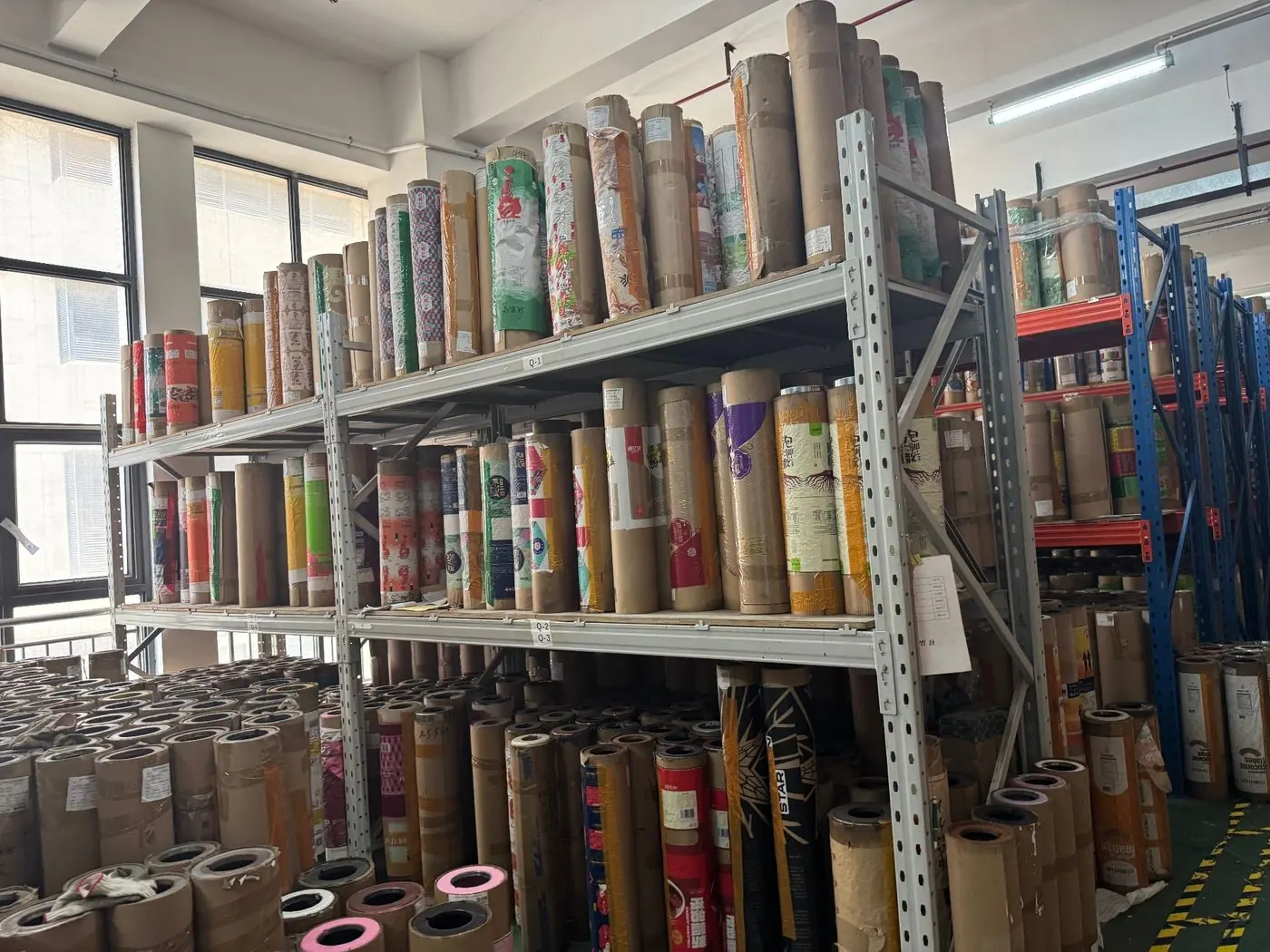
Why two quotes for “the same bag” differ
When a buyer writes “stand-up pouch, 250 g, printed”, four or five of the decisions that actually set the price are still open:
- How many layers, and how thick? A two-layer clear structure and a three-layer foil laminate can look identical on a spec sheet summarised as “250 g pouch” while differing substantially in film cost.
- Which barrier? Metallised PET, aluminium foil, EVOH and AlOx coatings all protect food, at different price points and with different end-of-life consequences.
- Which print method, how many colours, how much coverage? Digital printing and 10-colour rotogravure have very different cost curves, and a design that floods colour across the whole panel uses more ink and more press stations than a two-colour logo.
- What quantity tier? Setup, minimum film order and waste allowance are spread across the order. The same pouch at 500 pieces and at 50,000 pieces has two different unit prices.
- What is included? Cylinder cost, packing, documentation, freight, and whether the quote is ex-works, FOB or delivered. A price with no Incoterm is half a number.
None of those gaps is dishonesty. They are the reason we ask for five specific pieces of information before quoting — and the reason a quote you cannot decompose line by line is a quote you cannot compare.
The cost stack: what you are actually buying
Strip a pouch price down and it looks like this. Different factories weight these lines differently, but the set is universal:
| Line item | What it covers | Scales mainly with |
|---|---|---|
| 1. Film structure | Substrates, gauges, barrier layer, sealant layer, adhesive | Pouch area, layer count, resin prices |
| 2. Printing | Method, colour count, ink coverage, white underlay, varnish or matte finish | Colours and coverage; press time |
| 3. Prepress and cylinders | Artwork separation, engraving, proofing — a one-off cost per design | Number of designs; whether the design changes |
| 4. Conversion | Lamination, curing, slitting, bag-making, fitment attachment, QC, labour | Running metres, format complexity, features |
| 5. Quantity | Machine efficiency, setup amortisation, minimum film order, waste allowance | Order size and run length |
| 6. Format and features | Stand-up, flat-bottom, side-gusset, spout, zipper, valve, tear notch, handle, laser score, window | Number of added operations and components |
| 7. Documentation and logistics | Testing reports, declarations, cartons, pallets, freight, delivery terms | Market requirements; destination and Incoterm |
A quote that hides these lines is not necessarily a bad quote — but you cannot judge it, negotiate it, or compare it against anything else.
1. Film structure — usually the biggest lever, and the most over-specified
Film is typically the single largest share of a pouch’s cost, and the place where the most money is spent without anyone noticing. Each layer exists for a reason: an outer print web, a barrier layer where oxygen or moisture must be held back, a tie layer or adhesive, and an inner sealant layer that touches the food and does the sealing.
Over-specification is common because barrier is easy to add and hard to remove conceptually. A dry snack, a coffee bean with a one-way valve, a retort-ready meal and a frozen vegetable all need different structures — and a structure built for the hardest case is unnecessarily expensive for the easy one. Three questions move this line:
- What actually destroys the product? Oxygen, moisture, light, grease, aroma loss, or nothing much at all. Only the first three usually justify metallised or foil layers.
- How long is the shelf life, and at what temperature? A four-week ambient life and a two-year retort life are different engineering problems.
- Will the pack be recycled in your market? Under the EU Packaging and Packaging Waste Regulation, recyclability is a design requirement with deadlines in 2030 and 2038, and it favours mono-material structures over mixed laminates. If that is your roadmap, designing for it now costs less than retrofitting later — but it is a real trade-off in barrier performance, so it belongs in the cost conversation from the start.
The cheapest structure is not the thinnest one. What matters is the thinnest structure that still holds the product for its intended life — and that is a specification decision, not a purchasing one.
2. Printing: method and colour count
Printing cost has two halves, and buyers usually only discuss one of them.
The recurring half is ink, coverage and press time. A four-colour design with plenty of clear space costs less to print per pouch than a photographic image that floods the whole panel with process colour, a white underlay so the graphic reads on a clear or metallised film, and a matte varnish. Each of those is another station on the press.
The one-off half is the print method itself:
- Digital printing skips image carriers entirely. Nothing is engraved, so there is no setup charge per colour — which makes short runs and multi-flavour launches economic, and it is why our stock-size minimums start at 100–500 pieces per design. Unit cost falls slowly with quantity, because you are paying mostly for ink and machine time.
- Rotogravure printing uses an engraved cylinder per colour — a one-off prepress cost per design, after which the cylinder is kept and reused on every reorder. Unit cost drops sharply as volume rises, ink laydown is consistent across a long run, and it is the method that makes sense once a product has proven itself. Flexographic printing sits between the two and is common for simpler graphics.
Practical consequence: the quantity at which gravure overtakes digital depends on your design and colour count, and the honest answer is that it should be calculated, not guessed. If a supplier switches you to gravure on a first order without that calculation, ask why. If a product already sells, running it on the same cylinders again is where flexible packaging becomes genuinely cheap.
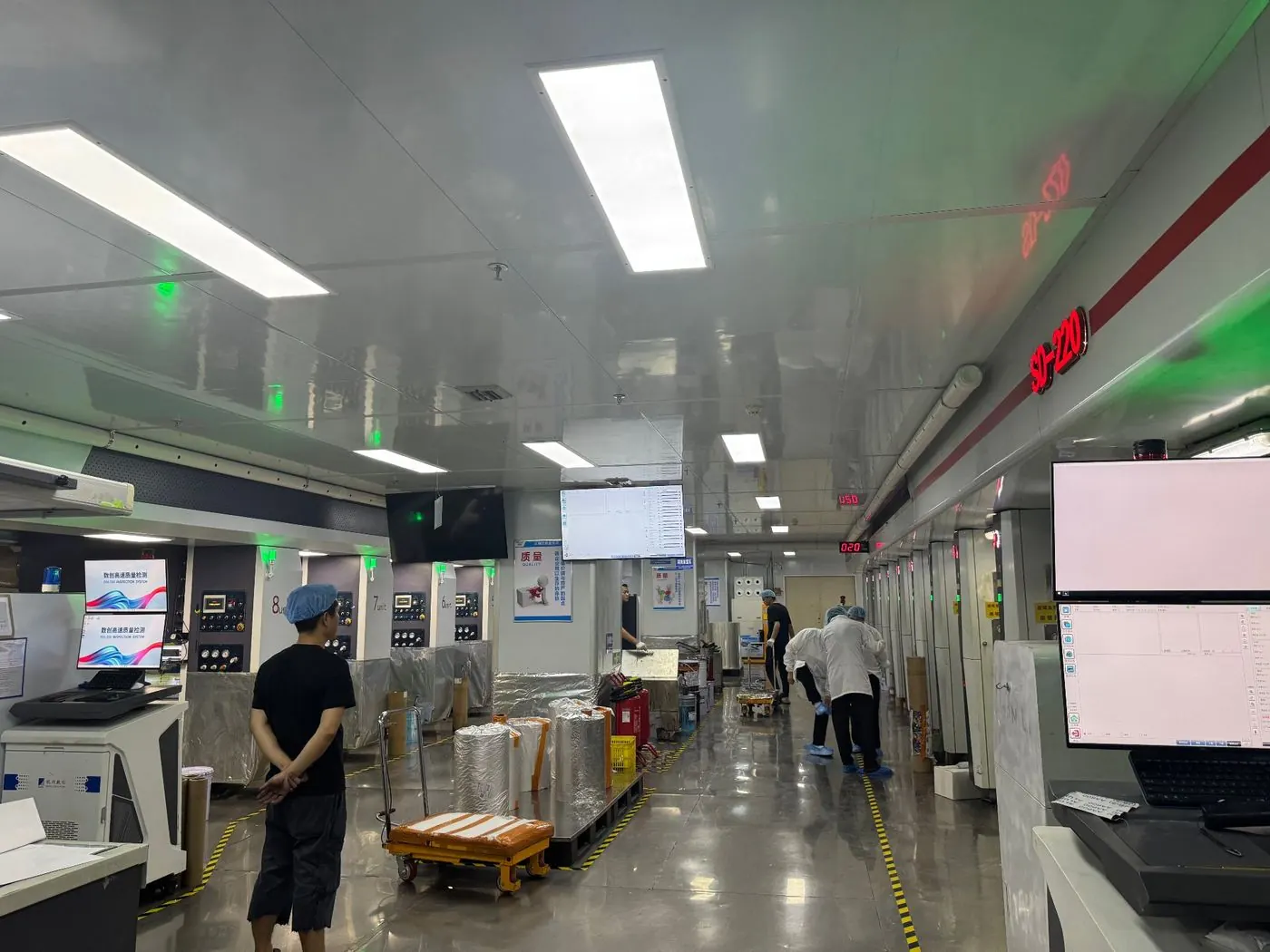
3. The part you pay once: prepress and cylinders
Cylinder and prepress costs are the most misunderstood line in a pouch quote, for one good reason: they behave unlike anything else.
- They are charged per design, not per pouch, so their effect on unit price shrinks as order size grows.
- They are kept and reused. Order the same design again and there is normally no cylinder charge — that is a large part of why reorders are cheaper.
- They are re-triggered by change. A new palette, a moved logo, a revised ingredient panel, a different pouch size and the cylinder set is re-engraved or replaced. Freeze artwork before volume runs, and batch your design changes instead of shipping them one at a time.
This is also where our artwork guide pays for itself: files prepared correctly the first time avoid a re-engraving cycle, which is the most expensive form of “saving time” in this industry.
4. Quantity: why the unit price falls, and where it stops falling
Unit price falls with order size because fixed costs — setup, registration, start-up waste, minimum film order, quality checks — are divided across more pieces. It does not fall forever, and it does not fall evenly:
- Below a machine minimum, the price per pouch rises steeply: you are paying for a run the equipment was not designed for, plus the waste of getting registration right.
- Film has its own minimum order from the laminator. A structure may be technically available in a smaller quantity while being economically silly in it.
- Functional structures carry higher minimums. Our published figures are a useful illustration: standard pouches start at 100–500 pieces per design, while retort, spouted and wet-food structures start at 5,000 — not as a policy, but because those structures need validated materials, tighter process control and different equipment.
- Storage is a real cost. Overtrading to chase a price break ties up cash and warehouse space, and films have a shelf life of their own.
The sane version of this conversation is not “what is the biggest discount” but “what quantity should I hold per design, given a realistic twelve-month forecast?” If you can commit to a release schedule rather than one lump, you can often have a better unit price without warehousing a year of stock. Our article on launching with low minimums covers that trade-off from the small-brand side.
5. Format, size and features
Two pouches can hold the same 250 g and cost differently because of how they are built and what is attached to them.
- Format complexity. A three-side-seal sachet is a simple fold and seal. A flat-bottom pouch stands up because of a folded base panel and extra forming steps. Side-gusset and shaped pouches add material and operations. Our format comparison sets out the trade-offs; the cost point is that standing up on shelf and running efficiently on a customer’s filling line are worth paying for, while a complex format chosen for looks alone is not.
- Size. Material scales with surface area, so a taller or wider pouch costs more per unit twice over: more film, and often a larger carton.
- Features. Zippers (press-to-close, slider, child-resistant), spouts with caps, one-way degassing valves, tear notches, laser scores, handles, hang holes, transparent windows, shaped die-cuts. Each adds a component, an operation or both — and valves, spouts and child-resistant closures are the ones that most often add both cost and lead time.
Before agreeing to a feature, ask which line item it lands on. A matte finish applied for a premium feel on a pack that never sits on a shelf is money spent on a photograph that nobody takes.
6. Documentation: a small line that decides whether you can sell
Testing and declarations are a modest share of a pouch quote, and skipping them is a false economy. A food-contact Declaration of Compliance, migration data, and statements on inks and adhesives are produced per structure, not per order — you pay for them once and reuse them. What changes the cost is the market: EU-bound packaging now requires documentation supporting the Declaration of Conformity and PFAS thresholds under Regulation (EU) 2025/40, and the US market expects a clearance route per material plus state-level review. Our compliance guide lists the exact documents to request.
7. Freight and landed cost
The last line in the stack is the one most often left out of a comparison:
- Incoterm. Ex-works, FOB, CIF and DDP are four different prices for the same pouch. Always compare landed cost at your door.
- Volumetric weight. Empty pouches are mostly air. Packing method determines how many fit in a carton and how much of the container is air — which is why the same order can ship at materially different cost depending on how tightly it is packed.
- Transit time. From our factory, sea freight runs about 14–18 days to the US West Coast and 25–30 days to Europe. Air freight is available for launches and sample orders, and it costs what it costs.
- Duties and clearance. Plan them early; they differ by market and by classification, and they belong in the model rather than in the surprise column.
Where you can cut cost without weakening the pack
These are real savings, in roughly the order of impact:
- Right-size the barrier. Specify the structure against actual shelf-life testing rather than against the worst case you can imagine.
- Consolidate SKUs. Two flavours sharing one pouch size and one printed design reach a better quantity tier than two separate small runs.
- Simplify the print. Fewer colours, more clear space, no full-panel floods, and matte or gloss as a finish rather than an extra station where it is not needed.
- Choose a standard format unless the shape does commercial work for you.
- Plan volume, then release. Forecast honestly, commit to a schedule, and let the factory plan film and press time around it.
- Freeze artwork before the first volume run so the cylinder set is engraved once.
- Drop features nobody uses. Every operation on the machine was chosen by someone; sometimes that someone no longer works there.
Where cutting cost backfires
- Thinning the sealant layer. Cheapest place to save film, fastest route to leakers, contamination claims and a customer who never reorders.
- Cheaper inks or adhesives. Odour, migration risk and compliance documentation that will not withstand a retailer audit.
- Removing barrier to save film. A shelflife that quietly drops from twelve months to four is a recall waiting for a warm warehouse.
- Squeezing quantity below machine minimum. You pay for the inefficiency in price and in consistency.
- Skipping paid samples. Printed samples cost US$120 for one to two pieces and take 5–7 days, and that charge is credited against the production order. Saving it to avoid a fee is how brands discover a colour problem on 30,000 pouches.
- Buying a claim you cannot document. Recycled content, compostability and “PFAS-free” are regulatory statements in most of our markets, not marketing adjectives.
Five things to send with a quote request
Give any supplier these five and the quotes you get back will be comparable:
- The product and how it is used — fill weight, ambient or chilled or frozen, hot-filled, retorted or microwaved, target shelf life.
- Format and size, or an explicit “advise me”. We will propose the format that fills and ships best, not the one that is easiest to make.
- Print expectation — colour count and reference artwork, or “advise”. Include whether the design is final.
- Quantity now and realistic 12-month volume. The second number is what determines whether digital or gravure is right for you.
- Market and delivery — where it will be sold, which compliance documentation you need, destination and preferred Incoterm.
Then add one sentence: “Please break the price into structure, printing, cylinder or prepress, conversion, and freight — and tell me what a reorder would cost without the setup.” Any converter worth working with can answer that in a table. If the response is a single number and a request for a deposit, you have learned something more useful than the price.
How we quote
We quote the way this article describes, because it is the only version that survives contact with a purchasing department. You get the structure and gauges named, the print method and colour count, the minimum quantity tier for your format, lead times and the shipping options available to your market — with the one-off exposure, if any, called out separately from the recurring cost.
Published figures you can hold us to: printed samples in 5–7 days at US$120 for one to two pieces, credited against the production order; standard pouches from 100–500 pieces per design; functional structures such as retort and spouted formats from 5,000 pieces; sea freight roughly 14–18 days to the US West Coast and 25–30 days to Europe. Where a cheaper structure would do the job, we will say so — a pouch that fails in the market costs both of us more than the margin on the film.
If you are still choosing a partner rather than a price, our 12 questions for vetting a pouch manufacturer applies the same logic to the supplier instead of the specification, and the flexible packaging overview shows what we actually run.
This article explains how customized pouch costs are built; it is not a price list. Costs depend on structure, print, format, quantity, market requirements and input prices, and any real figure has to come from a quote against your specification. Figures quoted for minimums, samples and transit are our published terms as of 5 October 2026.
Frequently asked questions
Why is a customized pouch quote so much higher than the price I see on an instant-quote website?
Instant-quote tools normally price a stock pouch in a fixed structure, in one of a few standard sizes, at high volume, with a template print or no print at all. A customized quote covers a structure built for your product, a design printed in your colours, a format and feature set you chose, and documentation for your market. The comparison only becomes meaningful when both quotes describe the same structure, print and quantity — which is why we ask for five specifics before pricing anything.
Is it cheaper to order more pouches?
Yes, up to a point, for two reasons: setup and prepress costs are spread across more pieces, and press and film minimums stop being a penalty. The fall is not linear, and it flattens once you are inside efficient run lengths. Two costs rise with quantity as well — cash tied up and warehouse space — and film has its own shelf life. The useful question is what quantity per design fits a realistic twelve-month forecast, not what the largest possible order is.
Do I have to pay for printing cylinders again on my second order?
No, not if the design and the pouch size stay the same. Cylinders are engraved once per design and reused on every reorder, which is a large part of why reorders cost less per pouch. You pay again when the artwork or size changes enough to require new engraving — a new colour, a moved logo, a revised panel, a different pouch width. That is the argument for freezing artwork before your first volume run and batching design changes rather than shipping them one at a time.
Should I choose digital or rotogravure printing?
It depends on quantity, colour count and how settled the design is. Digital printing involves no image carrier, so there is no per-colour setup and short runs of several designs are economic — which is why small-brand launches often start there. Rotogravure requires an engraved cylinder per colour, gives very consistent ink laydown on long runs, and delivers the lowest unit cost at volume once the design is fixed. The crossover point should be calculated for your specific design and quantity, and a supplier should be able to show you the calculation rather than assert a preference.
Which features add the most cost?
In our experience: spouts with caps and child-resistant or slider zippers, because they are added components plus extra machine operations; shaped die-cuts and window patches, which add material and handling; high-barrier foil or metallised structures, which change the whole film stack; and premium print treatments such as full-coverage process colour with a white underlay and a matte finish. Zippers and valves are usually worth their cost because they carry product performance; shaped pouches and finishes are worth it when the shelf or the channel demands it, and not otherwise.
Can I get a price and a physical sample before committing to production?
Yes, and you should. Send the product, the format or an area to advise on, the print expectation, the quantity you are considering, and your market. We will come back with a structure proposal and a quote, and printed samples take 5–7 days at US$120 for one to two pieces, credited against the production order. Filling a real sample and testing it — on your line, with your product, through your storage conditions — is the cheapest validation step in the entire project.
Related reading
Related: How we quote and build
Want a quote you can actually compare?
Send the product, how it will be filled and stored, the format or an area to advise on, your quantity now and your 12-month outlook. We come back with a named structure, a colour count, a minimum tier and a line-by-line price — usually within one working day.