
Pet Food Packaging Bags
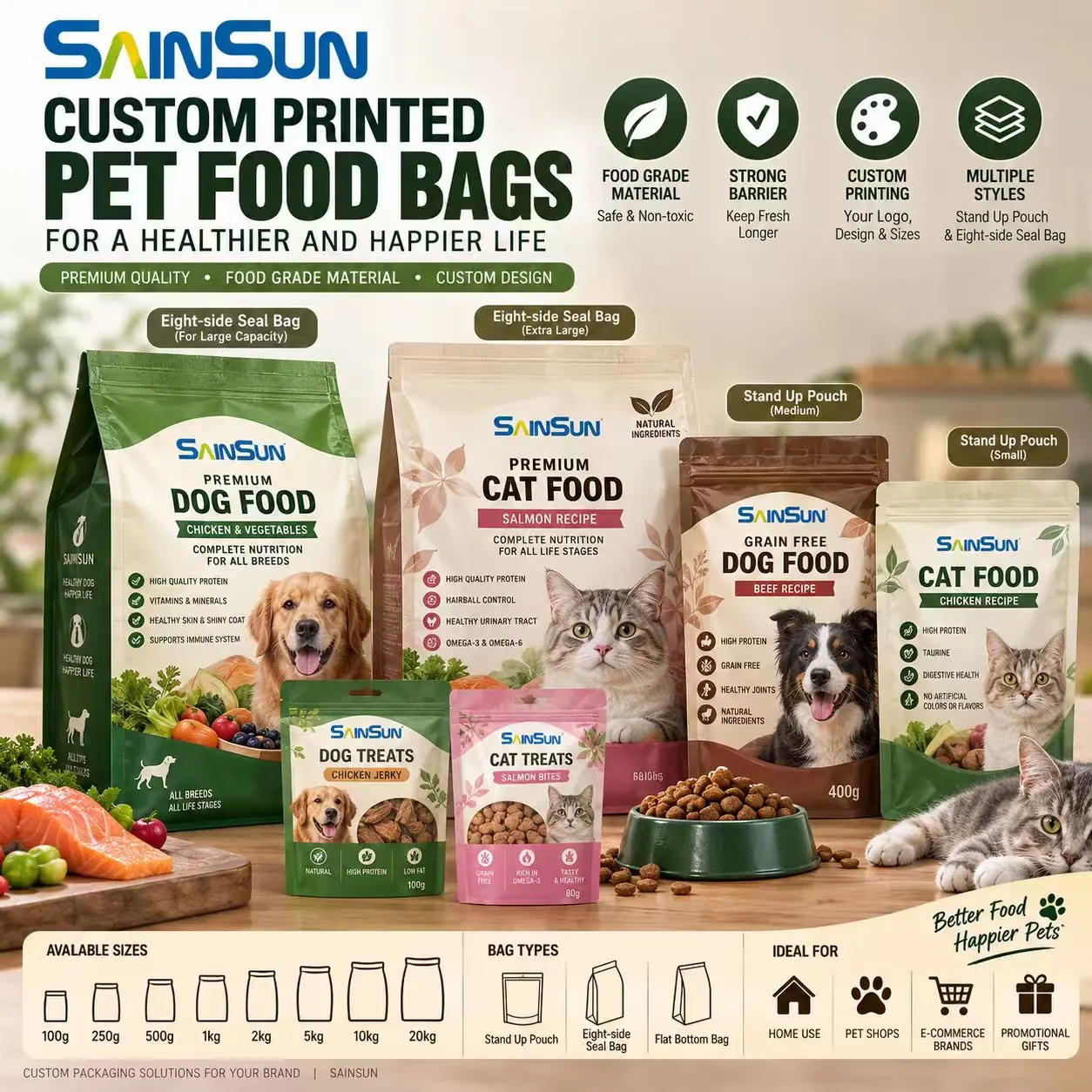
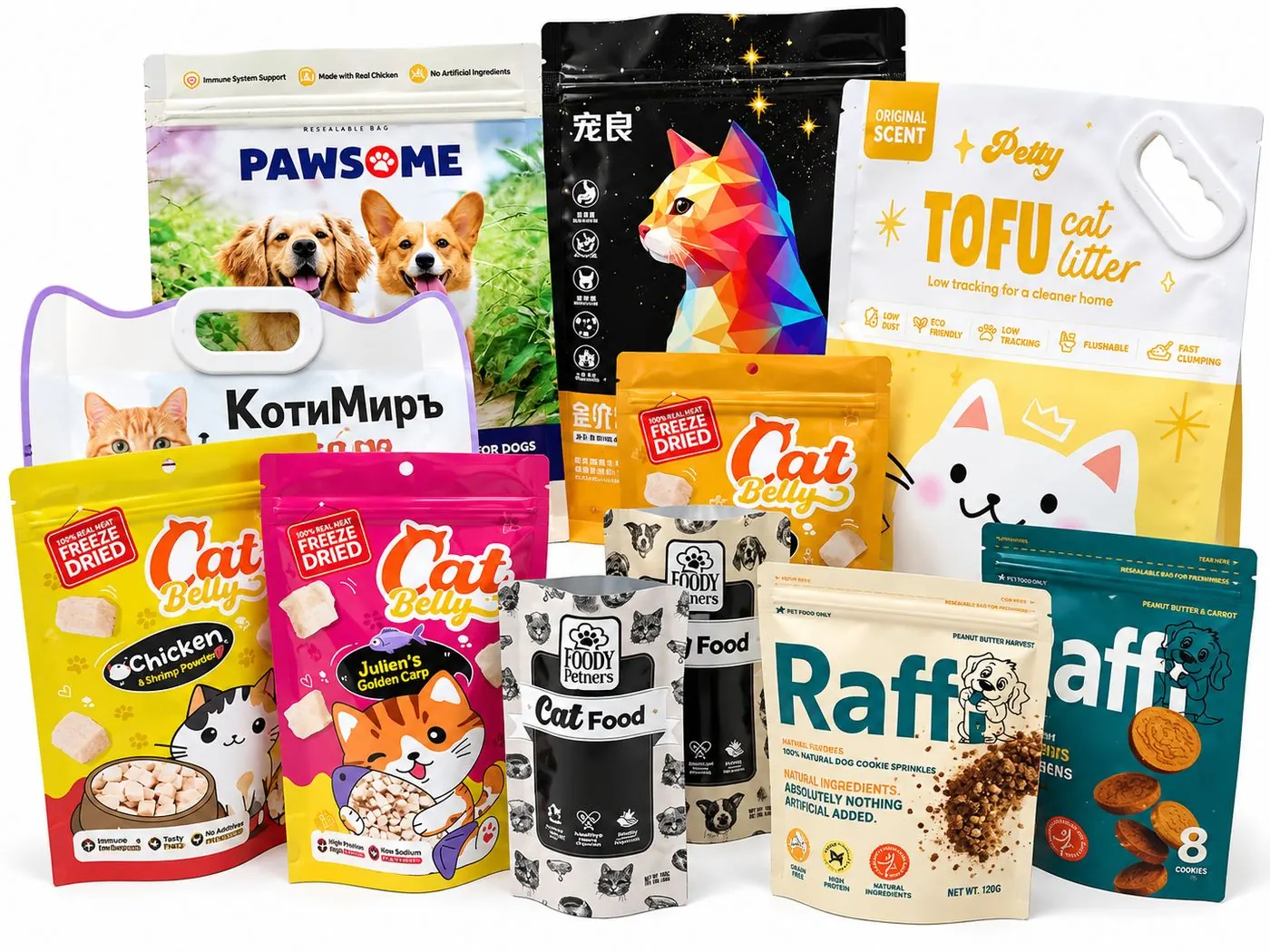
Durable, freshness-locking packaging designed for pet food brands. Heavy-duty structures and reliable seals keep kibble, treats, and wet food fresh from production to the bowl.
Key Features
- Heavy-duty films for puncture and tear resistance
- Aroma and moisture barrier structures
- Optional resealable zippers and one-way valves
- Large-format bag capabilities for bulk packaging
Key Takeaways
Pet Food Packaging Decisions at a Glance
- Kibble is dense and sharp: the outer film needs puncture resistance, and corners and seals need reinforcement.
- Fat content attacks weak barrier films — foil or metallized laminates carry odour control and shelf life.
- The zipper is the most-used feature on the pack; wide and durable beats thin and cheap every time.
- Treats run 50–500 g stand-up pouches; dry food runs 1–5 kg bags with a handle; wet food runs spouted or retort.
- MOQ 100–500 pcs per design standard; 5,000 pcs for wet-food structures.
Customization
Built to Your Specification
Material structures, formats, and finishes are tailored to your product, barrier requirements, and brand — produced in our own factory in Huizhou, China, on 10 production lines staffed by 100+ workers.
Material Structure
Multi-layer lamination matched to your barrier needs.
Formats
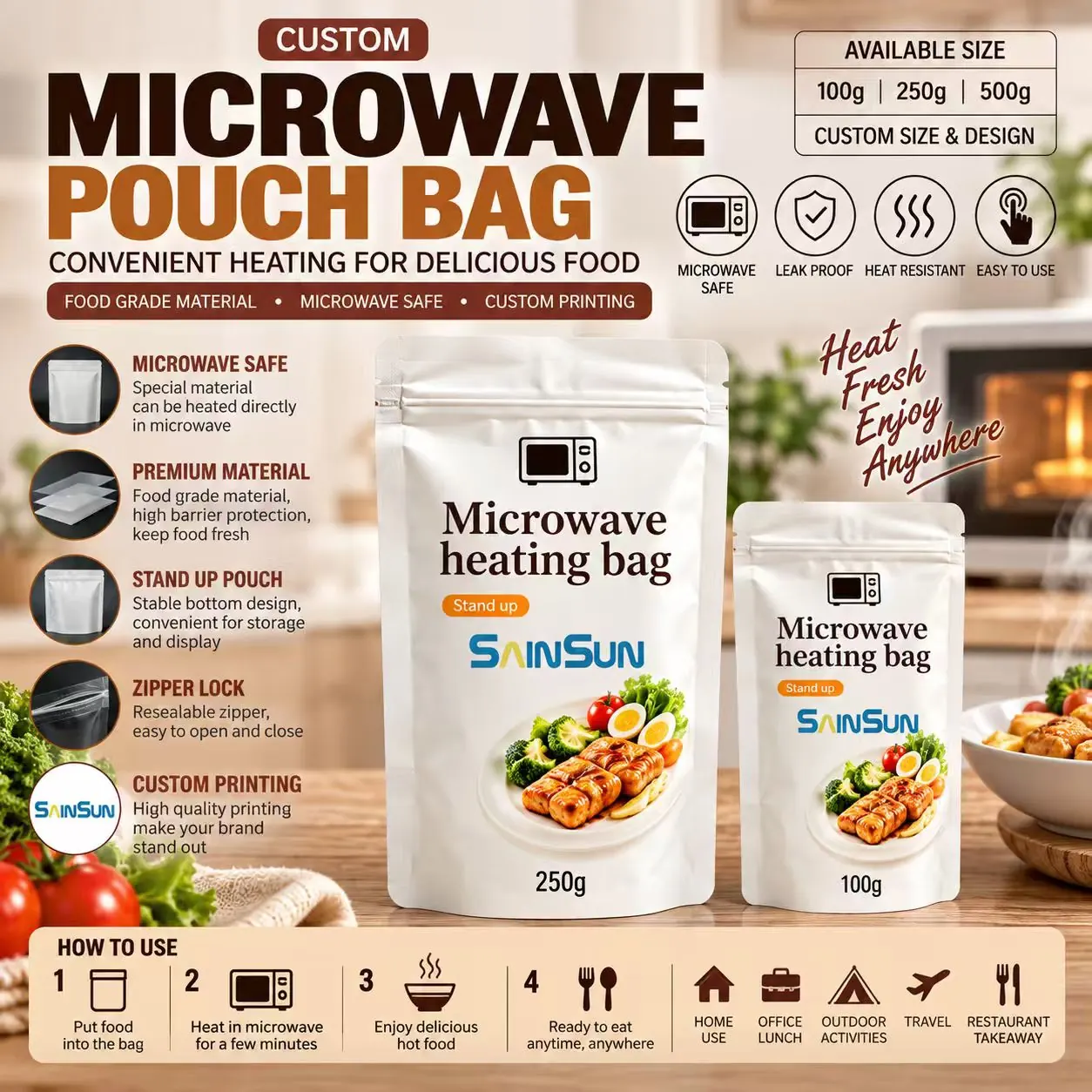
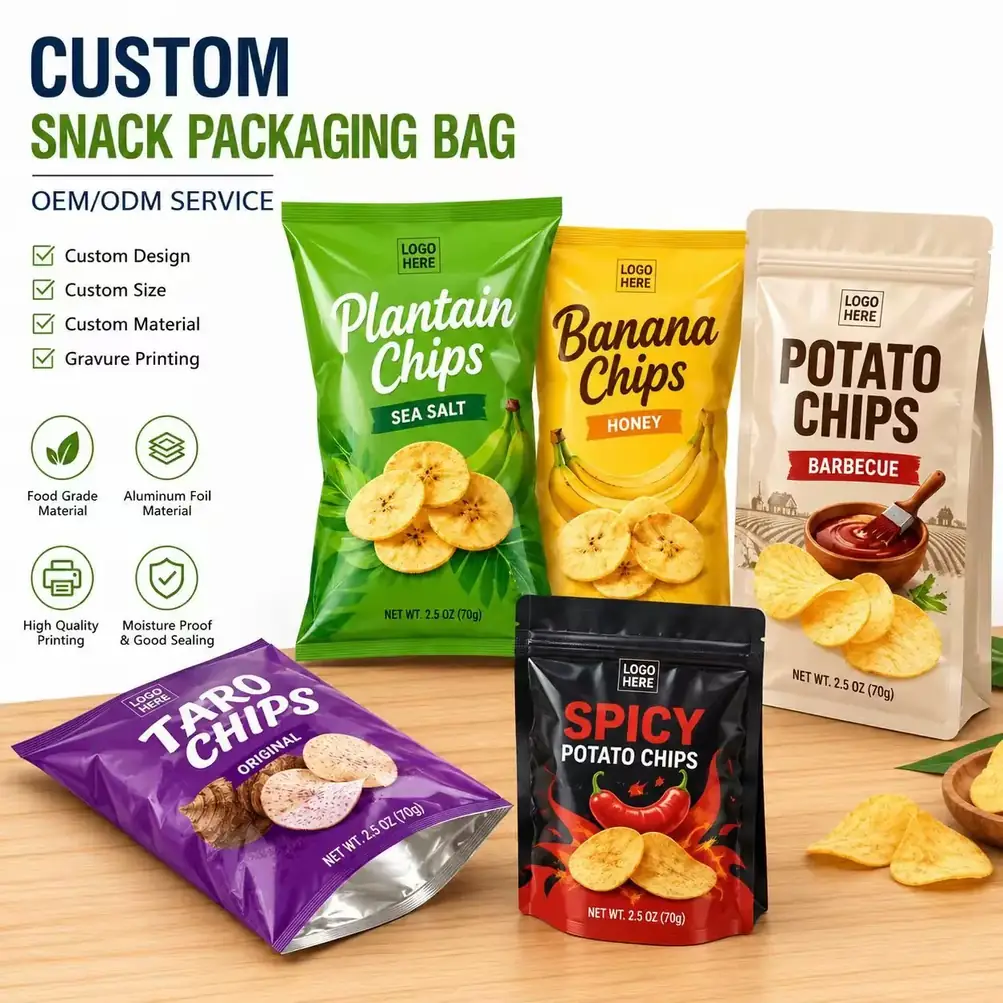
Stand-up, flat, quad-seal, spouted, and shaped pouches.
Printing
Rotogravure and flexographic, up to 10 colors.
Closures
Zippers, valves, windows, and tear notches.
The Category
Why Pet Food Is a Special Case
Pet food looks like food packaging, but the duty cycle is different. A 2 kg bag is opened daily for weeks, carried by the handle, stored in cupboards and attacked by determined paws. Seams that would survive a snack bag’s life fail early here.
So the specification starts with abuse: a puncture-resistant outer film, reinforced corners and seals, a barrier layer matched to fat and moisture, and a zipper tested through hundreds of open-close cycles. We confirm all of it on the sample pack before production.
The category also carries a trust premium. Owners read the back of the pack closely, and a pack that survives the month without splitting or going stale is part of what they are paying for. That is why we treat pet food as an engineering category, not a printing job.
Sizes
Common Pet Food Pack Sizes
| Pack | Typical format | Features |
|---|---|---|
| 50–150 g treats | Stand-up pouch | Zipper, hang hole option |
| 200–500 g treats | Stand-up pouch | Wide zipper, matte finish |
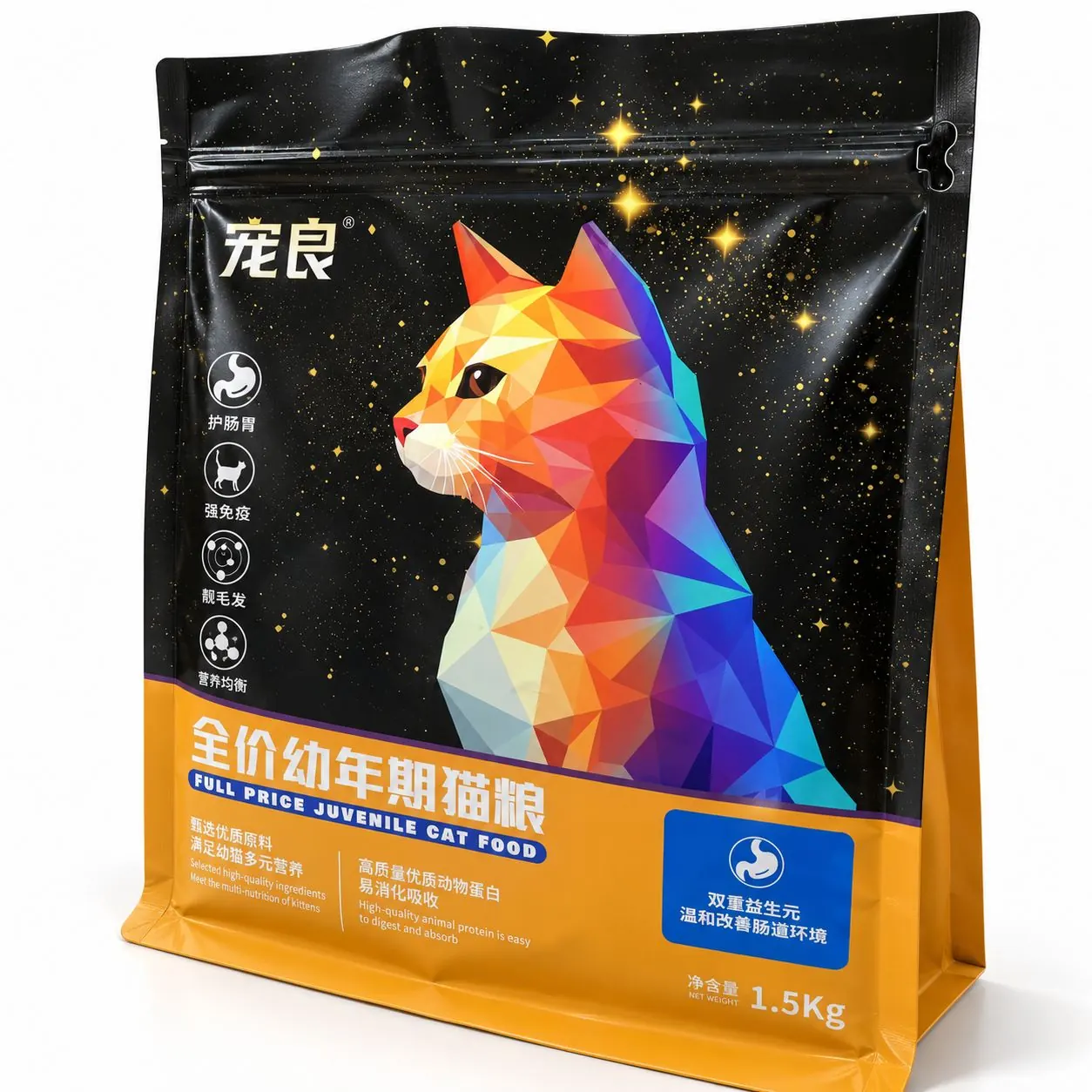
| 1–2 kg dry food | Flat-bottom / side gusset | Zipper, reinforced base |
| 2–5 kg dry food | Flat-bottom bag | Handle, wide zipper, puncture-resistant film |
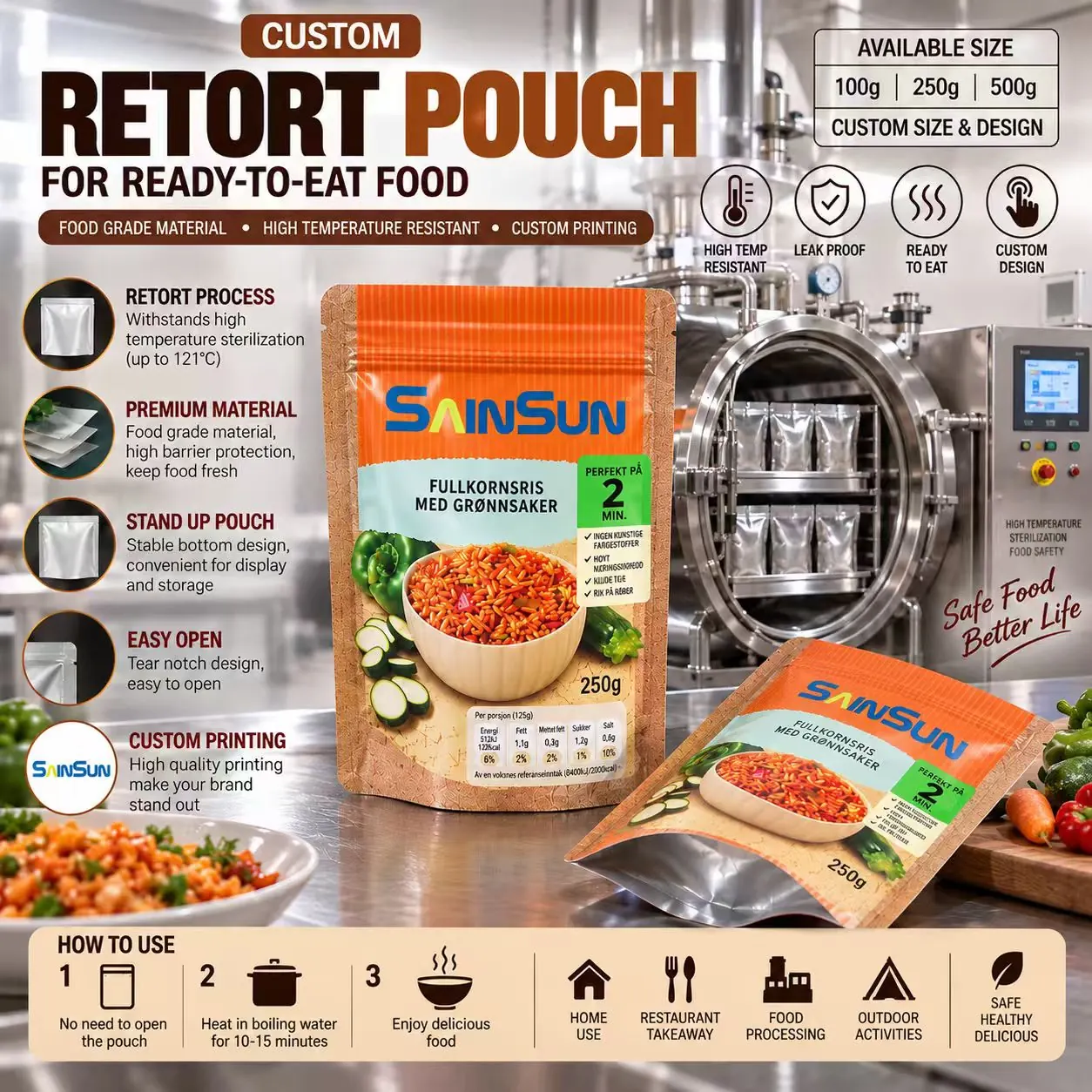
| Wet food & toppers | Spouted or retort pouch | Screw cap or retort seal |
FAQ
Pet Food Packaging — Common Questions
What film survives kibble?
A puncture-resistant outer layer with reinforced seals and corners — specified against your kibble profile and distribution chain. We verify it on sample packs before production.
Can you add a handle to 2 kg bags?
Yes. Die-cut or applied film handles are standard options on 2–5 kg packs, with the handle zone reinforced in the film specification.
What zipper options are there?
Wide resealable zippers are standard on treat and dry-food formats, and they are tested through repeated open-close cycles on the sample pack.
What about wet pet food?
Spouted pouches with a screw cap for toppers and broths, or retort pouches for sterilized shelf-stable wet food. Both are functional structures with an MOQ of 5,000 pcs per design.
Which compliance documents apply?
FDA 21 CFR and EU 10/2011 food-contact reports, produced under our BRCGS Issue 7 (Grade B) system, are supplied with the order.
Sustainability
Recyclability Without Losing the Barrier
The honest tension in pet food packaging is that the strongest barriers are multi-material laminates, and multi-material laminates are hard to recycle. Mono-material PE structures change that: a pack that lives in the polyethylene recycling stream, with a barrier good enough for many dry-food applications.
The trade-off is real: mono-material structures have a narrower processing window and somewhat lower barrier than foil. Whether that trade works depends on your shelf-life target — which is why we ask for it rather than defaulting to foil, or defaulting to recyclable.
Kraft-look laminates are the other common request. They carry the natural aesthetic buyers respond to while keeping a true barrier layer underneath — the look of paper with the performance of film.
Durability
Where Puncture Risk Actually Comes From
Large-format pet food packs fail in predictable ways. Each failure mode maps to a structural answer, which is why we ask about the product before quoting the film.
Kibble edges
Sharp, hard edges work against the inner layer during handling. Answered with puncture-guard nylon in the laminate.
Stacking load
Palletized bags compress for weeks. Answered with tensile strength in the film and gusset geometry that carries weight.
Drop and impact
Bags are dropped in warehouses and delivery vans. Answered with seal strength — tested on site before production.
Moisture pickup
Fat rancidity and staleness follow humidity. Answered with a high-barrier core matched to your shelf-life target.
Formats
Large Formats, Carried Stably
Pet food runs heavier than most flexible applications, so format and structure decide each other. Flat-bottom constructions carry weight most stably and hold the feeding-guide information large packs need; heavy-duty stand-up constructions cover the mid-range; and side formats remain economical for smaller treat lines.
Closures matter more here than in almost any other category: press-to-close zippers on smaller packs, heavy-gauge zippers on large ones, and handle options for the sizes customers carry rather than scoop. Whatever you choose, it is fixed on the dieline before artwork starts.
FAQ
Pet Food Packaging Questions
Which structure should I use for a 3 kg dry food pack?
Flat-bottom with a reinforced laminate is the natural choice at that weight — stable on the shelf, strong under stacking, with five printable panels for feeding information. Heavy-duty stand-up constructions work well up to around 2 kg.
Can you match the barrier to my shelf-life target instead of defaulting to foil?
Yes — that is the right way to specify. Foil is the strongest barrier but not always necessary; metallized and high-barrier transparent structures cover many targets. Tell us the shelf-life claim and distribution climate and we propose the structure that meets it, no stronger.
Do you supply compliance documents for pet food packaging?
Packs are produced under our BRCGS Issue 7 (Grade B) system, and food-contact structures are supported with FDA and EU test reports as applicable to your market. Ask for the document list with your quotation so nothing is discovered late.
Content last reviewed: September 2026