
Customized Spouted Pouches
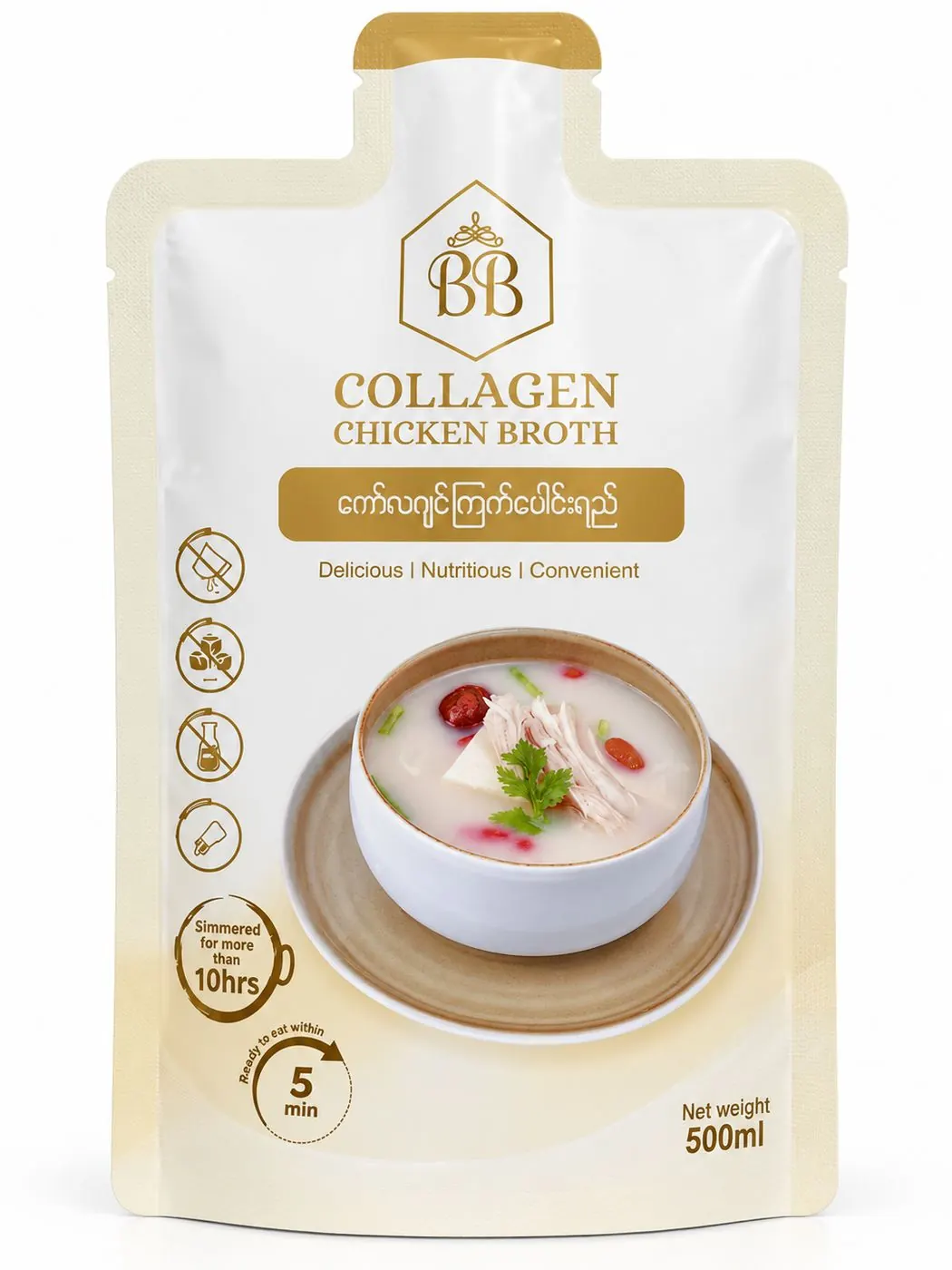
A spouted pouch pairs a flexible body with a rigid screw-cap spout — pourable, resealable and far lighter than a bottle. It is the format of choice for baby food, juices, sauces, honey, detergents and pet wet food.
Key Features
- Spout positions: top-corner, top-centre or centre-gusset
- Cap options: screw, flip-top, child-resistant, with tamper membrane
- Seals pressure-checked in-line; channel-leak tested for pastes and oils
- Ships flat — a fraction of the freight volume of rigid bottles
Key Takeaways
Spouted Pouches at a Glance
- Spouted pouches replace rigid bottles for liquids and pastes — comparable convenience, far less packaging weight and freight volume.
- Typical fills: juices and drinks, baby food and purees, sauces, honey, detergents and pet wet food.
- Spout, cap and pouch come from one supplier and are assembled in-line, so there is no second vendor to coordinate.
- Because it is a functional structure, MOQ starts at 5,000 pcs per design.
- Customized printed samples take 5–7 days; stock samples are free apart from freight.
Format
When a Spouted Pouch Beats a Bottle
A spouted pouch earns its place wherever the product is poured, squeezed or spooned out over multiple uses. The flexible body weighs a fraction of a rigid bottle, ships flat before filling, and takes up less shelf space — while the screw cap preserves the reseal-and-pour convenience consumers expect.
The format also prints on the full body surface, so branding is not squeezed onto a body label the way it is on a bottle. For baby food and children’s products, child-resistant caps and a tamper-evident membrane can be combined on the same spout.
Spouted pouches are functional structures: the spout is welded into a punched hole in the film, which adds tooling and a slower conversion step. That is why the MOQ is higher than a standard pouch — and why it pays to get the structure right at the quotation stage.
Specifications
Build Options
| Item | Standard options |
|---|---|
| Material structure | PET/PE · PET/VMPET/PE · PET/AL/PE, with a fitment-weld layer matched to the spout |
| Total thickness | Typically 100–180 micron, driven by fill weight and the puncture loads of filling |
| Spout positions | Top-corner, top-centre or centre-gusset; diameter matched to your filler |
| Caps | Screw, flip-top or child-resistant, with optional tamper-evident membrane |
| Printing | Rotogravure and flexographic, up to 10 colours; matte, gloss or soft-touch finish |
| Sizes | From 100 ml sachet-style packs to 2 litre family formats |
| MOQ | 5,000 pcs per design (functional structure) |
| Customized samples | 5–7 days · US$120 for 1–2 pcs · print film fee waived |
| Compliance | FDA 21 CFR and EU 10/2011 food-contact reports; produced under BRCGS Issue 7 (Grade B) |
Tell us your filling equipment and cap torque requirement at quotation stage — we match the spout weld and film gauge to the line, not the other way round.
Applications
What Spouted Pouches Are Used For
Baby food & purees
Child-resistant cap options and a spout sized for small hands and portion control.
Juices & drinks
Corner spouts with a straw hole or screw cap for chilled and ambient drinks.
Sauces & condiments
Wide spouts for ketchup, mayo and cooking sauces; channel-leak tested.
Honey & syrups
High-barrier structures that keep aroma in and moisture out.
Detergents & home care
Tough films and caps sized for refill and dosing applications.
Pet wet food & toppers
Single-serve and multi-serve packs with a wide, easy-pour spout.
Quality
Where Spouted Pouches Fail — and How We Prevent It
Three failure modes dominate this format: a weld that peels under torque, a channel leak along the spout edge, and a film that punctures during high-speed filling. All three are determined at the specification stage, long before production starts.
We match the fitment-weld layer to the spout material, verify seal strength on sample pouches, and pressure-check every batch in-line. For pastes and oily products we also run a channel-leak check on finished pouches before release.
Because the pouch, spout and cap all come from our own production and supplier chain, a spec change does not turn into a three-vendor negotiation — it is handled as one engineering change.
FAQ
Spouted Pouches — Common Questions
What is the MOQ for spouted pouches?
5,000 pcs per design. Spouted pouches are a functional structure — the spout is welded into a punched fitment hole, and the film, punch die and spout tooling all add setup cost that a smaller run cannot absorb.
Where can the spout be positioned?
Top-centre, top-corner or centre-gusset. Top-corner spouts pour cleanly from a standing pack; centre-gusset spouts suit wider packs and stand-up formats. We confirm the position against your filling line.
Which cap options are available?
Standard screw caps, flip-top caps and child-resistant caps, with or without an inner tamper-evident membrane. Cap diameter is matched to the spout and your filling equipment.
Are the pouches leak-tested?
Every batch is sealed and pressure-checked in-line, and we run a seal-strength check on finished pouches. For pastes and oily products we also test for channel leaking along the spout weld before release.
Which structures suit liquids best?
PET/PE for short shelf-life drinks, PET/VMPET/PE for aroma-sensitive liquids, and PET/AL/PE for long-life products that need the strongest oxygen and light barrier.
Can you supply food-contact documentation?
Yes. Structures are produced under our BRCGS Issue 7 (Grade B) system, with FDA 21 CFR and EU 10/2011 test reports available for food, beverage and home-care applications.
Next Step
Bring Us the Product, We Will Engineer the Pack
Tell us what you are filling, at what volume and on what line. We will propose the structure, spout position and cap — with samples in 5–7 days.
Last updated: September 2026