
Coffee Packaging for Roasters and Brands
Coffee punishes weak packaging faster than almost any food. Roasted beans vent CO₂ for days, aroma oxidises on contact with air, and light and moisture degrade what is left. This page is how we help roasters and coffee brands specify a pack that holds freshness from roast to cup.
Key Features
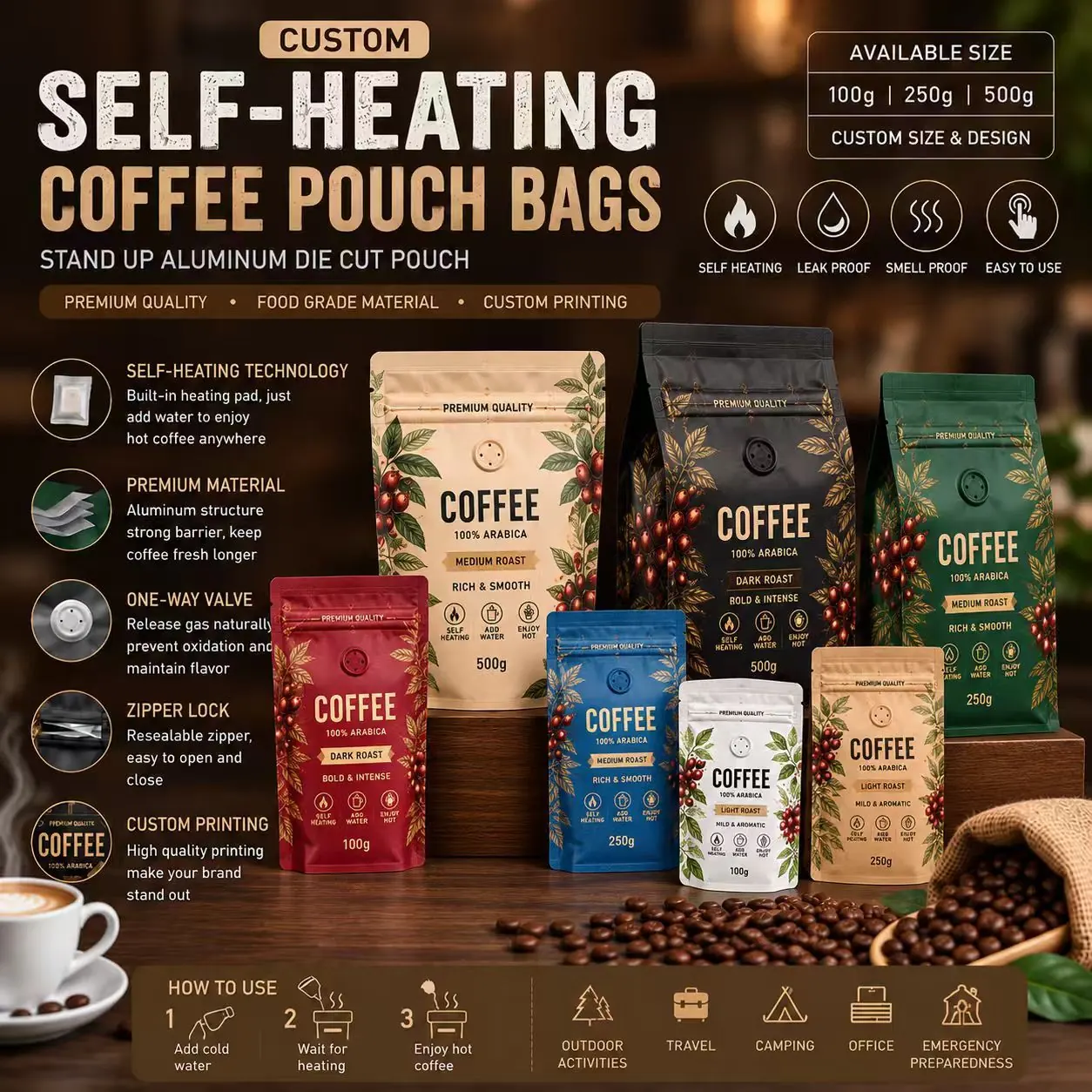
- One-way valve + high-barrier laminate: the baseline for whole bean
- Side gusset for density, flat bottom for shelf presence
- 250 g, 500 g and 1 kg — multiple sizes under one artwork
- MOQ 100–500 pcs per design, printed samples in 5–7 days
Key Takeaways
Coffee Packaging Decisions at a Glance
- Whole-bean coffee needs a one-way valve and a high-barrier film: the valve vents CO₂, the barrier keeps oxygen out.
- Ground coffee has a shorter fresh window than whole bean — an aluminium-foil layer is usually worth the extra cost.
- 250 g, 500 g and 1 kg cover most retail lines; side gussets pack densely, flat-bottom pouches present best.
- Instant coffee and sticks use foil three-side-seal sachets; cold-brew and RTD lines move to spouted pouches.
- MOQ starts at 100–500 pcs per design — low enough for a roastery’s first private-label run.
The Problem
What Coffee Does to a Pack
For the first days after roasting, beans release carbon dioxide continuously. Sealed inside a barrier film with nowhere to go, that gas inflates or bursts the pack. Leave the coffee in open air instead, and oxygen strips the aromatics that the roast created.
Light and moisture add a slower decay on top. A clear window shows the beans but also admits light; an uncoated kraft look is attractive but porous. Every coffee pack is a compromise between showing the product, protecting it and keeping the pack affordable — and the right answer depends on how fast the coffee reaches the consumer.
That is why we start every coffee enquiry with one question: how long does the roast sit before it is brewed? The structure, barrier layer and valve follow from that answer.
Structures
Coffee Types and the Packs That Suit Them
| Coffee type | Recommended format | Typical structure | Closures |
|---|---|---|---|
| Whole bean, retail | Side-gusset or flat-bottom bag | PET/VMPET/PE or PET/AL/PE | One-way valve + tin tie or zipper |
| Ground coffee | Side-gusset or stand-up pouch | PET/AL/PE — foil for the shorter fresh window | Valve + zipper |
| Capsule outer packs | Flat-bottom or stand-up pouch | PET/VMPET/PE | Resealable zipper |
| Instant coffee & sticks | Three-side-seal sachet | PET/AL/PE | Tear notch |
| Cold brew & RTD coffee | Spouted pouch | PET/AL/PE with welded fitment | Screw cap |
| Subscription refill bags | Stand-up pouch with valve | PET/VMPET/PE | Valve + zipper |
Structures are proposals, not prescriptions — we confirm the final laminate against your shelf-life target and fill weight.
Decisions
The Five Decisions in a Coffee Pack
Valve or no valve
Fresh roast needs venting; pre-rested coffee can skip it. Most roasters keep the valve for safety and as a freshness cue.
Barrier level
Metallized film for typical retail timelines; foil when coffee sits longer or ships to distant markets.
Format
Side gusset for density and cost; flat bottom for five printable panels and premium shelf presence.
Reclosure
Tin tie for the classic roll-down, zipper for repeat-use convenience — both standard options.
Size strategy
250 g and 1 kg to start; 500 g to fill the middle. One artwork, several sizes.
Finish
Matte and gloss contrast, kraft-look laminates, or soft-touch for premium positioning.
Specifications
What We Supply
| Item | Standard options |
|---|---|
| Formats | Side-gusset, flat-bottom, stand-up and three-side-seal, all with valve options |
| Structures | PET/VMPET/PE · PET/AL/PE · kraft/PE · mono-material PE for recyclability |
| Pack sizes | 100 g to 1 kg and larger, from your dieline or matched to an existing bag |
| Printing | Rotogravure and flexographic, up to 10 colours; matte, gloss, kraft-look, soft-touch |
| Closures | One-way degassing valve, tin tie, clip, resealable zipper, tear notch |
| MOQ | 100–500 pcs per design; several blends or sizes on one order |
| Customized samples | 5–7 days · US$120 for 1–2 pcs · print film fee waived |
| Compliance | FDA 21 CFR and EU 10/2011 food-contact reports; produced under BRCGS Issue 7 (Grade B) |
Send an existing bag or a dieline and we will match the format and closures, then propose the barrier from your roast-to-shelf timeline.
Freshness
Valve Placement Is an Engineering Detail
A valve is not just a fitting — where it sits on the pack changes how the bag vents. On side-gusset bags the valve sits on the front face above the fill line; on flat-bottom pouches it is usually placed on the back panel so shelf-facing artwork stays clean. Get it wrong and the bag pillows, or the vent sits below coffee and clogs.
We check valve placement against your filling process and degassing timeline before production, and confirm it on the sample pack. That check is part of why our coffee customers rarely see bag swelling complaints after a format change.
Documentation travels with the order: FDA 21 CFR and EU 10/2011 food-contact test reports, produced under our BRCGS Issue 7 (Grade B) system.
FAQ
Coffee Packaging — Common Questions
How long does coffee stay fresh in the pack?
It depends on the barrier and the roast-to-shelf timeline, not on the bag alone. A metallized laminate slows oxygen ingress substantially, and an aluminium foil layer goes further. Tell us how long your coffee sits between roasting and the consumer, and we will match the structure to that window.
Do I still need a valve if I rest my roast before packing?
If you rest the coffee for several days until degassing has largely finished, a valve is optional. Most roasters keep one anyway — it removes the timing pressure, protects against residual CO₂, and signals freshness to buyers.
Which pack sizes should a new brand launch with?
Most retail coffee lines start with 250 g and 1 kg — a trial size and a value size. Adding 500 g later covers the middle. Several sizes can be produced under one artwork so the setup cost is shared.
Can several blends run on one order?
Yes. Different blends can share a printing run where the design allows, which is one of the practical ways we keep MOQ at 100–500 pcs per design for small roasters.
What compliance documents come with coffee packaging?
Structures are produced under our BRCGS Issue 7 (Grade B) system, with FDA 21 CFR and EU 10/2011 food-contact test reports available — the documents an importer or retailer will ask for.
Can you match a bag I already sell?
Send us the existing bag or its dieline. We will match the format, film thickness, closures and print, and usually improve the barrier at the same time.
Next Step
Explore Coffee Packaging Formats
The coffee bag page covers valve placement, zipper and barrier structures for 250 g–1 kg roast packs. Choose side-gusset if your pack is the classic flat roaster brick.
Next Step
Send the Roast Timeline, Get the Structure
Tell us what you roast, how it ships and how long it sits on shelf. We will propose the format, barrier and closures — with printed samples in 5–7 days.
Last updated: September 2026