
Food Packaging Bags
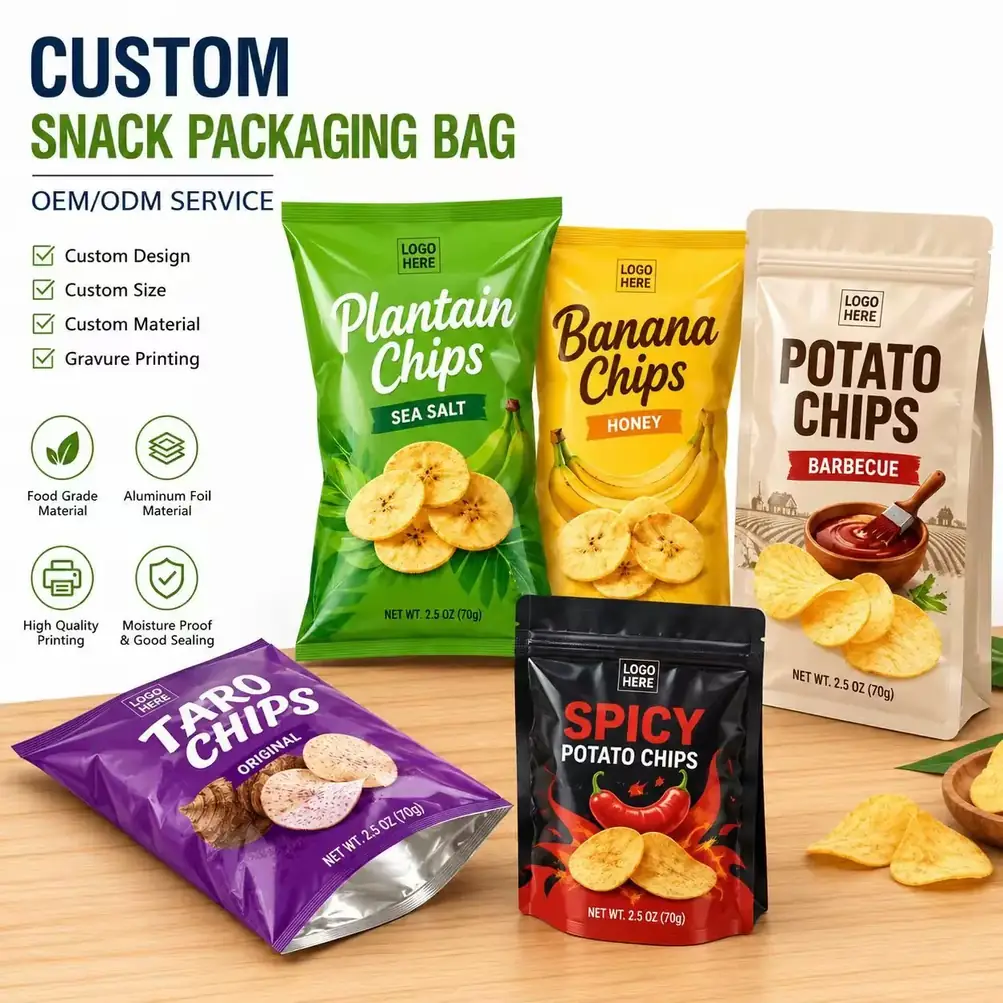
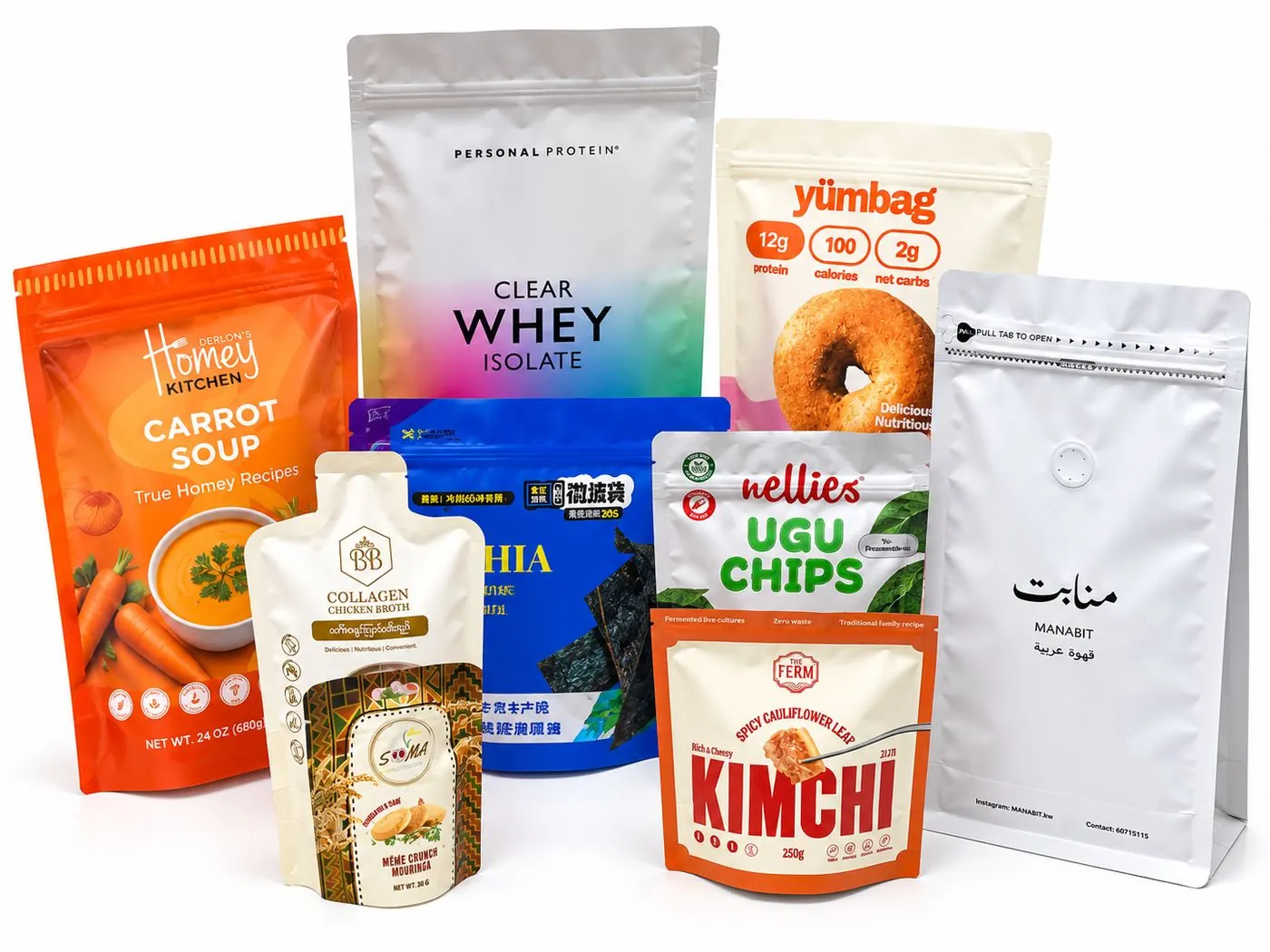
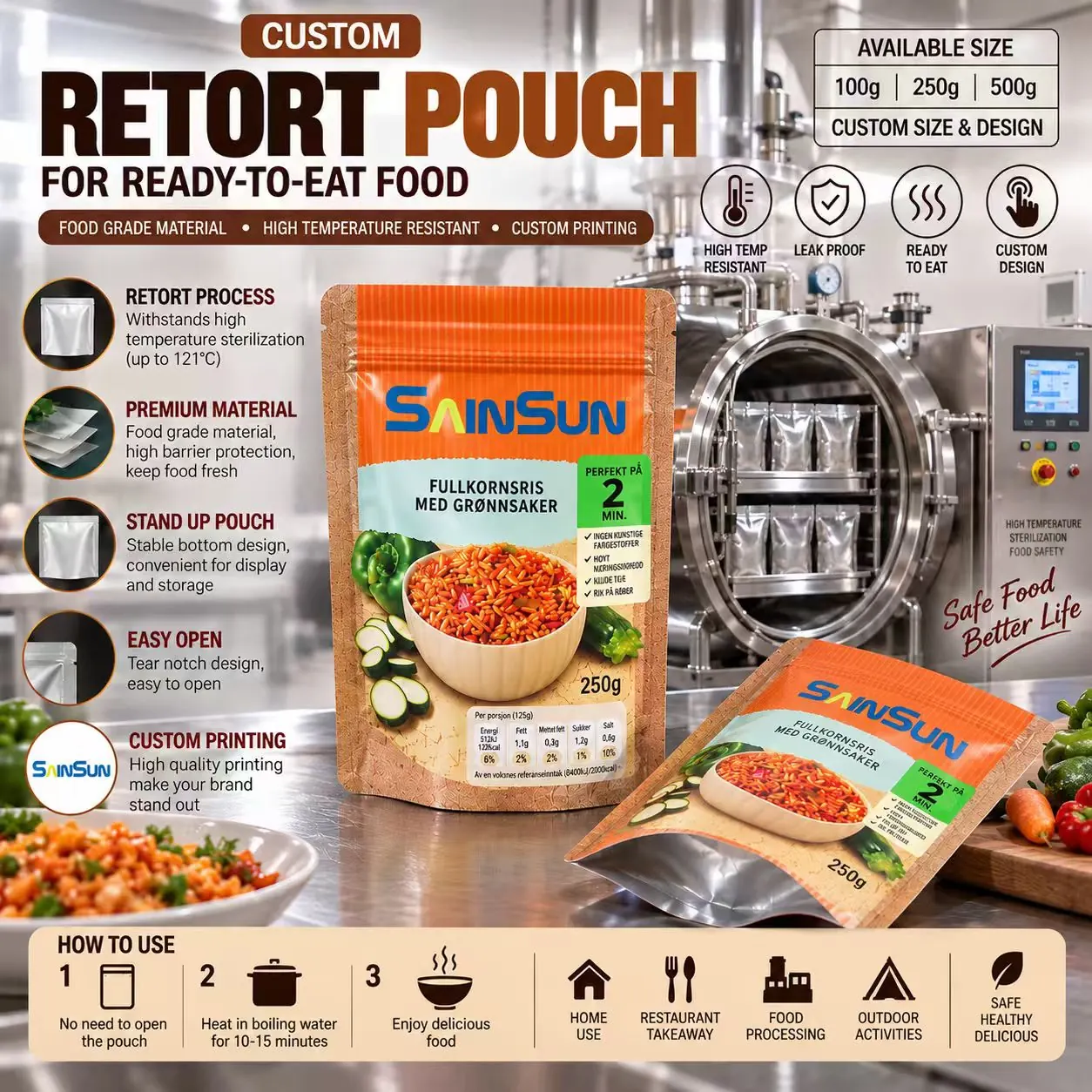
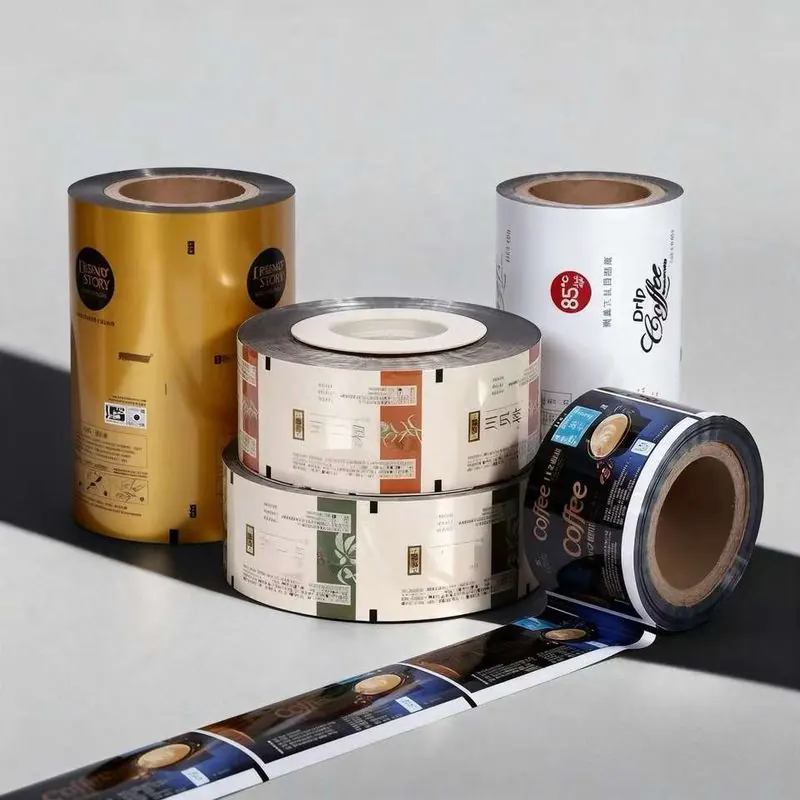
Customized printed zipper pouches, stand-up bags and roll film built for snacks, dry food and confectionery — from 50 g sample packs to 2 kg bulk. Sterilized, frozen and liquid categories are covered on their own retort, microwave and spouted-pouch pages; the same quality system runs behind every structure we make.
Key Features
- Wide material options for different food types
- Customized shapes, sizes, and closure styles
- Rotogravure and flexographic printing up to 10 colors
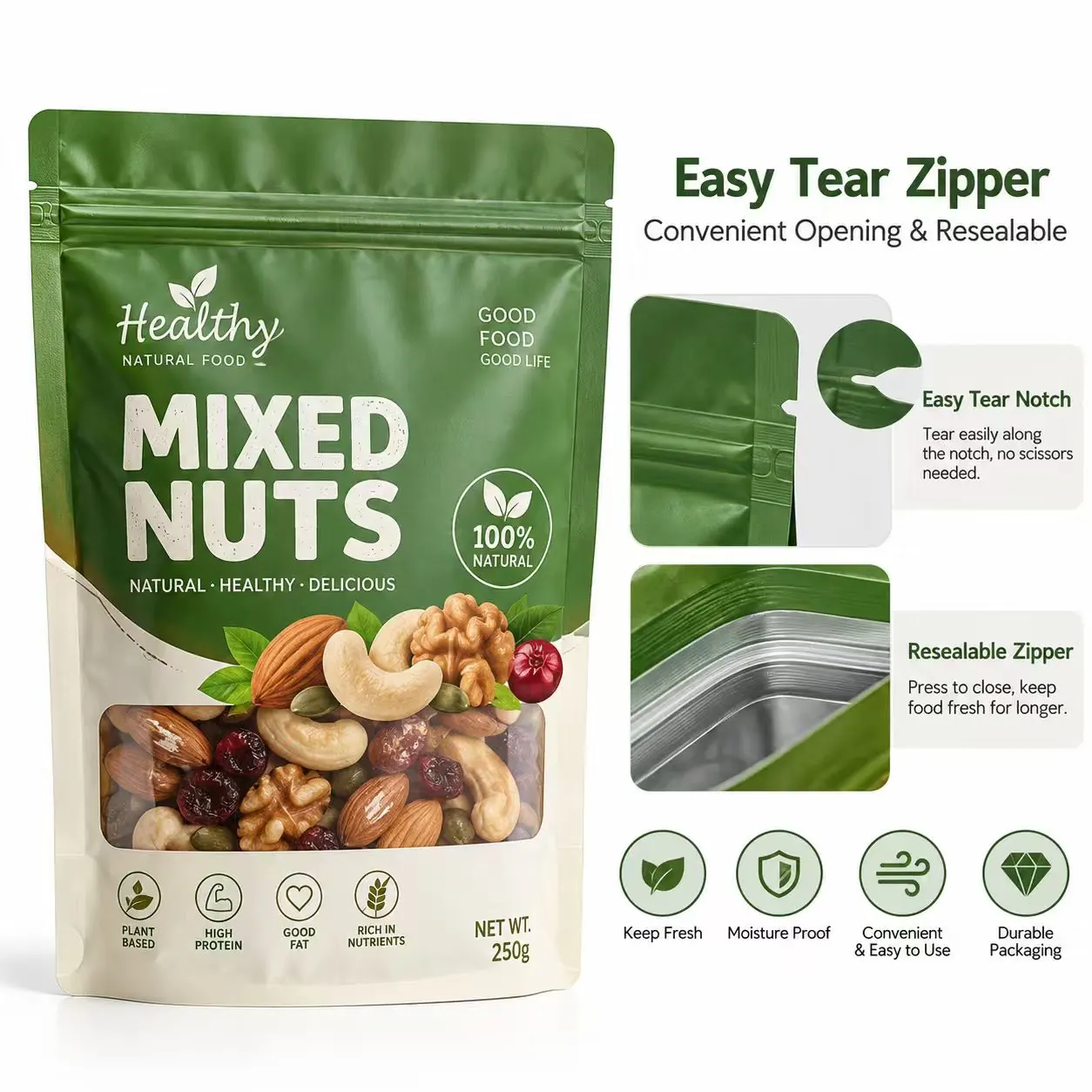
- Optional windows, zippers, and tear notches
Key Takeaways
Food Packaging at a Glance
- One factory covers dry goods, frozen, sterilized and liquid formats — the structure changes, the quality system does not.
- MOQ 100–500 pcs per design for standard pouches; 5,000 pcs for retort, spouted and venting structures.
- Every structure ships with FDA 21 CFR and EU 10/2011 food-contact reports under our BRCGS Issue 7 (Grade B) system.
- Printed samples in 5–7 days; stock samples free apart from freight.
Customization
Built to Your Specification
Material structures, formats, and finishes are tailored to your product, barrier requirements, and brand — produced in our own factory in Huizhou, China, on 10 production lines staffed by 100+ workers.
Material Structure
Multi-layer lamination matched to your barrier needs.
Formats
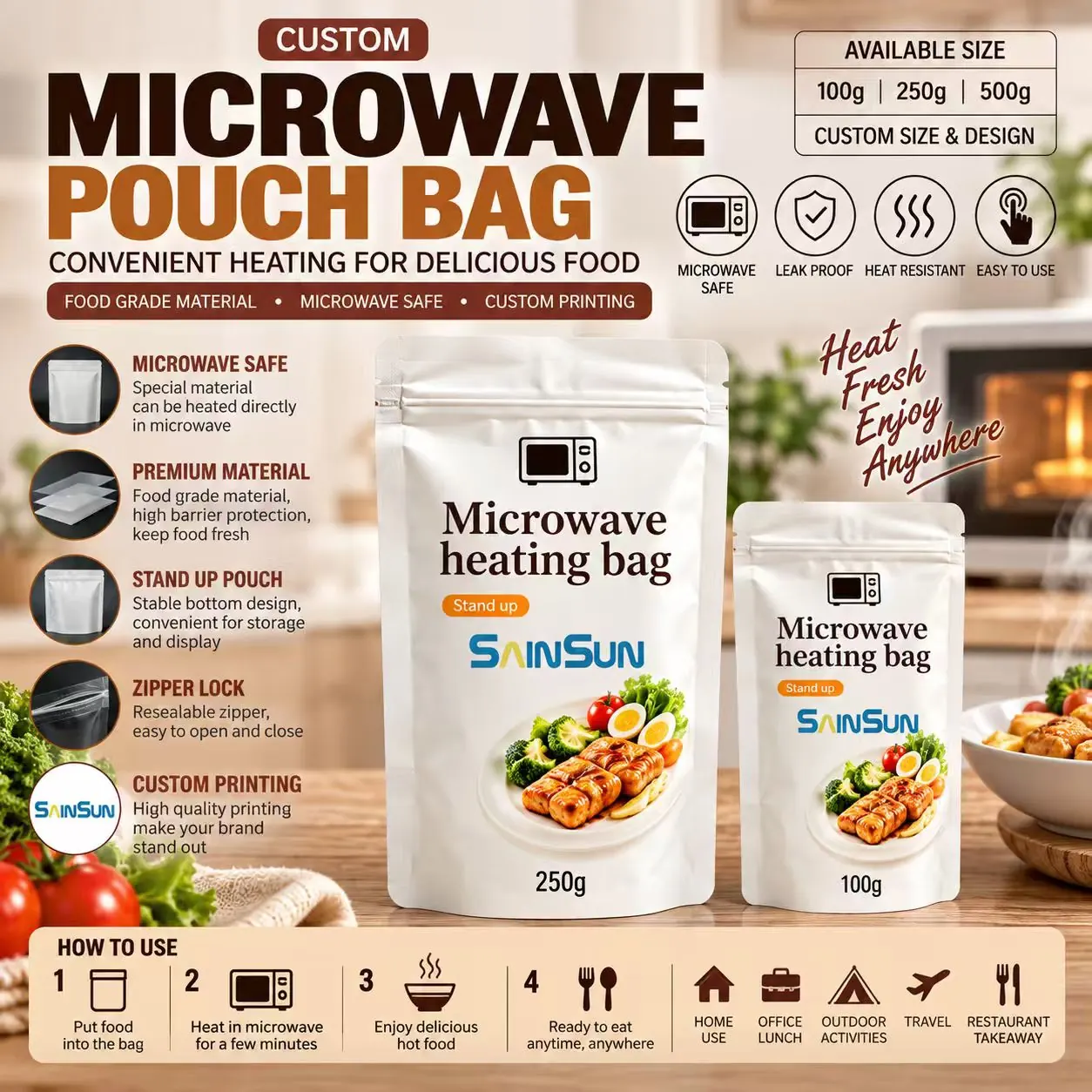
Stand-up, flat, quad-seal, spouted, and shaped pouches.
Printing
Rotogravure and flexographic, up to 10 colors.
Closures
Zippers, valves, windows, and tear notches.
Start Here
Browse Food Bags by Format
This page is the overview of what we build for snack, dry-food and confectionery brands. If you already know the pack style you need, jump straight to that format — each page covers structures, sizes, closures and MOQ for that build. If you are still weighing options, keep reading: the structure table and food-type guide below compare them side by side.
Stand-Up Pouches
The retail workhorse — 50 g samples to 2 kg bulk.
Flat-Bottom Pouches
Five printable panels and a square base for premium shelf presence.
Three-Side-Seal Pouches
Lowest unit cost for single-serve and sample packs.
Spouted Pouches
Sauces, purees and liquids with screw or flip-top caps.
Side-Gusset Bags
The classic coffee, tea and block-bottom format.
Explore
Related Product Lines
Choosing
Matching the Structure to the Food
Food packaging fails in predictable ways: moisture stales dry goods, oxygen stales fats, light fades colours, and heat during sterilization destroys ordinary sealants. Each failure has a structural answer — a barrier layer, a foil core, a retort-grade sealant — and the craft is matching the answer to the food without over-specifying and paying for barrier the product does not need.
That matching starts with three questions: what is the food, how long must it last, and through what climate does it travel? From those answers we propose two or three structures with the trade-offs spelled out, and confirm the choice on samples before production.
The same discipline applies to format: stand-up pouches for shelf presence, pillow and three-side-seal packs for cost, retort for shelf stability, venting bags for the microwave. The product pages carry each format in detail.
Structures
Food Types and Their Structures
| Food category | Typical format | Structure driver |
|---|---|---|
| Snacks & chips | Stand-up / pillow bag | Moisture and oxygen barrier |
| Confectionery & candy | Stand-up / flow-wrap | Moisture barrier and aroma seal |
| Dry goods & baking | Stand-up / pillow bag | Moisture barrier |
| Nuts & roasted goods | Stand-up pouch | Oxygen and light barrier |
| Frozen foods | Stand-up / venting bag | Low-temperature flexibility |
| Sterilized meals | Retort pouch | Retort-grade sealant for 121–135°C |
| Sauces & liquids | Spouted pouch | Seal integrity and fitment weld |
| Powders & mixes | Stand-up / flat-bottom | Moisture barrier + zipper |
FAQ
Food Packaging — Common Questions
Is the film food-grade?
Yes. All food structures are produced under our BRCGS Issue 7 (Grade B) system with FDA 21 CFR and EU 10/2011 test reports. The bags are intended for direct food contact within those limits.
What shelf life can I expect?
It depends on the structure and the product — we match the barrier to your target shelf life rather than quoting a generic number. Tell us the product and the target and we will confirm what the structure can deliver.
Can you match a competitor’s bag?
Send the bag or its specification. We match format, film and closures, and will point out where a structure change could improve shelf life or cost.
Do you support low-MOQ launches?
Yes — 100–500 pcs per design on standard structures, with several designs shareable on one order. It is how most of our food-brand customers start.
What about frozen food packaging?
Low-temperature laminates that stay flexible without cracking, plus microwave venting formats that go from freezer to microwave in one pack.
Checklist
What Speeds Up a Quote
The product
What it is, its fat or moisture content, and anything aggressive — acids, oils, spices.
Fill weight
Determines pouch dimensions and film thickness more than anything else.
Shelf-life target
Sets the barrier level — the single biggest cost lever in the structure.
Market & route
Destination and distribution climate affect both barrier and compliance documents.
Compliance
Documentation Is Part of the Product
Imported food packaging lives or dies on paperwork: the food-contact reports, the quality-system certificates and the audit records your retail customer will eventually ask to see. We treat that stack as part of the product — FDA 21 CFR and EU 10/2011 test reports for food structures, produced under our BRCGS Issue 7 (Grade B) system, with SMETA and ISO 9001 maintained alongside.
When you request a quotation, ask for the document list — we will send it with the price so nothing is discovered late.
Content last reviewed: September 2026