
Customized Flat-Bottom Pouches
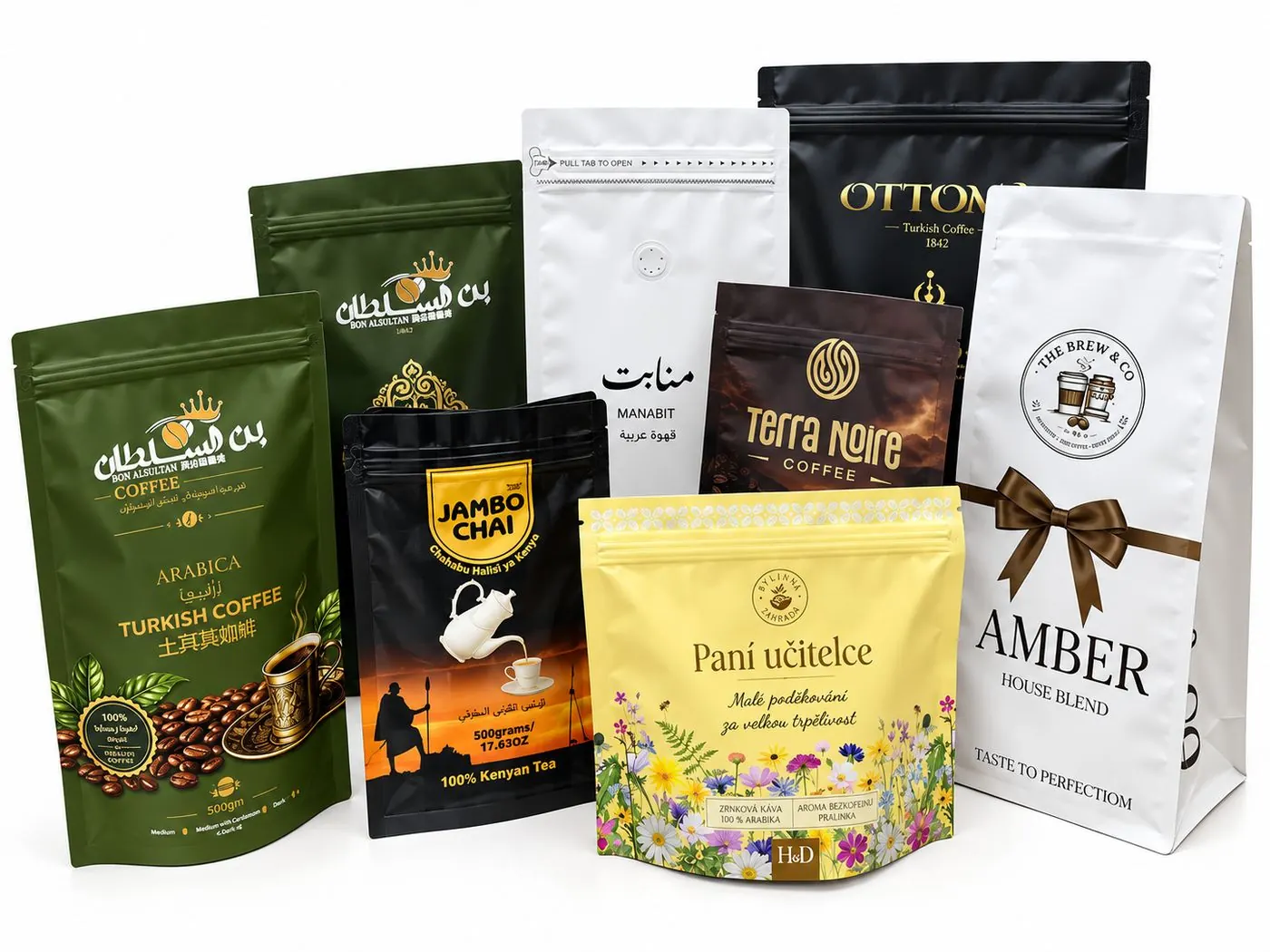
A flat-bottom pouch — also called a box pouch or quad-seal bag — gives you five printable panels and a rectangular base, so it stands square on shelf and holds its shape right down to the last scoop. It is the format most premium coffee, protein and pet-food brands settle on.
Key Features
- Five printable panels — front, back, two sides and base
- Box-shaped base holds its silhouette as the pack empties
- One-way valve, wide zipper, scoop and handle options
- Built for 200 g – 5 kg fills
Key Takeaways
Flat-Bottom Pouches at a Glance
- The format carries the largest printable surface of any flexible pouch — five panels, so no separate label or sticker is needed.
- It keeps a rectangular footprint on shelf, which palletises more predictably than round cans and wastes less display space.
- Best suited to 200 g – 5 kg fills: coffee, protein powder, dry pet food, rice, grains and dried fruit.
- A one-way valve, zipper, handle or scoop all fit on the same pouch, so the pack can be resealable and re-usable.
- MOQ starts at 100–500 pcs per design, with printed samples in 5–7 days.
Format
Why Brands Choose the Flat-Bottom Format
The flat-bottom pouch solves a specific problem. A stand-up pouch with a narrow gusset can look unstable once it is half empty, while a rigid can or jar is heavy, costly to ship and impossible to print all the way around.
Because the base is a true rectangle, the pouch sits square on shelf, stacks predictably in a carton and keeps its silhouette as the fill level drops. The two side panels create room for ingredient panels, certifications, brewing or feeding guides and multi-language copy — space that simply does not exist on a two-panel pack.
The trade-off is cost. The format uses more film and runs at a slower line speed than a standard stand-up pouch, so it is normally chosen for mid-to-premium products where shelf presence and print area pay for the difference.
Comparison
Flat-Bottom vs. Stand-Up vs. Rigid Can
| Flat-bottom pouch | Stand-up pouch | Rigid can / jar | |
|---|---|---|---|
| Printable panels | Five, including the base | Two faces plus base | Body label only |
| Shelf stability | Holds shape as it empties | Can sag below half full | Rigid — no change |
| Shipping | Ships flat, light after filling | Ships flat, light | Heavy, bulky, fragile |
| Fill range | 200 g – 5 kg | 50 g – 2 kg | Any |
| Best for | Premium coffee, protein, pet food | Snacks, powders, treats | Where a rigid pack is expected |
Specifications
Build Options
| Item | Standard options |
|---|---|
| Material structure | PET/VMPET/PE · PET/AL/PE · kraft/PE · mono-material PE for recyclability |
| Total thickness | Typically 100–180 micron, driven by fill weight and the abuse the pack must survive |
| Base construction | Reinforced rectangular base with four vertical seals; gusset depth matched to fill volume |
| Sizes | 200 g to 5 kg, plus fully customized dimensions from your dieline |
| Printing | Rotogravure and flexographic, up to 10 colours; matte, gloss, soft-touch or kraft-look |
| Closures | One-way degassing valve, wide resealable zipper, tin tie, scoop, die-cut or film handle |
| MOQ | 100–500 pcs per design for standard structures; 5,000 pcs for functional builds |
| Customized samples | 5–7 days · US$120 for 1–2 pcs · print film fee waived |
| Compliance | FDA 21 CFR and EU 10/2011 food-contact reports; produced under BRCGS Issue 7 (Grade B) |
For 2–5 kg fills we will also check the pouch against your carton dimensions, so the base is not compressed in transit.
Applications
Where Flat-Bottom Pouches Perform
Specialty coffee
250 g, 500 g and 1 kg bags with a one-way valve and a resealable zipper or tin tie.
Protein & supplements
Large print area for nutrition panels, with an optional scoop and a wide-mouth zipper.
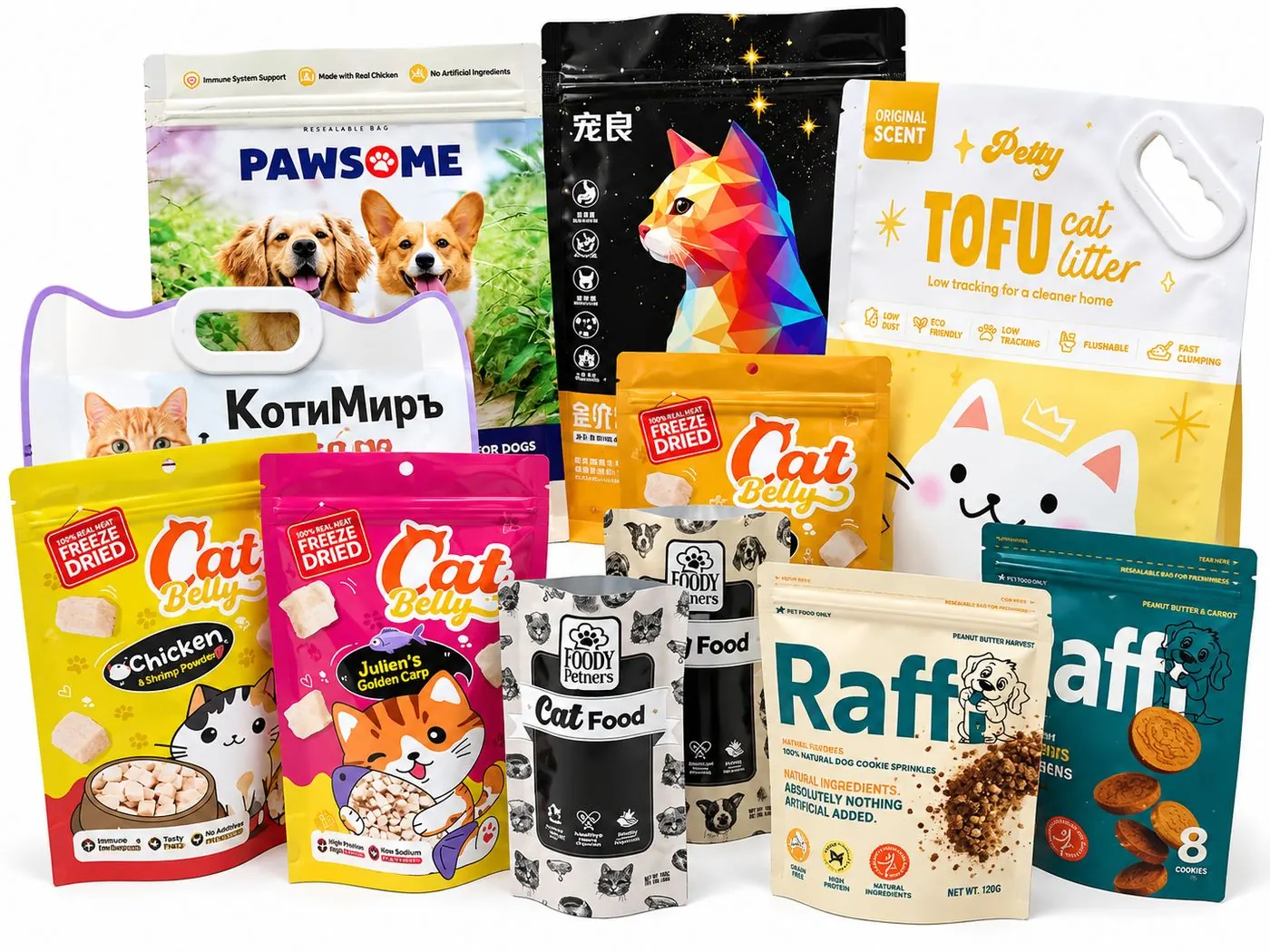
Dry pet food
2–5 kg packs with a reinforced handle and a puncture-resistant laminate.
Rice, grains & dried fruit
A rectangular base for stable palletising and clean shelf stacking.
Tea & matcha
Multi-language panels on a high-barrier metallized structure.
Premium snacks
Cold-foil or soft-touch finishes with a clear window for product visibility.
Details
Hardware That Turns a Pouch Into a Pack
Degassing valve
One-way valve releases CO₂ from fresh roast without letting oxygen back in.
Wide zipper
A resealable zipper on the top panel keeps the contents fresh after opening.
Handle
Die-cut or applied film handle for 2 kg and heavier packs.
Scoop & window
A clear window and a flat-bottom scoop fit make powders easier to portion.
Shelf Life
Matching the Barrier to the Product
For coffee and roasted nuts, the priority is keeping oxygen out and letting carbon dioxide escape — a metallized structure plus a one-way valve handles both. For long-life dry goods such as rice, grains and dried fruit, an aluminium foil layer gives the strongest moisture and oxygen barrier and the longest shelf life.
Where recyclability is a stated brand goal, a mono-material PE structure keeps the pack in the polyethylene stream, which is why more European brands are moving that way. The trade-off is a narrower processing window and slightly lower barrier than a foil laminate, so we confirm the target shelf life with you before proposing it.
Whatever the structure, we supply the food-contact documentation that goes with it: FDA 21 CFR and EU 10/2011 test reports, produced under our BRCGS Issue 7 (Grade B) system.
FAQ
Flat-Bottom Pouches — Common Questions
What is a flat-bottom pouch?
Also called a box pouch or quad-seal bag, it is a flexible pouch with a rectangular base and four vertical seals. That gives it five printable panels — front, back, two sides and base — and lets it stand square on shelf and keep its shape as it empties.
Which products suit the flat-bottom format best?
Mid-to-premium products in the 200 g to 5 kg range: specialty coffee, protein and supplement powders, dry pet food, rice and grains, dried fruit and premium snacks. The extra panels pay for themselves when you have a lot to say on pack.
Is it more expensive than a stand-up pouch?
Yes — it uses more film and runs at a slower line speed, so the unit cost is higher. It is usually chosen where shelf presence, print area or brand positioning justifies the difference.
Can it have a valve, zipper and handle?
Yes. A one-way degassing valve, wide resealable zipper and die-cut or film handle can all be fitted to the same pouch, which is common for 1–5 kg coffee and pet food packs.
What is the MOQ?
100–500 pcs per design for standard structures, and 5,000 pcs for functional or retort-grade builds. Customized printed samples take 5–7 days at US$120 for one to two pieces.
Will the pouch keep its shape in transit?
The rectangular base palletises predictably and the laminate holds its silhouette, but like any flexible pack it should be packed to the carton dimensions we confirm with your order so the base is not compressed in transit.
Next Step
Get a Structure Proposal for Your Pack
Send the fill weight, product and shelf life you are targeting. We will reply with two or three structure options, the MOQ and an indicative price.
Last updated: September 2026