
Blog
Your Bulk Order Does Not Match the Sample. Here Is Why.
When a bulk order does not match its approved sample, the cause is almost always one of four things: a different film batch, a press condition change, a re-plated design, or a fill weight that shifted the pouch geometry. Colour and dimension are the two things buyers check first, and they have different root causes — which is why 'it looks different' is not enough information to fix it. This guide sets out the four causes, how to tell them apart from the sample you kept, and what to put in the order so the next run matches.
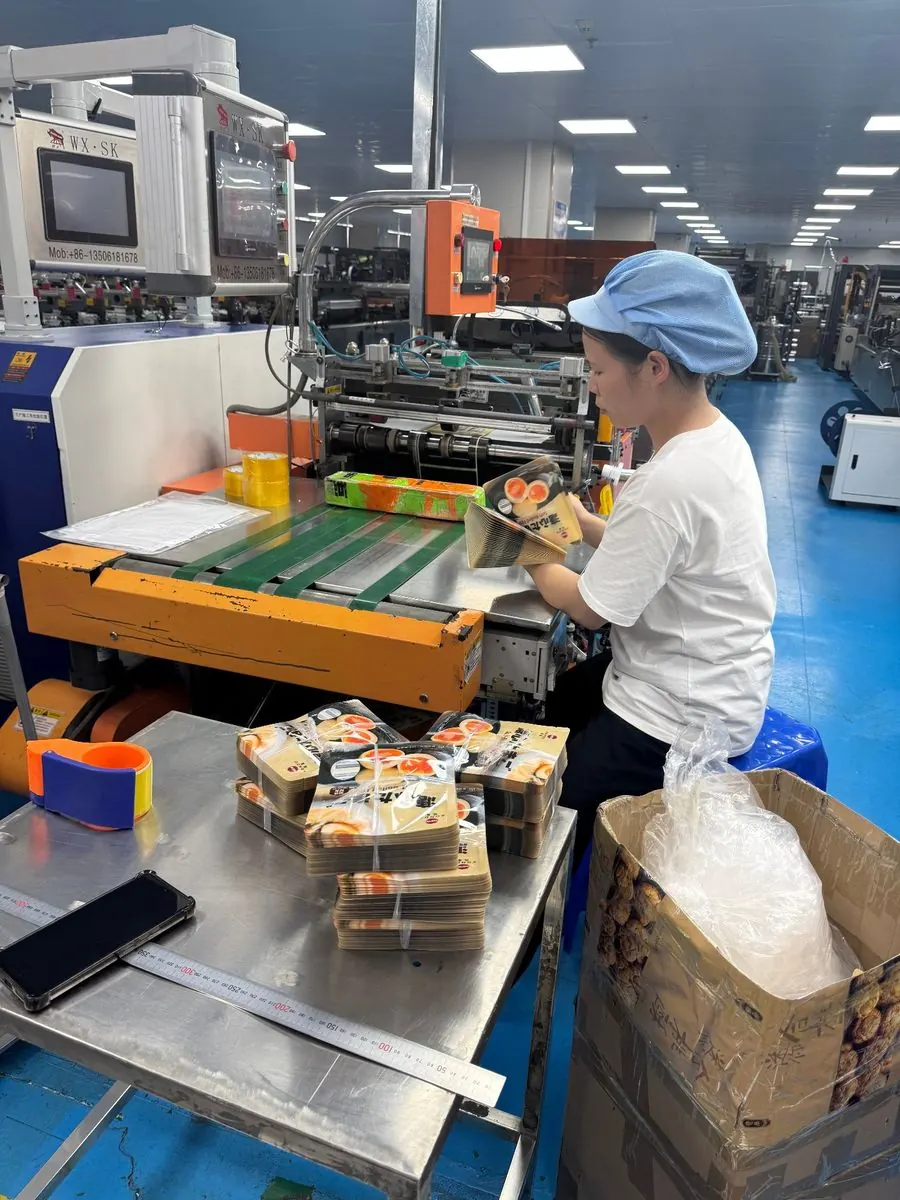
Ask any buyer what went wrong with their packaging and the answer is rarely the price. It is this: the sample was right, and the production order was not. Thicker here, duller there, a zip that felt crisp on the sample and sloppy on the carton, a colour that looked like the brand on screen and slightly muddy on the pallet.
The instinct is to call it a bait and switch. Usually it is not. It is drift — and drift has specific, predictable causes. If you know where it happens you can close the gaps before the run, instead of arguing about them afterwards.
A sample is a sales tool until you make it a specification
A structural sample exists to answer one question: does this shape and size work for my product? A print sample answers a second question: does this look right? Neither question is the same as will ten thousand of these be identical to this one.
Two things make sample-to-bulk drift almost certain unless someone actively prevents it:
- Samples are made in the sample room, production runs on the line. Sample room work is slower, checked more closely, and often made from a small quantity of film held aside for the purpose. A production run is made at speed, from a film lot purchased weeks later, on a press and a bag-making machine that have both been set up for a dozen other jobs in between.
- Nothing in the sample records the settings. If the sample does not come with a named structure (each layer and gauge), a colour reference, a measured seal strength and a retained reference piece, there is nothing for the production floor to match. It becomes a memory of a pouch, and memories do not survive a shift change.
So the first fix is not a stricter supplier. It is making the sample legible.
The four places drift actually happens
| Where | What changes between sample and bulk | How you catch it |
|---|---|---|
| 1. Film and laminate | Resin lot, gauge within tolerance, film supplier, coating weight, adhesive type (solvent-based vs solvent-free) | Structure named layer by layer with gauges on the order, not just “PET/PE”; lot number recorded per run |
| 2. Printing | Press, number of stations, ink lot, drying and register at speed, print direction, finish (gloss/matte) | A signed printed reference, a defined colour tolerance, and a proof approved on the real substrate |
| 3. Conversion | Seal temperature and pressure, dwell time, slitting position, zipper and valve placement, curing time before slitting | Named machine settings tied to the approved sample; first-article check at press start |
| 4. What “approved” meant | Approval given on a digital proof, on a different substrate, or verbally | Approval only against a physical piece on the final structure, referenced by revision |
None of these four is exotic. Each one is a normal variable in a factory. The failure is not that they move — it is that nobody agreed in advance what the acceptable range is, so nobody can tell the difference between a variation that is fine and a defect that is not.
Colour: the tolerance nobody writes down
Colour is where drift is most visible and most argued about, and it is almost always a documentation problem rather than a cheating problem.
The common misunderstanding is that a Pantone number is a guarantee. It is not. A spot colour is printed ink on a specific substrate, and the same reference lands differently on coated paper, kraft, matte PET, metallised film and white PE. A dark navy or a deep burgundy will show the difference between two film lots more readily than a pale tint will. Add a white underlay or remove it and the colour shifts again. Then there is the light you approve it under: a colour checked under an office tube and a colour checked under a D50 viewing condition are not the same colour, even when they are the same ink.
What actually controls it:
- Define a numeric tolerance, not a word. The industry measure is ΔE — the calculated distance between the approved colour and the delivered colour. A common working limit for brand-critical colour is ΔE of 2 or less, and anything above about 1.5 starts to be visible to a careful eye. Agreeing a number turns a subjective argument into a measurement.
- Approve on the real substrate. A digital proof on paper cannot predict ink on metallised film. If you cannot visit, ask for a physical printed piece on the actual structure before you authorise the run.
- Keep a retained reference. One signed piece per colour, held by both sides, dated and tied to the artwork revision. When the second order arrives, you compare against the reference, not against your memory.
- Freeze the artwork before volume. Every artwork change mid-order is a chance for the colour to move, and in rotogravure it also means new cylinders. Batch your changes.
Seal strength: the defect you cannot see on the pallet
Most of the real damage in flexible packaging is invisible when you open the carton. A weak seal looks identical to a strong one. It shows up later as a leak in transit, a compressed pillow that lost its gas, a returned pallet, or a customer complaint three weeks after the shelf date.
Two habits close this gap:
- Ask for the seal strength figure, not the assurance. Seal strength is a measured number (a peel or pull test in newtons per 15 mm of seal width). Ask what your pack is specified at and what was measured on the run. If nobody can quote a figure, the seal is not being controlled — it is being hoped for.
- Test the filled pack, not just the empty one. Seals behave differently once the pack contains powder, oil, liquid or hot product. Where the product is sensitive, a leak test on filled samples (including a water or vacuum check for pinholes) tells you more than any inspection of the flat film.
The four documents that make drift enforceable
- A specification sheet that names the structure. Each layer, in order, with gauges and the function of the layer (print web, barrier, tie, sealant). Not a summary like “three-layer laminate”. This is the document that makes two quotes comparable, and it is also the document the production floor works to.
- An approved physical reference, signed and dated, both sides holding one. Colour, finish, structure and construction in a single piece. This is the golden sample in the sense that matters: it is the thing you compare against, not the thing that was sold to you.
- A colour tolerance and a seal strength figure written into the order. Two numbers. They convert a complaint into a non-conformance.
- An inspection record per shipment. Which specification, which lot, which checks, which results, who signed. Where our customers ask for it we issue a report per shipment rather than per relationship, so each delivery carries its own evidence.
First-article at press start beats inspection at the port
There is one habit that prevents more drift than any other, and it costs nothing: check the first article when the run starts, not when the goods are packed.
A first-article check is simple. When the press or the bag machine starts the job, the first off-tool pieces are compared directly against the approved reference for colour, register, seal width, dimensions, zipper and valve position. If something is off, you correct it in minutes while the machine is still warm. If you defer everything to a pre-shipment inspection, the same error is discovered after a full run of film has been printed, laminated and converted, and the conversation becomes about who pays for the reprint instead of how to fix the setting.
We would rather catch a 2 mm valve offset on the first hundred pouches than defend it on the ten thousandth.
How we run it
Ordered in the sequence you will experience it: you send the product, the fill weight, the format and the artwork. We come back with a named structure, a colour count, a minimum tier and a line-by-line price. Printed samples run in 5–7 days at US$120 for one to two pieces, credited against the production order, and you approve against the physical piece, not a rendering on a screen. If the design is still moving, we say so, because freezing it later is cheaper than re-engraving it.
If you are comparing suppliers rather than specifications, our 12 questions for vetting a pouch manufacturer applies the same discipline to the supplier, and the cost breakdown shows where each of these levers sits in the price.
This article describes how sample-to-bulk variation is managed in flexible packaging. Measured limits such as ΔE, seal strength and barrier figures have to be set against your product, market and shelf-life requirement, and any real number belongs in a specification agreed with your supplier. Published minimums and sample terms quoted here are our terms as of 8 October 2026.
Sources and standards
Primary sources for the rules and test methods referred to in this guide:
- ASTM F1249 — Water vapour transmission rate of plastic film (ASTM)
- 21 CFR 177.1520 — Olefin polymers for food contact (US eCFR)
Frequently asked questions
Is it normal that my production order does not look identical to the sample?
Some variation is a physical certainty in printing and lamination, which is why the useful question is not whether there is a difference but whether the difference is inside an agreed tolerance. What is not normal is discovering the tolerance after delivery. If the order carries a named structure, a signed physical reference, a colour tolerance and a seal strength figure, most of the argument disappears, because both sides are measuring against the same document instead of a memory.
The colour looks duller than my approved proof. Can I claim against the supplier?
Only if you have something to claim against. If the approval was given on a digital proof or on paper rather than on the final film, there is no defined target, and the conversation goes nowhere. The practical fix is to approve a physical printed piece on the real substrate and to agree a numeric colour tolerance at the same time. With a number and a retained reference, a duller-than-spec delivery is a non-conformance you can raise.
How many samples should I keep?
Keep one signed and dated piece per colour and per size, held by both sides, and link it to the artwork revision and the specification sheet. Two or three extra pieces for your own team to fill and test are useful too, because a printed sample and a filled, sealed, stored sample answer different questions. Store them away from light and heat so the reference itself does not age into something you cannot compare against.
Do I need to pay for a new set of cylinders if only the colour shifts slightly?
Not for a small ink adjustment, which is made on press. You pay for new engraving when the artwork or the size changes enough to require it. This is the reason to freeze the design before your first volume run and to batch subsequent changes into one revision rather than releasing them a few at a time.
What is a first-article check and why does it matter?
It is a comparison of the first pieces off the machine against the approved reference, done at the moment production starts. Colour, register, seal width, dimensions and the position of zippers and valves are checked while the job is still running, so a correction costs minutes rather than a full reprint. Deferring the same check to a pre-shipment inspection converts a small setting problem into a commercial dispute.
Can I get an inspection record with each shipment?
Yes. Tell us which checks matter for your market and we will record the specification, the lot, the measured results and the sign-off per shipment rather than per relationship, so every delivery carries its own evidence. For food-contact orders we also supply the compliance documents that apply to the structure we are running.
Related reading
Have a pack like this to quote?
Send the product, how it will be filled and stored, the format or an area to advise on, and your quantity. You get back a named structure, a colour count, a minimum tier and a line-by-line price — usually within one working day.