
Blog
How to Vet a Customized Pouch Manufacturer: 12 Questions Serious Buyers Ask
“Reliable customized packaging vendors?” — on r/Packaging, a thread with that exact title resurfaces every few weeks, and the replies rarely agree. One commenter swears by a supplier they have used for years; the next warns that the same brochure was used by three different “factories.” For a food brand, a packaging partner is not a stationery order: the material touches food, the print carries your brand, and a failed shipment stalls your launch.
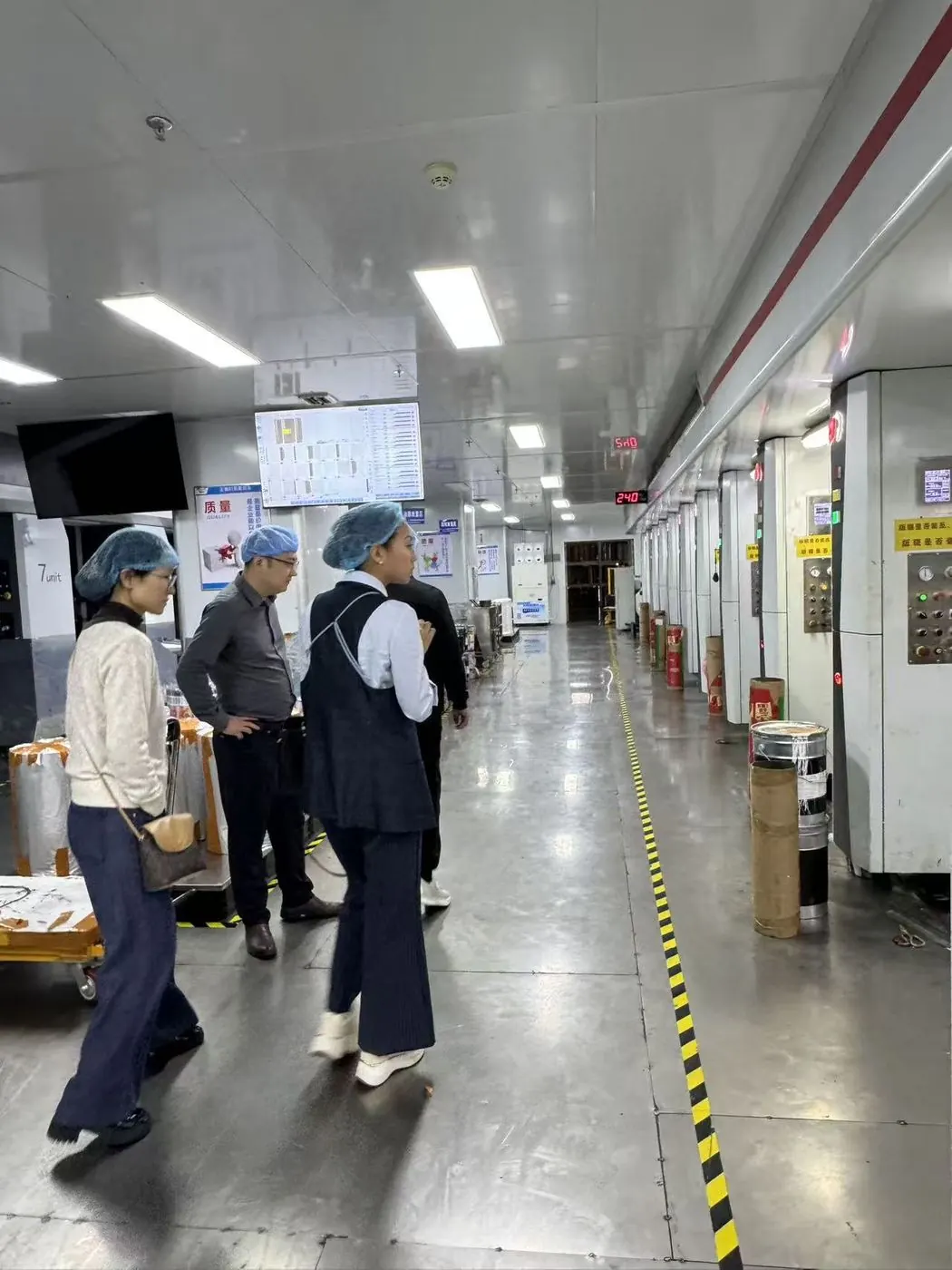
After 9 years of exporting flexible packaging — mostly to North America and Western Europe — we have been on the receiving end of every question a careful buyer asks. Here are the twelve that matter, grouped by what they actually test, and what a good answer sounds like.
Certifications & compliance (questions 1–3)
1. Which food-contact regulations do your materials comply with — and can you show the documents?
A confident factory answers with file names, not adjectives. For food pouches you want to hear EU Regulation 1935/2004 and EU 2020/1245 (migration limits) for Europe, and FDA 21 CFR for the US — followed by an email with the actual certificates. If a supplier says 𠇊ll food grade, don’t worry” without paperwork, worry.
2. Is the factory certified, by whom, and when was the last audit?
Quality management (ISO 9001) and a packaging-specific scheme (BRCGS Packaging Materials) are the baseline for export suppliers. Ask for the certificate and its scope — the certificate must name the producing site, not a head office. A third-party audit report (SGS, TÜV) with a recent date is stronger evidence than any wall plaque.
3. Can you provide migration test reports for my specific structure?
Generic test reports describe a generic film. Your structure — say, PET/AL/PE for retort or mono-PE for recyclable — has its own migration behavior. A serious factory tests per structure and per customer request, and treats this as routine.
Factory reality (questions 4–5)
4. Is the factory yours — and can I see it?
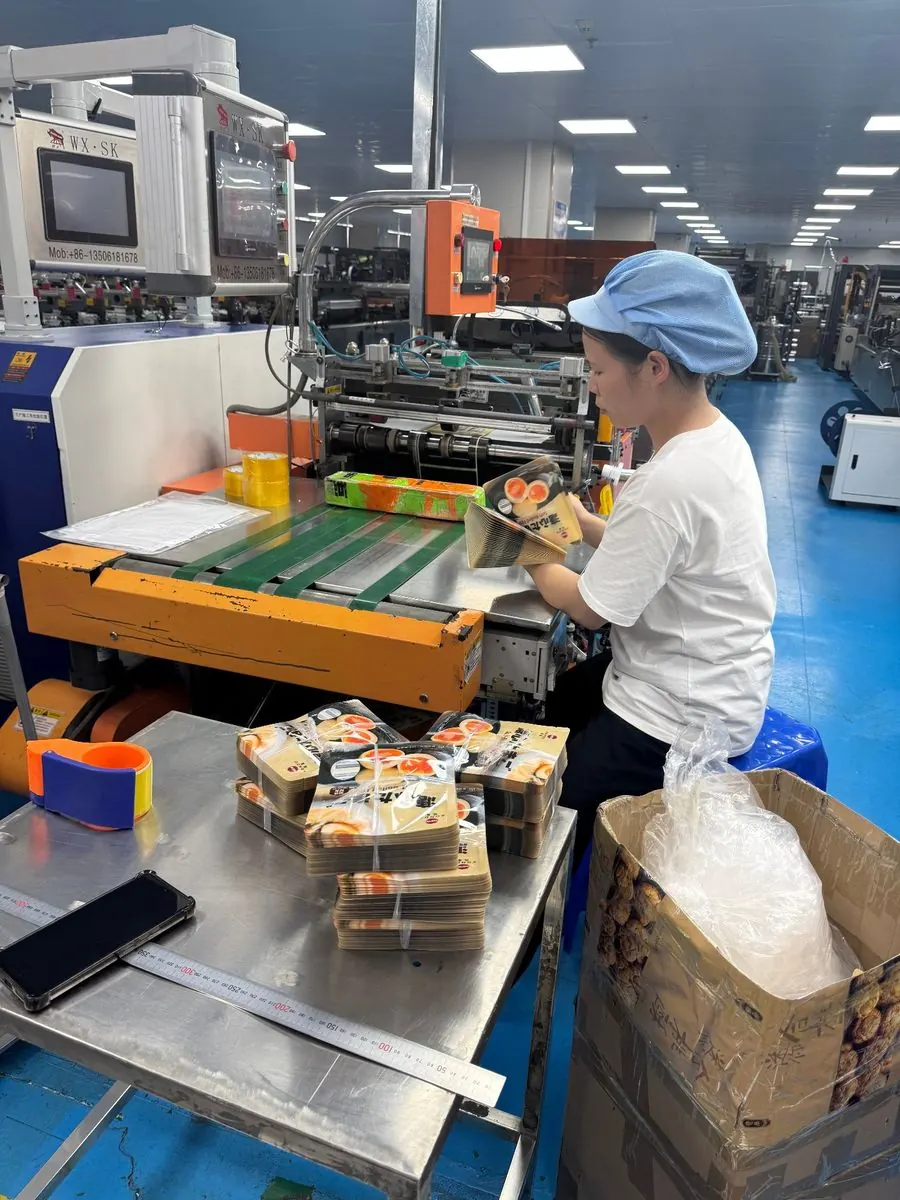
Trading companies are not evil; they just add a layer between you and the people who make your bags. Ask for a live video walkthrough of the production floor, not a polished montage. Better: check whether the supplier hosts visits. We publish real photos and videos of customer visits at our Shenzhen plant, and clients inspect goods or run audits on site year-round — a factory with nothing to hide says yes to this quickly.
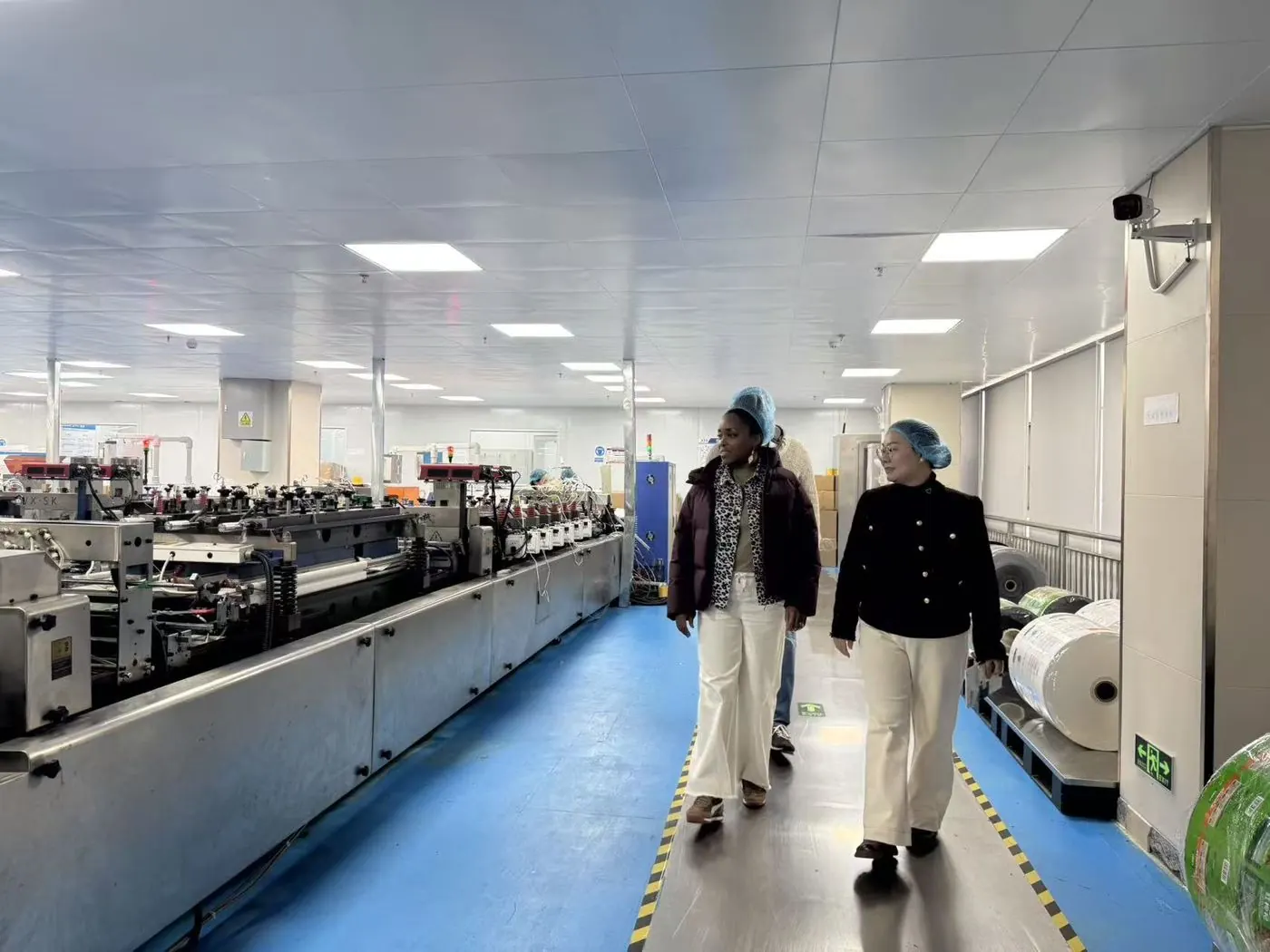
5. Who owns my project day to day?
“The sales team” is not an answer. You want a named contact who follows artwork, sampling, production and shipping — and a backup when they sleep, since time zones matter. Ask how questions are handled outside Chinese working hours; our own target is a reply within 24 hours, and most export-focused factories similar in size will promise something comparable. Then test the promise before you order.
Samples & quality (questions 6–8)
6. What is your sampling process, timeline and cost?
Expect a clear sequence: digital proof → printed film proof or physical sample → your approval → production. Typical timelines are 5–7 days for a customized sample; stock samples should be free apart from shipping. A factory that skips the proof step to “save time” is saving it for themselves.
7. How do you keep color consistent between orders?
For gravure, your cylinders are the fingerprint: kept and reused, they reproduce the same print on reorder. Ask whether cylinders are stored for you, how color is checked (standard light booth, Pantone references, tolerances), and what happens when a reprint drifts. This is where “same supplier, second order” either pays off or falls apart.
8. What testing do you run in-house?
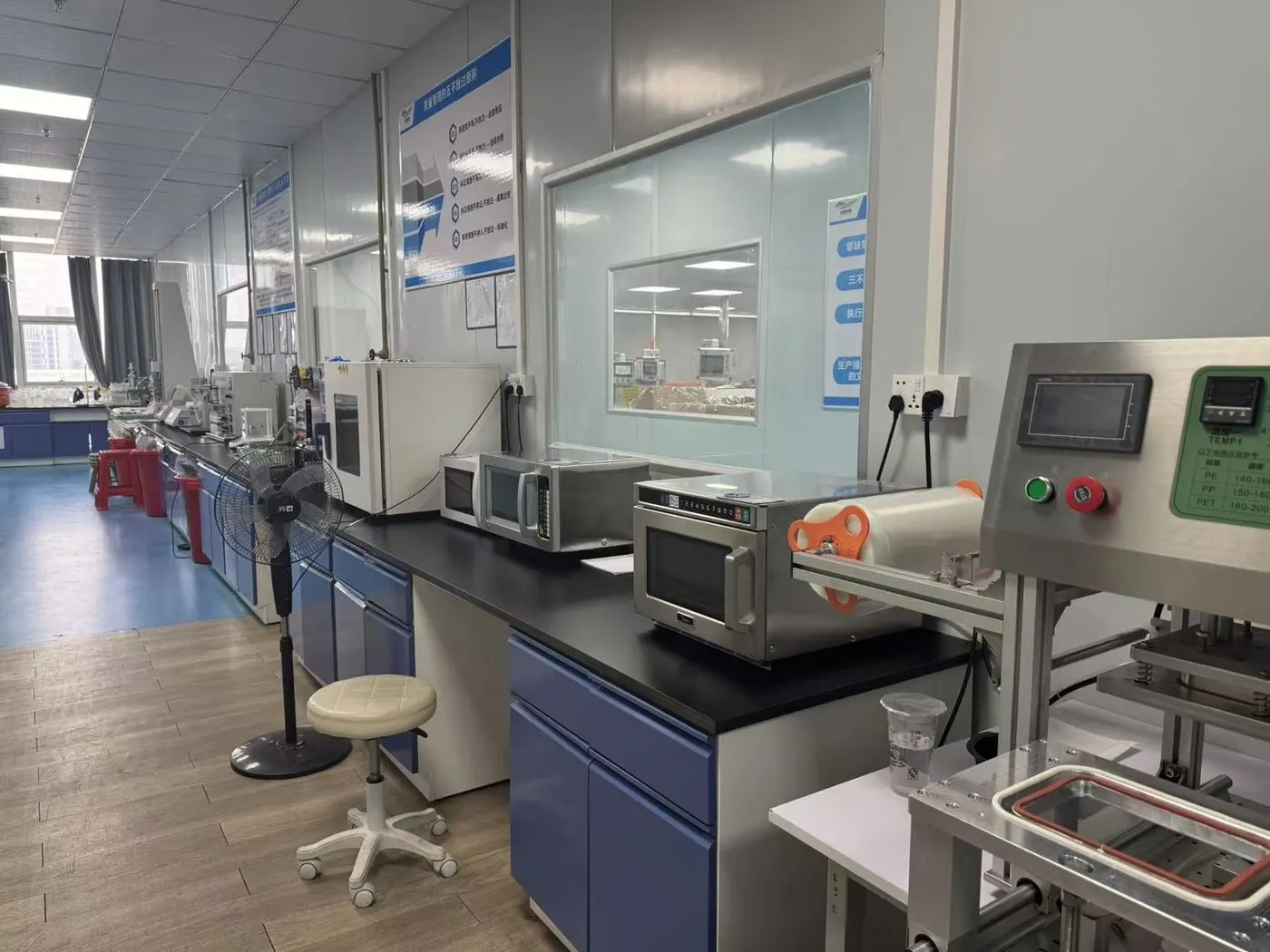
Seal strength, barrier (oxygen and moisture), retort surviving tests, drop tests — a factory with an in-house lab catches problems before a shipping container does. Ask what instruments they run and whether you can receive test reports with each batch.
Commercial terms (questions 9–12)
9. What exactly does the quoted price include?
EXW, FOB or CIF? Port charges? Freight forwarder coordination? A quote that looks 20% cheaper can lose the difference in surprises. Ask for the price broken down and the incoterm stated in writing.
10. What is the real lead time after artwork approval — and what if it slips?
Digital runs are commonly 7–15 days, gravure 15–25 after approval, plus shipping. The better question is what compensation or escalation exists when a date moves. Factories that plan capacity honestly will tell you their busy season upfront.
11. How does reordering work — will my tooling be kept?
For gravure orders, confirm that cylinders are stored on your behalf (typically free for a fixed period) and that reorders skip the tooling cost. For digital, confirm that your artwork and color references are archived so reorder #3 matches order #1.
12. What happens if a shipment arrives defective?
You are not being difficult by asking; you are asking how they behave under stress. A mature supplier has a written claims process: evidence required, remedy offered (reprint, credit, refund), and timeline. Get it stated in the contract, not in a WeChat message.
Five red flags that end the conversation
- Catalogues and MOQ sheets on request, but no certificates ever attached.
- A quote far below the market range with vague terms and no breakdown.
- Refuses a live factory video call or third-party inspection.
- “Yes” to every spec without asking about your product, filling method or shelf-life target — real engineers ask questions first.
- Cannot name the certifications of the films they buy from their own suppliers.
What the good answers have in common
Notice the pattern in every strong answer: specific, verifiable, documented. A factory relationship works when promises survive being written down. That is the standard we hold ourselves to at Sainsun — SGS-audited, ISO 9001 and BRCGS-certified production in Shenzhen, EU and FDA food-contact documentation per structure, and customers who visit the floor before their first order and return for their fifth year of reorders.
Use the twelve questions on any supplier you are evaluating — including us. If you want to see how our answers look, start with our FAQ or send a specification through the contact page and ask us anything on this list.
Frequently asked questions
Do I need a sourcing agent to buy pouches from China?
No. A direct factory relationship works well when documentation is clear — certificates, proofs and a written claims process. An agent adds cost but can help with consolidation across categories; for a single packaging line, most brands do better dealing with the factory directly.
How can I verify a Chinese factory is real?
Four checks: business license matching the bank account name, a third-party audit report (SGS/TÜV) naming the site, a live video walkthrough of production, and references you can email. A real factory passes all four without friction.
Which documents should I receive before production starts?
At minimum: food-contact certificates for your structure, migration test report if required by your market, the signed artwork/color approval, and the commercial contract stating incoterm, lead time and claims process. If any of these is missing, pause the deposit.
Related reading
Related: Factory tour
Need customized pouches with real low minimums?
Standard pouches from 100–500 pcs, free stock samples, pre-production samples in 5–7 days. Send your product and size — we reply within 24 hours.