
Blog
How to Choose a Food Pouch Manufacturer (Print, MOQ, Compliance)
The difference between a food pouch manufacturer and a trading office shows up in three documents: the lamination record, who owns the print plates, and a batch record from a previous order. Food-contact compliance is the second filter — a supplier who cannot name the migration test and its standard is relaying someone else's certificate, not holding one. This guide gives the twelve questions in the order that produces disqualifying answers fastest, the answers a real factory gives without hesitation, and what to look for on a video walkthrough.
Most bad experiences in customized food packaging do not start on the production line. They start at supplier selection: a quote that looked 30% cheaper, a salesperson who answered fast, and a factory that turned out to be an office above a factory — or not near any factory at all. By the time the problem shows up, it is a pallet of pouches with your brand on them.
The fix is not a bigger budget. It is a short list of questions that are easy for a real manufacturer to answer and very hard for everyone else to fake. Ask them to every supplier on your list, including us — the answers, and the speed and specificity of the answers, tell you most of what you need to know.
Compliance: four questions that filter hardest
- “Which food-contact regulations does my structure comply with, and can I see the report?” A real factory names the specific rules — FDA 21 CFR for the US market, EU Regulation 10/2011 for Europe — and sends a report that names your actual layers, not a generic certificate with a logo on it. If the report cannot name your structure, it does not cover your pouch.
- “What certifications does the factory itself hold?” For food packaging, the answer you want is BRCGS for packaging materials (ask which issue and grade), plus ISO 9001. These are factory audits, not product tests — they are what your retailer’s quality team will ask you for, and a trading company cannot show you its own because it has none.
- “Who does the migration testing, and when was it last done for my structure?” Overall and specific migration testing has a validity window tied to the materials. “We test every structure” is weaker than “this structure was tested in [month, year], here is the report.”
- “Is the ink system food-safe for my application?” Printing on the outside is easy; low-migration ink systems for the inner sealant side, and compliance for indirect contact, are where cheap quotes cut corners.
Engineering: can they actually build your pouch
- “What structure do you recommend for my product, and why?” The answer should start with your food — its moisture, fat, oxygen sensitivity and shelf-life target — not with their stock film. If a supplier quotes one structure for every enquiry, they are reselling something.
- “What is my pouch’s seal window, and how was it determined?” Real factories talk about seal windows and verify them on their own pouches with your product or a simulant. This connects to filling-line fit too — if you run a VFFS or pre-made pouch machine, ask how the pouch will run on it. Our filling-line compatibility guide covers the failure modes.
- “Who owns the printing cylinders?” Gravure cylinders are a real, one-time per-design cost. If you pay for them, they should be yours — stored for your reorders, movable if you change suppliers. Get this in writing; it is the single most common lock-in trap in this industry.
- “What happens if the bulk does not match the sample?” Every supplier says it will match. Good ones describe the mechanism: first-article inspection against the approved sample, retained samples from your batch, and a defined remedy. Our sample-to-bulk guide explains what to demand.
Commercial: MOQ, pricing and the factory floor
- “What is your real MOQ for my structure, and why?” Two numbers should exist: one for standard digitally printed pouches (100–500 pieces per design is a normal floor) and a higher one for demanding structures like retort and spouted pouches (typically 5,000). A supplier quoting one MOQ for everything is quoting a wish.
- “What is included in the unit price — and what is not?” Cylinders, artwork, plates, freight terms and duties all sit outside the pouch price. The cleanest way to compare two quotes is landed cost, not unit price — our landed cost guide walks the math.
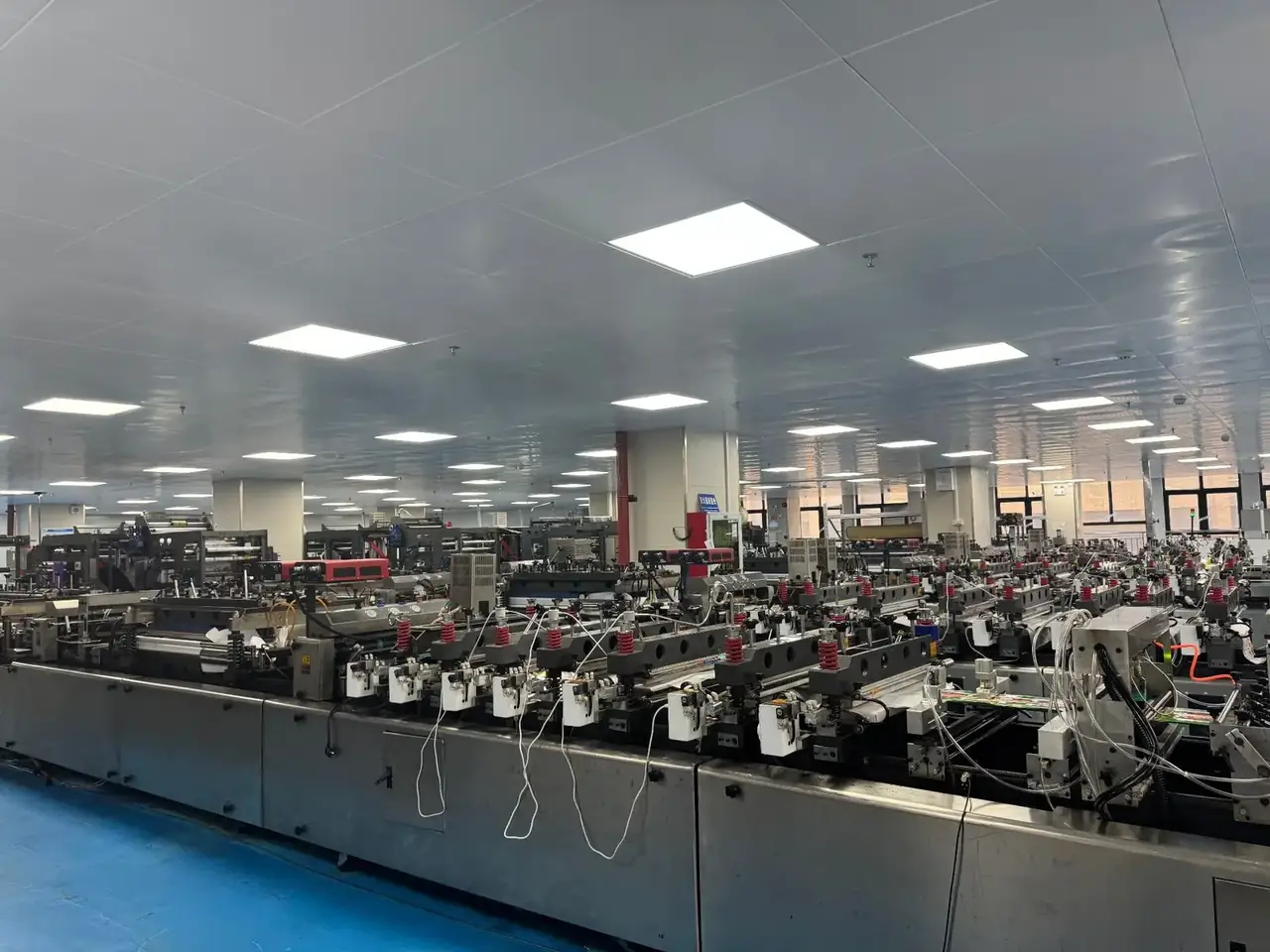
- “Can I see the production floor?” Not a brochure — a live video walkthrough or a visit. You want to see laminators, bag-making machines, a QC area and film in the warehouse. A real factory schedules this in days. Ours in Shenzhen — a 10,103 m² facility with 10 production lines and 100+ staff — is on the factory tour page, and live video walkthroughs are a standing offer.
- “Who do I actually talk to when something goes wrong?” In a factory with its own production, the salesperson can walk to the floor. In an office reselling production, the answer travels through another company’s queue. Ask how long a first-article response takes when a problem is found on the line.
A simple way to score the answers
Give each supplier one point per answer that is specific (names a number, a document, a date or a machine) and zero for answers that are reassuring but vague. Compliance and engineering weigh double — they are where reprints, customs holds and retail audit failures live. In our experience the pattern that emerges is consistent: real factories are fastest and most specific on compliance and engineering, and most cautious on price; intermediates are the reverse.
One more filter that costs nothing: send the same artwork and product brief to two or three suppliers and compare the questions they ask back. The one that asks about your product before quoting your pouch is the one whose structure recommendation you can actually trust. Start from the food pouches category guide to know what should be asked, and from the sizing guide so the size conversation happens before the price conversation.
How we answer these questions
Everything above is the checklist we run on ourselves. Food-contact reports and BRCGS Issue 7 (Grade B) certification ship with every structure; cylinders stay yours; MOQs are published per structure; and the factory floor is one video call away. Send your product brief and artwork to our contact page and we will come back with a structure recommendation, the compliance documents for it, and a costed sample path — usually within 24 hours.
This article is general supplier-selection guidance. Compliance requirements vary by product category, claim and destination market; confirm the specific documents your retailer and regulator require before ordering.
Sources and standards
Primary sources for the compliance references in this guide:
- 21 CFR 177.1520 — Olefin polymers for food contact (US eCFR)
- EU Regulation 10/2011 — Plastic materials in contact with food (EUR-Lex)
Frequently asked questions
How do I verify a pouch manufacturer is actually a factory?
Ask for a live video walkthrough of the production floor at short notice — laminating, bag-making and QC in one unbroken call — and check the business licence scope plus factory audits like BRCGS that certify a production site, not a company name. A visit or third-party inspection report (SGS, TÜV) closes any remaining doubt.
What certifications should a food packaging manufacturer have?
At minimum ISO 9001 for the quality system and BRCGS for packaging materials (food-grade audiences), with product-level food-contact reports against FDA 21 CFR (US) or EU Regulation 10/2011 (EU) for your specific structure. Retailers increasingly require the BRCGS certificate from their suppliers directly.
Why do MOQs differ so much between suppliers for the same pouch?
Because the MOQ reflects what happens after the sale. Factories with their own bag-making lines can schedule short runs; resellers inherit another factory’s batch minimums and round up. Also, digitally printed stock sizes run from 100–500 pieces, while custom-width gravure production starts higher because cylinders and setup are per-design costs.
Are cheaper quotes from trading companies always worse?
Not always — some add value in design or logistics. The risk is traceability: when the film structure, food-contact report and production batch all belong to someone else, problems take longer to diagnose and nobody owns the remedy. If you use an intermediary, require the factory’s own compliance documents and audit rights in the contract.
How long should a food pouch manufacturer take to quote?
A structure-level indication within one business day is realistic when your brief names the product, fill weight and destination market. A firm costed quotation with compliance documents typically takes two to three business days, because the layers, sealant and print method need to be specified first — instant quotes usually mean stock answers.
Have a pack like this to quote?
Send the product, how it will be filled and stored, the format or an area to advise on, and your quantity. You get back a named structure, a colour count, a minimum tier and a line-by-line price — usually within one working day.