
Blog
Landed Cost for Printed Pouches: What Actually Lands in Your Unit Price
Landed cost is the pouch price plus freight, duty, and the cost of the failures the cheap option produces — and the third line is the one buyers leave out. On a first order the freight and duty lines can add a significant share to the unit cost, which changes which supplier is actually cheaper. This guide builds the landed-cost calculation line by line and shows where a lower pouch price stops being a saving.
A buyer compares two quotes, finds a 30 percent gap, and picks the cheaper one. Three months later the finished cost per pouch has closed most of that gap — because the second quote included something the first one had quietly left out, or because the first one shipped earlier from a different port, or simply because duty and freight were never in either number.
The FOB price on a quotation is not what a pouch costs you. It is one line in a longer calculation, and the lines below are the ones that decide whether importing was actually a good decision.
The lines that land in your unit cost
| Line | What it covers | How it behaves |
|---|---|---|
| 1. Goods | The pouch itself: structure, print, conversion, per your quantity tier | Falls with volume; the only line most quotes show |
| 2. One-off setup | Prepress, engraving or cylinders, plate costs, artwork work | Fixed per design; amortised over the order and reusable on reorders |
| 3. Export packing | Cartons, inner liners, pallets, palletisation and strapping | Scales with volume and with how much handling damage you will accept |
| 4. Inland freight to port | Trucking from factory to load port | Fixed per shipment; relatively minor but real |
| 5. Main freight | Ocean or air from origin to destination | Charged largely on volume for flexible packaging, not weight |
| 6. Insurance | Cargo cover for the shipment value | Small percentage of value; cheap relative to the risk |
| 7. Duty and tariff | Import duty per the classification and origin of the goods, plus any additional measures in force | Percentage of declared value; changes with policy, not with your order |
| 8. Clearance and brokerage | Customs entry, documentation, port and terminal charges, and destination handling | Mostly fixed per shipment — which is why small shipments suffer |
| 9. Inland delivery | Port to your warehouse or co-packer | Fixed per shipment plus distance |
| 10. Cost of cash | Deposit paid weeks before delivery, plus the time inventory sits before it sells | Invisible in a quote and often the largest swing between two offers |
Line 10 is the one people skip. A pouch ordered at a lower price but with a longer transit and a longer production window ties up your money and your shelf-life clock for longer. If your product launches late because the bags were late, the extra weeks cost more than the margin you saved.
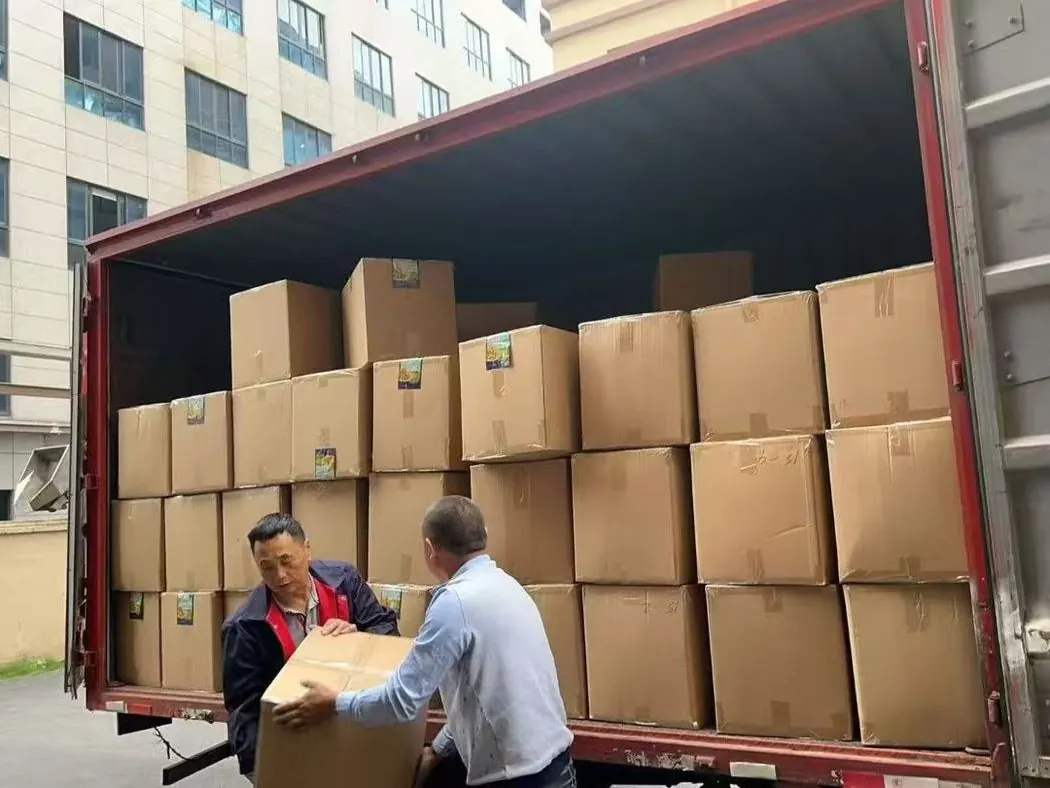
Flexible packaging is billed on space
This is the structural fact that surprises buyers most. A container load of printed pouches is mostly air. Finished pouches are packed flat or lightly, so a shipment of a hundred thousand pouches occupies far more cubic metres than its weight would suggest. Ocean freight for LCL shipments is priced per cubic metre against a minimum, and air and express freight is priced on volumetric weight derived from the carton dimensions.
Two consequences worth designing for:
- Reducing packed volume is a real cost saving. Carton size, how the pouches are nested, whether they are packed flat or on edge, and how many cartons fit on a pallet all change what you pay for freight. It is worth asking your supplier how the goods are packed, not just how many there are.
- Small frequent shipments are punished by fixed charges. Clearance, brokerage, terminal and delivery charges are largely per shipment. Splitting one container-sized order into four smaller ones can multiply those fixed lines far beyond any benefit from lower inventory.
What changed for low-value shipments
For years, many small brands built their import math around a de minimis threshold — the value below which a shipment entered the United States without duty. That assumption needs revisiting. The United States suspended the US$800 de minimis exemption for shipments from China and Hong Kong in May 2025, and extended the change to all origins later that year. Low-value parcels that previously arrived duty-free now generally face duty.
In the European Union, VAT on imports is charged at the point of entry for business imports and collected differently for low-value consumer consignments, while duty treatment depends on the value and the classification. In the United Kingdom, import VAT and duty operate on their own thresholds.
The practical advice is not to memorise rates — they move — but to stop assuming. Before you price a landed cost, establish three facts for your own destination: the tariff classification of the goods, the duty treatment that applies to that classification from your country of origin, and any additional measures currently in force. Your customs broker or the destination country's official tariff schedule is the authority; a supplier, including us, is not.
Incoterms: agree what the price includes before you compare it
Most of the confusion in comparing quotes comes down to a single missing word. These are the terms that matter for pouch imports:
- EXW (ex works) — the price covers the goods at the factory door. You arrange and pay for everything after that. Cheapest-looking number, most of the cost still ahead of you.
- FOB (free on board) — the price includes delivery to the origin port and loading. Main freight, insurance, duty and destination charges are yours. This is the most common basis for a supplier quote and the most comparable one.
- CIF (cost, insurance, freight) — the supplier also pays main freight and insurance to your destination port. Duty, clearance and inland delivery remain yours.
- DAP and DDP — the supplier delivers to a named place at destination, and under DDP also clears customs and pays duty. Simple for the buyer, but you are trusting the supplier's duty estimate, and DDP is not available in every market.
A price with no Incoterm and no named place is not a comparable price. Ask for FOB, with the named origin port, from every supplier you are comparing, and add your own freight and duty estimates on top. Then you are comparing goods to goods.
How to build the number
- Get FOB with a named port, plus the one-off setup called out separately.
- Ask the volume and the packing. How many cartons, what carton dimensions, how many per pallet. This is what freight is priced on.
- Get two freight quotes for that volume, door to door, and note the transit time for each.
- Get the duty rate for the classification and origin from your broker, and confirm it in writing.
- Add clearance, terminal, delivery and insurance. Your broker can estimate these per shipment.
- Divide the total by the number of pouches in the shipment. That is your landed cost per pouch at that quantity.
- Repeat at the next quantity tier. Landed cost per pouch changes shape as the fixed lines spread over more pieces, and the tier where it stops improving is the tier you should be ordering.
Once you have that, the supplier comparison becomes straightforward and two quotes with very different unit prices often converge. That is a good outcome: you learn which supplier is genuinely cheaper and which was simply quoting less of the journey.
How we quote
We quote FOB with the named port, with the structure and gauges named and the one-off exposure called out separately from the recurring cost, so you can build a landed cost without guessing what is inside our number. Sea freight from our region runs roughly 14–18 days to the US West Coast and 25–30 days to Europe, and we will tell you which packing arrangement minimises your freight where that matters. Published terms: printed samples in 5–7 days at US$120 for one to two pieces, credited against the production order.
If the gap you are trying to close is on the goods line rather than the freight line, the cost breakdown shows which specification decisions move the price, and the supplier vetting questions cover how to confirm you are dealing with the party that actually makes the pack.
This article is a framework for building a landed cost, not advice on duty or tax. Tariff classifications, duty rates, de minimis treatment and VAT rules change and differ by market; confirm them with a customs broker or the destination country's tariff authority before relying on them. Transit and sample terms quoted here are our published terms as of 20 October 2026.
Sources and standards
Primary sources for the rules and test methods referred to in this guide:
Frequently asked questions
Why is my landed cost so much higher than the unit price I was quoted?
Usually because the quoted price was FOB — the pack at the origin port — and your landed cost also carries main freight, insurance, duty, clearance, terminal handling and inland delivery. Fixed charges are also spread over the whole shipment, so they weigh heavily on small volumes. Build all the lines before comparing two suppliers, otherwise you are comparing goods to a delivered pack.
Should I ask for DDP instead so I know the final number?
DDP gives you one number and shifts the customs work to the supplier, which is genuinely convenient. The trade-off is that you are trusting their duty estimate, you lose visibility of what each line costs, and DDP is not available in every market. Many buyers find FOB plus their own broker both cheaper and more transparent once volumes justify it.
Does a lower unit price always mean a cheaper pouch?
No. Two quotes with different unit prices can converge once freight, duty and packing are included, and a supplier with a longer production and transit window ties up your cash and your shelf-life clock for longer. Compare landed cost per pouch, and compare the timeline, before deciding which offer is cheaper.
How is freight calculated for pouches?
Mostly on volume rather than weight, because finished pouches are bulky and light. LCL ocean freight is priced per cubic metre with a minimum, and air and express services convert carton dimensions into a volumetric weight. That means carton size and packing arrangement change what you pay, so it is worth asking how the goods will be packed.
What changed about the US de minimis exemption?
The United States suspended the US$800 de minimis exemption for shipments from China and Hong Kong in May 2025 and extended the change to all origins later that year, so low-value parcels that used to enter duty-free generally now face duty. If your import math was built on that threshold, it needs rebuilding. Confirm current treatment with a customs broker.
How do I make two suppliers comparable?
Ask both for FOB with the named origin port, with the one-off setup shown separately, plus the carton count and dimensions. Add your own freight, duty and clearance estimates to each. Then both quotes describe the same journey, and the difference you see is a difference in the goods.
Have a pack like this to quote?
Send the product, how it will be filled and stored, the format or an area to advise on, and your quantity. You get back a named structure, a colour count, a minimum tier and a line-by-line price — usually within one working day.