
Blog
Why Pouches Jam on the Filling Line, and What to Specify
A pouch that does not run on your filling line is a pouch you cannot use, regardless of how well it meets its specification — and the incompatibility is usually detectable from the drawings. Seal width, pouch stiffness, gusset depth and the zipper position each have a machine requirement, and one mismatch stops the line. This guide gives the questions to ask your filler before ordering, and the drawing details that decide whether a pouch will run.
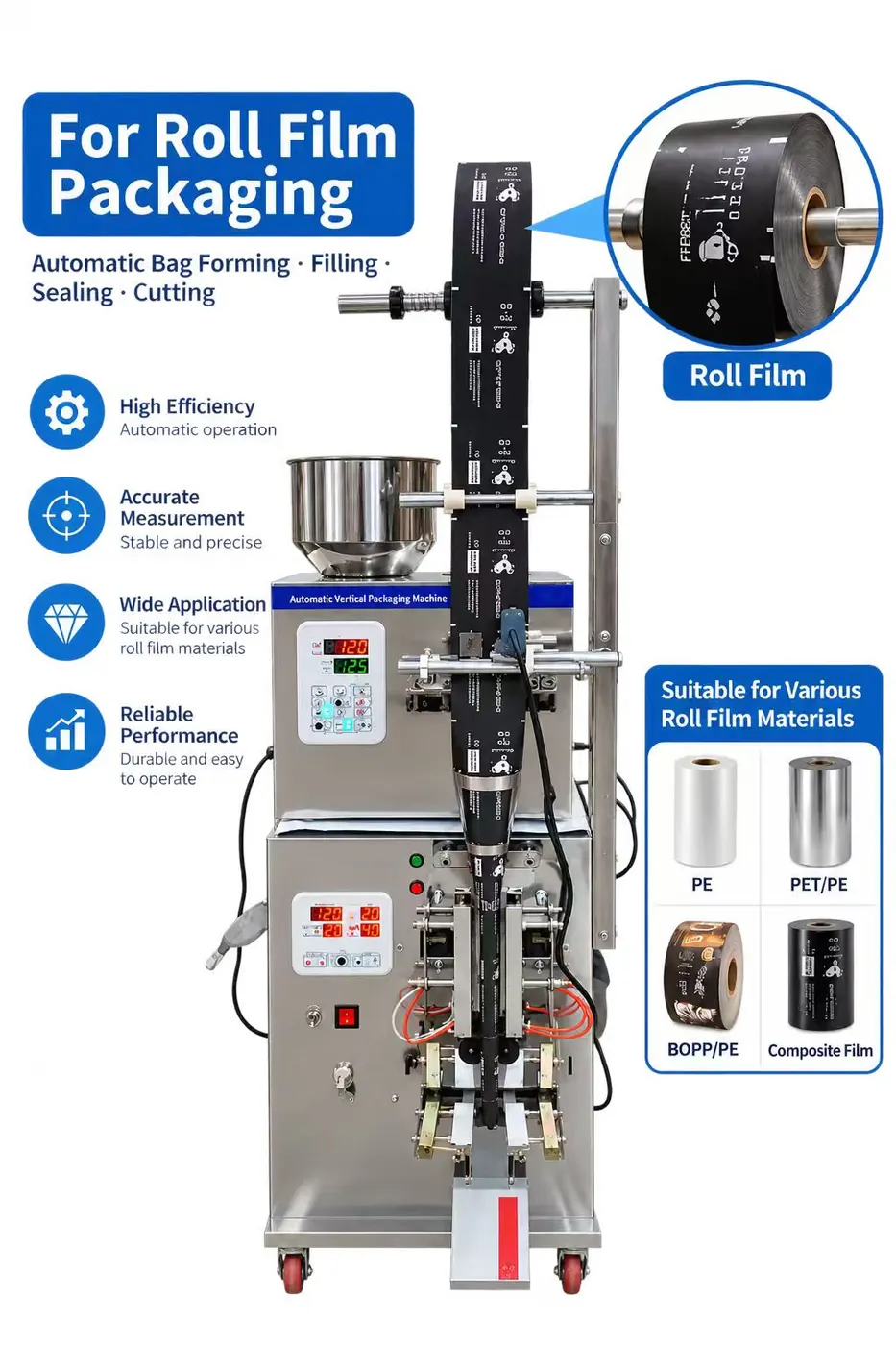
There is a specific kind of bad day in packaging. The pouches arrive, they look exactly like the sample, the first twenty fill by hand without complaint, and then the line runs and the machine stops. Bags slip in the jaws. The zipper catches. The web tracks to one side. Seals come out weak at speed. Forty bags a minute becomes eleven, then zero.
When this happens, the instinct is to blame the pouches. Usually the pouches are fine — they were simply specified for how they look on a shelf and never for how they behave on a machine. Those are different specifications, and only one of them is in the sample photo.
First question: roll film or pre-made pouches?
Before any pouch detail matters, the machine decides everything. Two systems, two entirely different conversations:
- Vertical form-fill-seal (VFFS) from roll film. The machine makes the bag from a web, seals it, fills it and seals it again. Here your converter is not supplying pouches at all — they are supplying film, and what matters is web behaviour: width, unwind direction, friction, stiffness, thickness tolerance, and how the film survives being pulled, folded and heat-sealed dozens of times a minute.
- Pre-made pouch filling lines. The pouch exists before it reaches the machine. A magazine picks a pouch, jaws open it, a funnel fills it, and the top is sealed. Here what matters is pouch geometry and mechanical behaviour: how the pouch sits in the magazine, whether the opening presents properly, whether the zipper interferes with the gripper, and whether the pouch survives being dropped into a carton.
This is why a pouch spec cannot be copied between factories. The same pouch that runs beautifully on one filling line can be unworkable on another, without either machine being wrong.
The six variables that actually cause jams
| Variable | What it does on the line | How to control it |
|---|---|---|
| 1. Friction (coefficient of friction) | Too slick and the web mis-tracks or the pouch slides out of alignment; too tacky and the film drags, stretches or sticks to itself | Specify friction alongside the structure, and tell your converter the machine type if you are moving an existing specification |
| 2. Thickness tolerance and stiffness | A thin gauge bulges or folds unpredictably; a stiff film refuses to form tight corners or opens poorly at the fill station | Agree the gauge and the tolerance band, and keep it consistent between reorders — a change here is a change on the line |
| 3. Seal layer and seal window | Too narrow a seal window gives weak seals whenever line speed or product temperature moves | Tell your converter the target speed and whether the product is filled hot, cold or frozen |
| 4. Gusset geometry and dimensions | Wrong gusset depth makes the pouch refuse to sit square, angle into the funnel or fold unevenly on the drop | Specify width, height and bottom gusset together, and fill-test before printing |
| 5. Zipper and closure position | A zipper inside the gripper zone stops the jaws closing; a zipper too close to the fill line traps product | Agree the distance from the top edge to the zipper, and check it against the machine drawing |
| 6. Valve, vent and spout placement | A valve where the product lands is clogged by fines; a spout or vent where the funnel or gripper travels is a collision | Send the machine's clearance drawing, or measure the fill path and place the fitment outside it |
There is a seventh cause that is not on the pouch at all: product dust and static in the seal area. Powder and fine coffee chaff blow into the top seal and hold it open by a fraction of a millimetre. That is a filling-house problem, not a pouch problem, but it presents as a seal failure and gets blamed on the film.
What to send before the run
Most line failures are specification failures, and most specification failures are because the converter never saw the machine. Nine pieces of information remove almost all of the guesswork:
- Machine make and model, and whether it is VFFS or pre-made pouch, and whether it is intermittent or continuous motion.
- Target speed in pouches or bags per minute.
- Fill weight and product form — powder, granules, liquid, paste, whole bean. Product temperature at fill.
- Lay-flat width the film or pouch must be, and the seal jaw width available.
- Seal jaw type — constant heat or impulse, crimp or flat, and the seal bar pressure the machine runs.
- Fill system — auger, volumetric cup, weigher, pump — and the funnel or nozzle dimensions.
- Gripper or magazine clearance for pre-made pouches, with the drawing if you have it.
- Any accessory position the machine expects — zipper park position, valve clearance, gas flush or vacuum access.
- A short video of the line running with a current pouch. Nothing communicates the problem faster than twenty seconds of footage.
Most of this is on the machine plate or in the manual. Ten minutes collecting it prevents the version of this problem where you and a supplier trade emails for a week about whether the film is too slippery.
Trial before the print run, not after
Run a physical trial on the actual machine before you commit artwork and a full run. Two hundred to five hundred pouches is enough for a real answer, and it costs a fraction of a reprint.
What to record during the trial:
- Production rate achieved against the rate you need, not just bags that eventually passed.
- Reject reason by count. Ten rejects from mis-tracking and ten from weak seals point to different fixes; a total reject figure tells you nothing.
- Seal strength on filled pouches, at the fastest speed you intend to run and with your hottest and coldest product, because the seal is where speed and temperature meet.
- Drop and stack behaviour if the pack will be cartoned and shipped, and especially if it will be shipped as a parcel.
- Where the failure happened. Magazine, opener, fill station, top seal, or discharge. That single detail usually names the variable.
If a trial shows the film is too slippery, too soft or too stiff for the machine, the fix belongs in the specification and it is cheap at this stage. Ten thousand printed pouches later it is not a specification problem any more; it is a write-off.
If you buy roll film, four more things
Roll film adds its own list, because the machine is not just filling — it is manufacturing:
- Core diameter and unwind direction. Getting these wrong means the roll will not mount or the print faces the wrong way.
- Web width matched exactly to the machine's forming collar.
- Splice-free running length per roll, if your line cannot tolerate a splice mid-run.
- Print registration tolerance and, if the film is going to be laminated or printed further, the corona treatment level.
Our roll film page runs through the structures we commonly supply for VFFS lines, and the artwork guide covers how the print has to be laid out so it registers on the web.
How we work on this
Send the machine details and the product, and we will propose the structure and the film or pouch specification against them, naming the gauges, the friction and the seal layer rather than describing the pack by its look. Printed samples run in 5–7 days at US$120 for one to two pieces, credited against the production order, and we will tell you plainly if the format you have chosen is a poor fit for the machine you have described — that conversation is much cheaper here than on the line.
This article describes how pouch and film specifications interact with filling equipment. The parameters that matter depend on your machine, product and line speed, so specifications should be confirmed on a trial run rather than adopted from a general guide. Published minimums and sample terms quoted here are our terms as of 17 October 2026.
Frequently asked questions
The pouches run on my co-packer's machine but jam on mine. Whose fault is it?
Neither, usually. Pre-made pouch filling lines differ in magazine geometry, gripper clearance, opener type and seal jaw configuration, so a pouch that fits one machine can fail another without either being defective. The pouch was specified against a machine, and it is now running against a different one. The fix is to re-specify against your machine using the checklist above.
Can you copy the specification of a pouch that already works for me?
Yes, if you can also tell us the machine it runs on. A working pouch plus a machine model is a much stronger brief than a pouch by itself, because it tells us which of the six variables are already solving the problem. We will measure the existing pouch where you can send one and keep the same functional behaviour.
What is the single most common cause of weak seals at speed?
A narrow seal window. If the seal layer only closes properly across a small band of temperature and pressure, then any variation in line speed, film dwell time or product temperature pushes the seal outside it. Tell your converter your target speed and product temperature so the seal layer is chosen for the range you actually run, not for a comfortable test.
Why does the web track to one side?
Usually friction, tension or a width mismatch rather than a printing fault. Two films can look identical and behave differently because the coefficient of friction differs, or because the gauge varies outside the tolerance band. If you are moving a specification to a new machine, send the web width, the core diameter and the unwind direction with the enquiry.
Should I trial with 200 pouches or with a full order?
Trial first with a small quantity — a few hundred pouches is normally enough to expose line behaviour. Record the achieved rate, the reject reasons by category and the seal strength on filled pouches at your intended running speed. If the trial fails, you have found a specification problem while it is still cheap to change.
Do you supply both roll film and pre-made pouches?
Yes. We supply laminated roll film for VFFS lines and pre-made pouches in stand-up, flat-bottom, side-gusset, three-side-seal and spouted formats. Which one is right depends on your machine, your volume and your format, not on our preference.
Have a pack like this to quote?
Send the product, how it will be filled and stored, the format or an area to advise on, and your quantity. You get back a named structure, a colour count, a minimum tier and a line-by-line price — usually within one working day.