
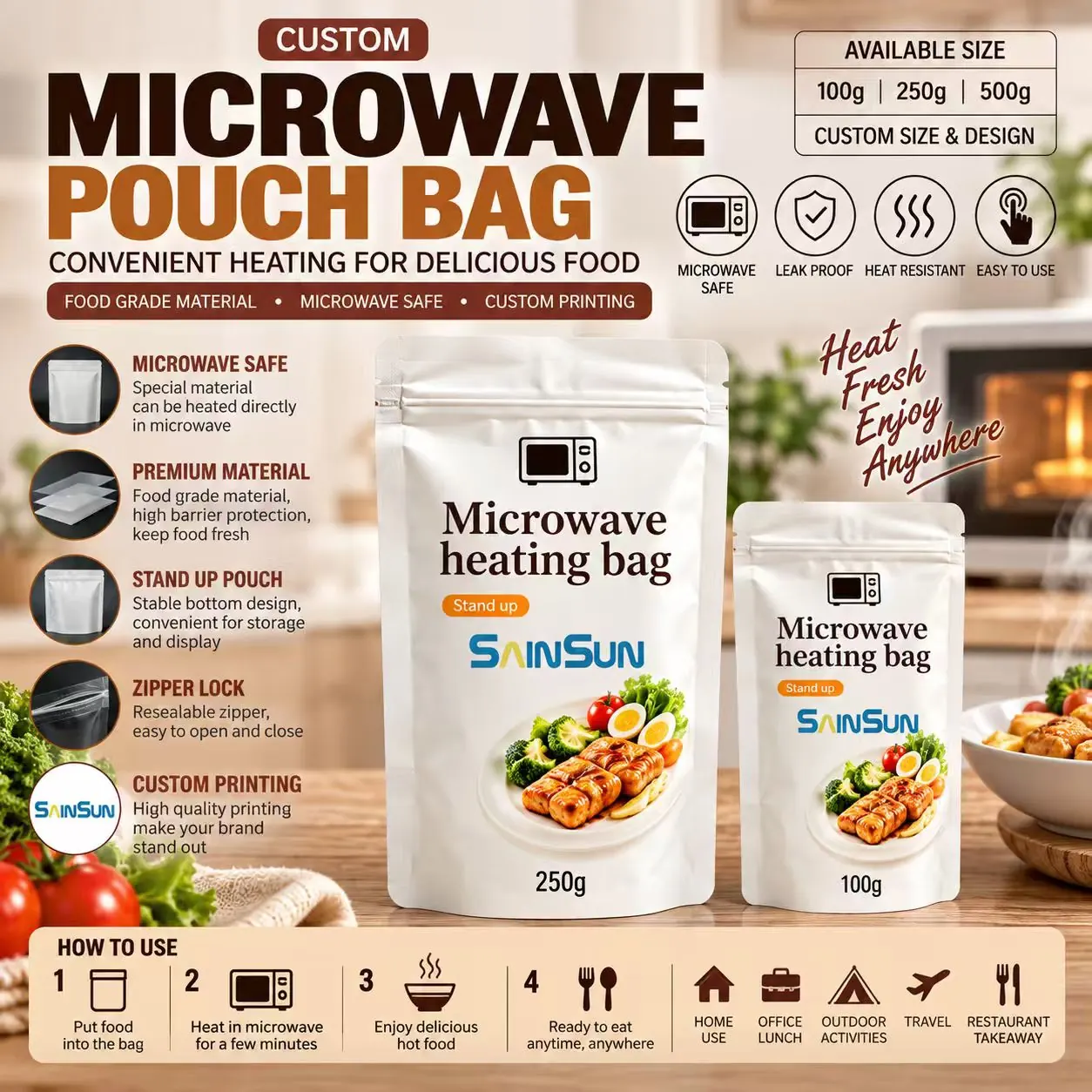
Microwave-Ready Venting Bag
Our proprietary venting design lets you microwave food straight from frozen — without opening the bag first.
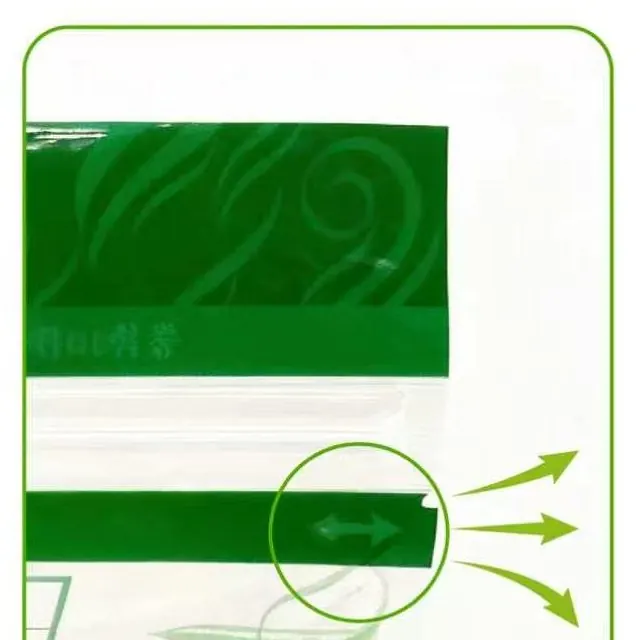
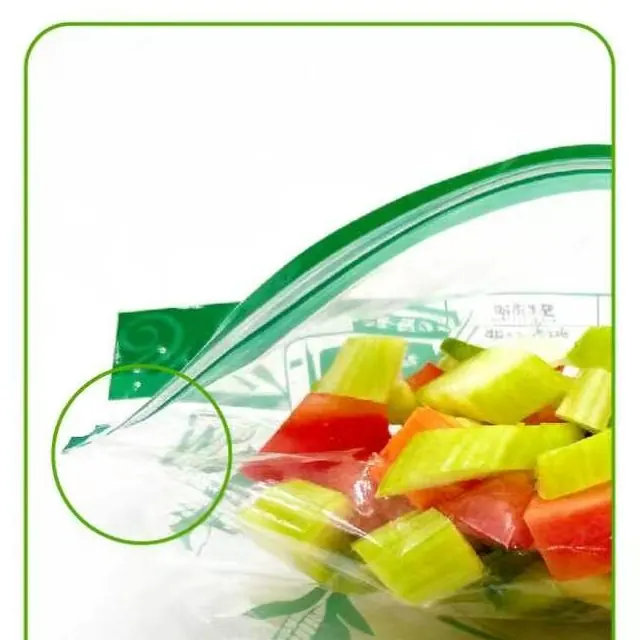
An engineered pressure-release point automatically vents built-up steam during heating, preventing bursting while locking in freshness and texture until you're ready to eat. It is suitable for a wide range of frozen and ready-to-heat foods.
Key Benefits
- Automatic venting design prevents bursting
- Advanced material maintains freshness and moisture barrier
- Even microwave heating preserves optimal texture
- Suitable for dumplings, buns, ready meals, rice, noodles, soups, and more
Key Takeaways
Venting Bag Decisions at a Glance
- The self-venting structure releases steam gradually — the food reheats in its own moisture, and the bag never bursts.
- No thawing, no transferring, nothing to wash: freezer to microwave to table in one pack.
- Suits frozen dumplings and buns, rice and noodles, ready meals, soups and sauces.
- A functional structure: MOQ 5,000 pcs per design, with the venting behaviour confirmed on samples.
How to Use
Three Steps from Freezer to Table
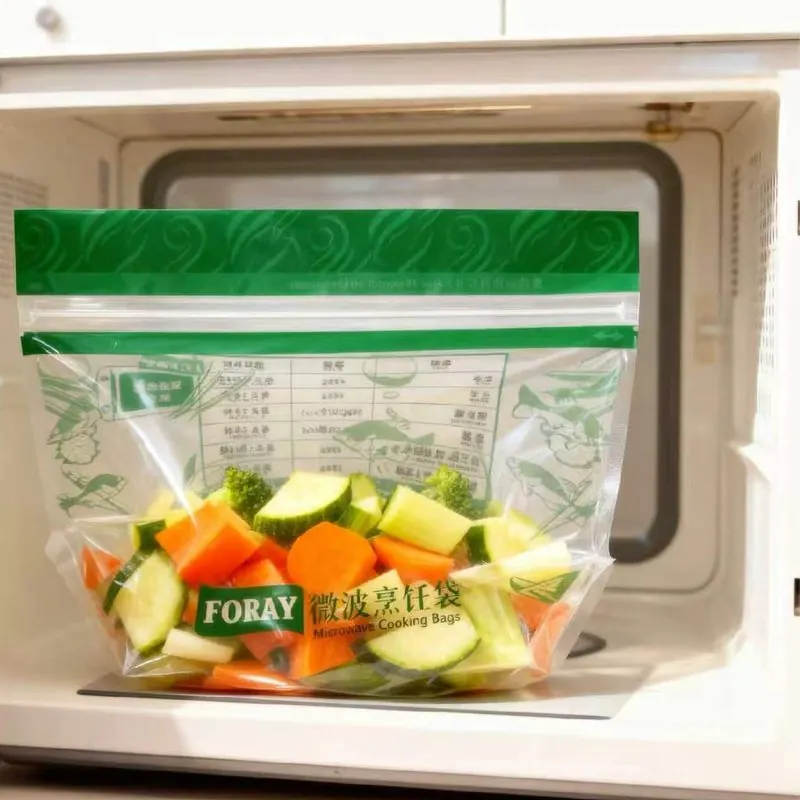
Place the sealed bag directly in the microwave — no need to open it first.
Heat according to package instructions.
Tear along the pre-cut notch to open and enjoy.
Sealed bag straight into the microwave — the vent does the rest.
Applications
Suitable for a Wide Range of Foods
Why It Works
The Engineering in the Vent
A sealed bag in a microwave builds steam pressure until it bursts — unless the structure gives the steam a controlled path. Our venting bags open gradually at a designed pressure, releasing steam while keeping the food inside and the microwave clean.
That behaviour is a film property, not a hole punched in the pack. The venting layer is engineered into the laminate, so it works consistently across thousands of packs rather than depending on a fragile mechanical feature.
For brands, the payoff is a simpler promise on the front of the pack: no instructions about transferring food, no second container, no waiting to thaw. The pack is the process.
Options
Venting Bag Options
| Item | Options |
|---|---|
| Formats | Flat venting pouches and stand-up venting bags |
| Fill types | Frozen dumplings and buns, rice and noodles, ready meals, soups and sauces |
| Printing | Up to 10 colours, with microwave instructions printed on the pack |
| MOQ | 5,000 pcs per design (functional structure) |
| Samples | Customized printed samples in 5–7 days; stock samples free apart from freight |
| Compliance | FDA 21 CFR and EU 10/2011 food-contact reports; BRCGS Issue 7 (Grade B) |
FAQ
Venting Bags — Common Questions
Do I need a special microwave to use these bags?
No. The venting works in any domestic microwave — the structure opens at a designed pressure and releases steam gradually, which is also why reheating is more even than in a sealed container.
Can the bag go from freezer to microwave directly?
Yes. That is the point of the format: no thawing, no transferring. The laminate stays flexible at freezer temperatures and survives the reheat cycle.
Is the venting feature reliable across a production run?
It is engineered into the laminate rather than being a mechanical hole, so the opening behaviour is consistent across the run — verified on sample packs before production.
What is the MOQ?
5,000 pcs per design. The venting structure is a functional build with a higher film specification than a standard pouch.
Which foods suit venting bags best?
Frozen dumplings and buns, rice and noodles, ready meals, soups and sauces — anything reheated in its own steam. Very dry or crispy products are better in a conventional pack.
Brand Side
What the Pack Says on the Front
Venting bags change what you can promise on the front of the pack. "Microwave straight from the freezer" is a product claim the packaging makes true — and it prints in fewer words than the instructions it replaces.
We print the preparation steps directly on the pack — up to 10 colours — so the how-to lives where the customer actually looks. That saves a leaflet, and more importantly it saves the customer a guess.
For foodservice buyers the same pack reads as labour saving: fewer steps, fewer containers to wash, consistent results. The pack is the process, and the front panel is where you say so.
Content last reviewed: September 2026