
Blog
Steam-in-Bag Vegetables: Packaging for Microwave Steaming
Steam-in-bag vegetable packaging needs a film that survives being heated in its own pack while the vegetables cook — which means the structure is specified for the cooking temperature, not the storage temperature. The pack also has to vent steam without bursting, so the seal and the film have to fail in a controlled order. This guide covers the structures that hold at cooking temperature, how the vent is designed, and the tests that catch a bag before it bursts in a customer's microwave.
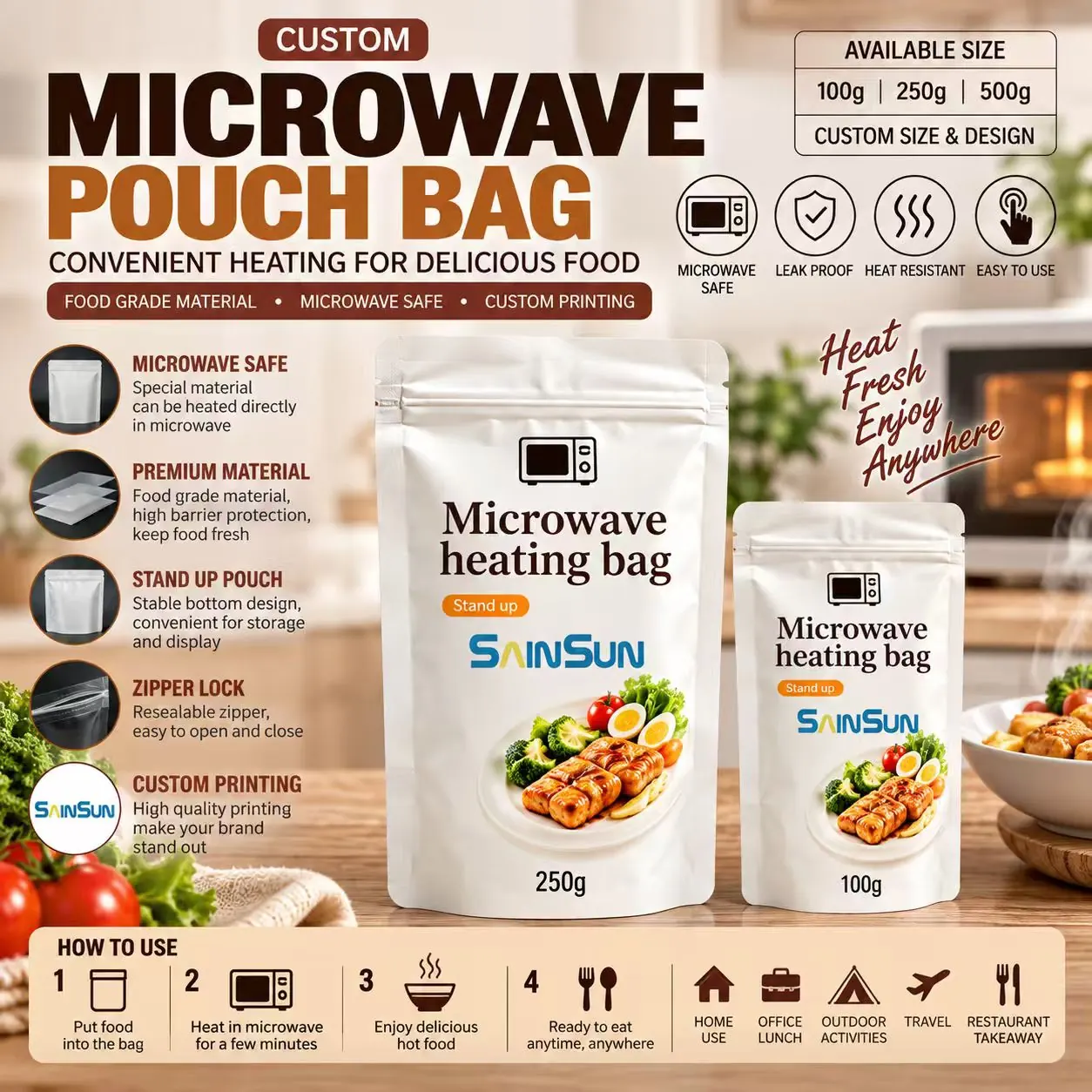
A steam-in-bag vegetable pack is asked to do something no ready-meal pack has to do: cook the food. The vegetable goes in raw or blanched and frozen, and comes out of the microwave steamed — colour, bite and texture decided entirely inside the sealed bag. There is no sauce to mask a failure, no strong flavour to hide a scorched corner, and no way for the consumer to step in and stir.
The pack either steams the product properly or the product is ruined. That is the whole brief, and it is why most failures in this category trace back to a structure borrowed from a ready-meal pack. The two look similar on a spec sheet. They behave nothing alike in an oven.
Steaming is not heating
A ready meal is reheated: the food is already cooked, the pack carries it to serving temperature, and the sauce buffers both the heat and the moisture. A steam-in-bag vegetable pack is different in four ways that all push on the film:
- The water is inside the food, not around it. Vegetables hold a high proportion of water, and a sealed bag traps every gram of it as steam. Internal pressure climbs faster and peaks higher than in a sauced meal of the same weight, because nothing in the pack absorbs it.
- The product is the point. A sauce hides a slightly uneven cook. A plain vegetable does not — over-steam it by thirty seconds and it goes limp and grey, and the consumer sees exactly that through the film.
- The consumer does nothing. The instructions are usually "place bag in microwave, cook, stand, open". No piercing, no stirring, no partial opening. Every function the pack needs has to happen on its own.
- It is a high-volume retail product. Unlike a specialty ready meal, steam-in-bag vegetables sell by the pallet, at a price point where a few microns of film and a fraction of a second of cook time matter commercially.
The practical consequence: the vent, the seal and the cook behaviour have to be designed together, at the real fill weight, for the specific vegetable. A generic microwaveable laminate will not do it.
Sizing the vent for vegetable steam
Every self-venting pack releases steam through a designed opening rather than through a failed seal. The mechanism choices — laser micro-perforation versus a membrane patch, and the pressure relationship between the vent and the seal — are covered in self-venting microwave pouches: what to specify. What changes for vegetables is the rate.
A vegetable pack generates steam quickly and in volume. That means the venting area has to be sized for a higher flow rate than a comparable ready-meal pack, or the pressure inside the bag will outrun the vent and find the weakest seal edge instead. Three variables set the answer:
- Hole count and diameter where laser perforation is used. A pattern that vents one fill weight comfortably may be too slow for a larger pack with the same film, because steam generation scales with product mass while the perforation does not.
- Vent location relative to the headspace. Steam collects in the headspace first, so a vent placed away from it can stay covered by food and effectively blocked at the moment it is needed most.
- The seal-to-vent relationship. The vent must open well below the strength of the weakest seal, with enough margin to absorb the spread in both across a production run — not just on the sample that was approved.
The other half of the brief is the opposite requirement: the vent must not open during freezing, palletising, transport or retail handling. A pack that vents in the cold chain is a leak, and nothing goes visibly wrong until the product arrives spoiled weeks later. This is the failure mode that costs brands the most, precisely because it is silent.
Film structures for steam-in-bag vegetables
Metal is out — aluminium foil arcs in a microwave — so the whole structure is polymer, and every function has to be carried by a layer:
- PET / PE — the baseline. PET supplies temperature stability and print surface, PE does the sealing. Suitable for shorter frozen shelf life and moderate steam loads.
- PET / PP — higher temperature tolerance and better dimensional stability through a long cook cycle. Where a pack is filled hot or steamed hard, the PP sealant holds shape better than a PE equivalent.
- NY / PE or NY / PP — adds puncture and flex-crack resistance. The nylon layer earns its place on products with stems, cobs or husks, which behave like small blades against the film under a pallet load.
- Anti-fog sealant layer — specific to this category, and often underestimated. Steam condenses on the inside of the film within seconds of cooking, and a standard sealant turns that condensation into an opaque film of droplets. The consumer judges a steamed vegetable with their eyes first: an anti-fog layer keeps the product visible through the cook, which is a merchandising decision as much as a technical one.
Two structural decisions are worth settling early, because they are expensive to change later:
Thickness versus cook behaviour. A thicker film is not automatically a better pack. More mass means slower heat transfer into the product and a different steam curve, and it changes how the bag behaves when the consumer lifts it out hot. Thickness is set by fill weight, product edges and handling, then validated in a real microwave — not chosen from a table.
Where the print sits. Ink belongs on the outer surface or buried between layers, never on the food-contact layer. A microwaved pack is a warm, wet, high-migration environment, and print in the wrong position is a compliance problem rather than a cosmetic one.
Different vegetables fail differently
This is the part of the brief that a generic microwave pack ignores, and it is usually where a first sample round goes wrong:
- Broccoli and cauliflower. Hard stem ends press against the film from the inside and are a puncture risk, especially after a frozen pallet load. Nylon-containing structures and a reinforced seal edge are the usual answer.
- Corn on the cob and cob cuts. High product mass per unit and a hard, irregular surface, so steam load and puncture risk both rise. These usually need the heaviest structure in the range.
- Peas, sweetcorn kernels and small cuts. Fine product settles and can sit over the vent area, restricting steam release exactly when the internal pressure peaks. Vent placement does more work here than vent size.
- Leaf vegetables and spinach. The highest moisture release of any product in the category. The film has to vent fast, and the anti-fog requirement is at its most visible because the consumer is checking for a green, not grey, result.
- Mixed vegetables and stir-fry blends. Different pieces reach temperature at different rates, so cook evenness rather than peak pressure becomes the limiting test. The pack may need a standing time built into the instruction, which the artwork has to reflect.
Formats and fill weights
- Single-serve retail — the supermarket format. Stand-up or three-side-seal pouches sized so the product spreads in a single layer and steams evenly rather than stacking in the base.
- Family and bulk retail packs — larger stand-up formats. More product means more steam, so the vent pattern and film thickness are re-specified rather than scaled.
- Foodservice packs — catering volumes reheated in a steamer, combi oven or water bath rather than a domestic microwave. Often no consumer vent at all, and a different structure entirely.
The critical sizing rule is the one consumers never see: the product must sit in an even layer, not a pile. A pack that stacks vegetables in the base steams unevenly no matter how good the film is, and the fix is a format and fill-weight decision, not a structure decision. This is why we ask for fill weight and pouch dimensions together, not separately.
What to test before a bulk order
- Burst pressure on the finished pack, at each fill weight in the range.
- Vent activation at real product load, plus a transit and cold-chain simulation to prove it stays closed when it should.
- Cook performance in a real domestic microwave — at the lowest and highest wattage your instruction will cover, with the actual vegetable, checking doneness, colour and texture.
- Post-cook seal integrity — no leakage at the seal or the vent when the consumer lifts and opens the bag.
- Flex cracking after freezing, driven by pallet compression and cold-store handling.
- Anti-fog behaviour at the end of the cook, when the consumer is about to judge the product through the film.
All of this runs on samples made from the exact production structure with your own product at your own fill weight. Our microwave-ready bags page explains what we validate before a production release, and the freezer-side requirements are covered in frozen ready meal packaging.
What to send us
- Vegetable or blend, and whether it is raw, blanched or cooked before freezing
- Fill weight and target pouch dimensions
- Storage: frozen, chilled or ambient, and the shelf life target
- Cook instruction you intend to print: time, wattage, standing time, whether the bag stays sealed
- Format: stand-up pouch, three-side-seal, or roll film for your own line
- Print requirement and artwork status, including any anti-fog or window needs
- Quantity per design and target annual volume
If the product is a complete meal rather than a vegetable side, the brief changes — see frozen ready meal packaging: freezer-to-microwave pouches. For shelf-stable versions sterilised in the pack, the structure becomes a foil-based laminate and the rules change again: microwave cooking bags and retort pouches: how to choose.
Sources and standards
Primary references for pack performance and food-contact rules referred to in this guide:
- ASTM F2095 — Internal pressurization failure resistance of unrestrained packages (ASTM)
- ASTM F1140 — Burst testing of unrestrained flexible packages (ASTM)
- 21 CFR Part 177 — Indirect food additives: polymers (US eCFR)
- EU Regulation 10/2011 — Plastic materials in contact with food (EUR-Lex)
Frequently asked questions
What film is used for steam-in-bag vegetables?
Metal-free polymer laminates, because aluminium foil arcs in a microwave. PET/PE is the baseline, PET/PP where the cook cycle is long or the fill is hot, and nylon-containing builds where stems, cobs or husks create puncture risk. Most vegetable packs also use an anti-fog sealant layer so steam condensation does not hide the product from the consumer.
How is a steam-in-bag vegetable pack different from a ready meal pack?
A ready meal is reheated and its sauce buffers heat and moisture. A vegetable pack cooks the product, releases far more steam for the same fill weight, and gives the consumer nothing to do. That means a higher vent flow rate, a structure specified for the specific vegetable, and a seal that holds against a faster pressure rise.
Why do some microwave vegetable bags fail in the cold chain instead of in the microwave?
Because a vent that opens early is a leak. A pack can vent correctly in the microwave and still be a failure if the vent activates during freezing, palletising or transport. That is why we test vent activation against transit and cold-chain simulation, not only in the oven.
What causes uneven cooking in steam-in-bag vegetables?
Usually format rather than film. If the product piles up in the base of the pouch instead of sitting in an even layer, it steams unevenly however good the structure is. Mixed blends also reach temperature at different rates, which is why the printed instruction may need a standing time.
Do you supply anti-fog microwave vegetable pouches?
Yes. Anti-fog sealant layers are specified on request and we recommend them for this category: steam condenses on the inside of the film within seconds of cooking, and a standard sealant turns that into an opaque layer of droplets that hides the product at exactly the moment the consumer is judging it.
What should I send for a steam-in-bag vegetable pouch quote?
The vegetable or blend and its pre-freeze state, fill weight and pouch dimensions, storage condition and shelf-life target, the cook instruction you intend to print including wattage and standing time, format and print requirements, and target quantities. Samples are made from the exact production structure with your own product at your own fill weight.
Have a pack like this to quote?
Send the product, how it will be filled and stored, the format or an area to advise on, and your quantity. You get back a named structure, a colour count, a minimum tier and a line-by-line price — usually within one working day.