
Blog
Self-Venting Microwave Pouches: What to Specify
A self-venting microwave pouch releases steam through a designed seam rather than through a tear, so the consumer does not have to open the pack before heating. The vent is a controlled weakness in the seal — specified as a peel strength, not as a hole — and it is the part of the pouch that has to be tested most carefully. This guide covers how the vent works, the film and sealant properties it needs, and the tests that confirm it vents at the right pressure.
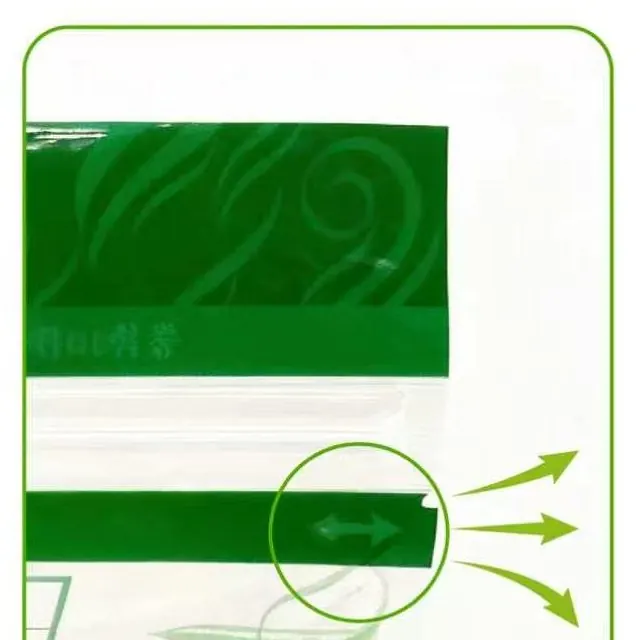
A self-venting microwave pouch has one job: let steam out at the right moment, without letting the consumer do anything and without letting the pack burst. Everything else — the film structure, the seal, the barrier, the print — exists to support that single behaviour.
Most buying guides treat venting as a checkbox. It is not. The vent mechanism, the pressure it opens at, and the film it is cut into determine whether a pack cooks evenly, survives shipping, and keeps a shelf life. This guide covers the mechanics, the numbers behind them, and the questions to ask before you commit to a production run.
Two vent designs, and the real difference
Every self-venting pack is one of two designs. The choice changes who takes the risk.
- Self-venting (automatic). The vent activates on its own when internal pressure reaches a set threshold. The consumer puts the sealed pack in the microwave and does nothing else. This is the design convenience brands want — and it puts the whole engineering burden on the converter, because the vent has to open at the same pressure on every pack in every batch.
- Consumer-activated. A scored tab, a peel corner or a press-to-vent zone the consumer opens before heating. Simpler to manufacture, lower risk of premature activation in transit — but it depends on the consumer reading the instruction. Common on steam-in-bag vegetables and multi-compartment trays.
The trade-off is not cost, it is failure mode. A self-venting pack that activates slightly early loses seal integrity in transit. One that activates late bursts in the microwave. Consumer-activated packs move that risk to the kitchen, where the failure is a customer complaint and a one-star review.
How the vent is actually made
Two mechanisms cover almost all self-venting microwave packs, and they behave differently enough that the spec sheet has to name which one you are buying.
Laser micro-perforation
A focused laser ablates micro-holes through one or more film layers. Typical hole diameters run 50–200 microns — small enough to hold a barrier at room temperature, engineered to open under steam pressure during heating. The number, size and pattern of holes set the burst pressure. A key capability is selective layer perforation: the laser cuts the outer structural layer while leaving the food-contact sealant layer intact until pressure opens it. That preserves shelf life in storage and still vents reliably in the microwave.
Valve and vent patches
A small membrane patch — often an expanded PTFE disc — heat-sealed over a pre-cut aperture in the lidding or pouch film. Steam passes through the membrane's pores when pressure rises; when the microwave stops and the pack cools, the pores recover and the vent effectively reseals, which also keeps external moisture and contaminants out. Patches are specified with an activation pressure, a steam release flow rate, and a water entry pressure, and they are functional across the full frozen-to-steam range.
Which one belongs on your pack depends on the format and the fill. Pouches that are steamed directly usually take laser perforation with selective layer control; tray-sealed meals and lidded formats often take a patch on the lidding film.
The numbers that decide whether it works
This is where a vent spec stops being marketing and becomes engineering:
- Vent activation pressure. Most self-venting packs target a burst pressure of roughly 2–5 psi, set by the food type and the pouch geometry.
- The 60–80% rule. The vent should activate at 60 to 80 percent of the package's seal strength. This is the single most useful rule in the whole discipline: it guarantees steam escapes through the designed vent rather than blowing out a seal edge, which is a field failure, not an inconvenience.
- Activation temperature. Self-venting designs are commonly calibrated to open between roughly 95 and 105 °C — the point where steam pressure inside a typical 200–400 g pouch reaches the target burst pressure.
- Vent flow rate. A patch spec will quote a steam release flow — for example 500 ml/min at 100 mbar — which has to be matched to how much steam your fill weight actually generates in the cook time.
The consequence of getting these wrong is symmetric: too early and the food dries out or the pack loses seal in transit; too late or inconsistent and the pack balloons, distorts or bursts. There is no "close enough" here, which is why the vent pattern is validated on the actual production structure rather than assumed from a similar job.
Film structure: the part buyers usually get wrong
A vent is only as good as the film it is cut into. The structure has to be metal-free for microwave use — aluminium foil, the standard retort barrier, arcs in a microwave — while still doing the barrier job. Common builds:
- PET / PE and PET / PP laminates — clarity, dimensional stability at microwave temperatures, and predictable laser behaviour. The workhorse for steam-in-bag and pouch formats.
- OPP / PE — a lower-cost route for shorter cook cycles. Lower melting point than PET, so seal strength around the vent zone has to be validated carefully.
- NY / PE laminates — where puncture resistance matters, such as bone-in proteins or sharp-edged contents. The nylon layer adds toughness; laser settings must penetrate it without damaging the sealant layer.
- Barrier-enhanced builds — EVOH or oxide-coated layers where the product needs a real oxygen barrier alongside microwaveability. For ambient shelf-stable microwave meals, this is what replaces the foil you cannot use.
If the pack is also frozen, the structure has to survive the full frozen-to-microwave range, and the seal has to hold through the temperature swing. That is a different qualification than a chilled or ambient pack, and it is worth saying plainly in the enquiry.
Retort is the adjacent case: packs sterilized at 121–135 °C in the factory are usually foil-based and not microwaveable. If your product needs both shelf stability and microwave heating, the structure conversation is different again — see microwave cooking bags and retort pouches: how to choose.
What to test before a bulk run
A vent specification is a claim until it is tested on the real structure. The tests that matter:
- Burst pressure on the finished pack, to confirm the vent activates inside the target window rather than at the seal edge.
- Vent activation temperature across the full range of fill weights and product viscosities that SKU will see — a sauce and a solid meal generate steam at different rates.
- Seal integrity after transit simulation, because the most common field failure is a vent that activated early in a truck, not one that failed in a kitchen.
- Microwave cook performance on a real oven: even heating, no dry edges, pack holds shape, food reaches serving temperature in the stated time.
- Post-cook moisture and headspace checks if shelf life is part of the brief.
Run these on samples made from the exact production structure, with your own food, at your own fill weight. Our microwave-ready bags page shows what we validate before a run; the principle is that a signed-off sample names the structure, the vent mechanism, the activation spec and the seal window.
What to send us
- Product type, fill weight, and whether the pack is frozen, chilled or ambient
- Vent design wanted: automatic self-venting or consumer-activated
- Cook time and the microwave wattage the instruction will assume
- Format: pouch, stand-up, tray lidding, or roll film for your line
- Barrier and shelf-life target
- Print requirement, artwork status and target quantity
Our wider range of food formats and their barrier builds is covered in food packaging pouches: types, materials and customized options, and the ready-meal category context — shelf-stable versus freezer-to-microwave — is on our ready meal packaging page.
Sources and standards
Primary references for vent performance and food-contact rules referred to in this guide:
- ASTM F2095 — Internal pressurization failure resistance of unrestrained packages (ASTM)
- ASTM F1140 — Burst testing of unrestrained flexible packages (ASTM)
- 21 CFR Part 177 — Indirect food additives: polymers (US eCFR)
- EU Regulation 10/2011 — Plastic materials in contact with food (EUR-Lex)
Frequently asked questions
How does a self-venting microwave pouch work?
Internal steam raises the pressure inside the sealed pack. When it reaches the engineered activation threshold, a laser micro-perforation or a membrane vent patch opens and releases steam in a controlled stream, so the pack cooks evenly instead of ballooning or bursting at a seal edge. When heating stops and the pack cools, a patch vent reseals.
What pressure should a microwave pouch vent open at?
Most self-venting packs are engineered to activate at roughly 2-5 psi, set by the food type and pouch geometry. The working rule is that the vent should activate at 60-80 percent of the pack's seal strength, which guarantees steam escapes through the designed vent rather than blowing out a seal.
What is the difference between laser perforation and a vent patch?
Laser micro-perforation cuts 50-200 micron holes into the film, and can be tuned to perforate only the outer layer while leaving the sealant layer intact until pressure opens it. A vent patch is a membrane disc heat-sealed over an aperture, typically on lidding film, that vents and then reseals. Pouch formats usually use laser perforation; tray and lidded formats often use patches.
Can a self-venting pouch go straight from the freezer to the microwave?
Yes, if the film structure and the vent are specified for the full frozen-to-steam range. The structure has to withstand temperatures from around -20 C or lower up to the microwave steam peak, and the seal has to hold through that swing. Say that the pack is frozen when you enquire, because it changes the film qualification.
Can microwave pouches use aluminium foil?
No. Aluminium foil arcs in a microwave, so microwaveable packs are metal-free. If the product also needs a real oxygen barrier for ambient shelf life, the foil is replaced by EVOH or oxide-coated barrier layers, which is a different and usually more expensive structure.
What should I test before ordering microwave pouches in bulk?
Burst pressure on the finished pack, vent activation temperature across the full range of fill weights and viscosities, seal integrity after transit simulation, real-oven cook performance, and post-cook moisture or headspace checks if shelf life is part of the brief. Test on samples made from the exact production structure with your own food.
Have a pack like this to quote?
Send the product, how it will be filled and stored, the format or an area to advise on, and your quantity. You get back a named structure, a colour count, a minimum tier and a line-by-line price — usually within one working day.