
Blog
Holiday Packaging Lead Times: What Express Courier Buys You Back
Holiday packaging lead time is decided by the transit mode, not by production: for a 10–15 day production run, an express courier leg moves the Black Friday cutoff from early October to the end of it. The commonly quoted 'three months' is a blended average that assumes sea freight and a first-time order — both of which can be changed. This guide works the calendar backwards from an on-shelf date, with the cutoffs for each transit mode and the five details to lock before the clock starts.
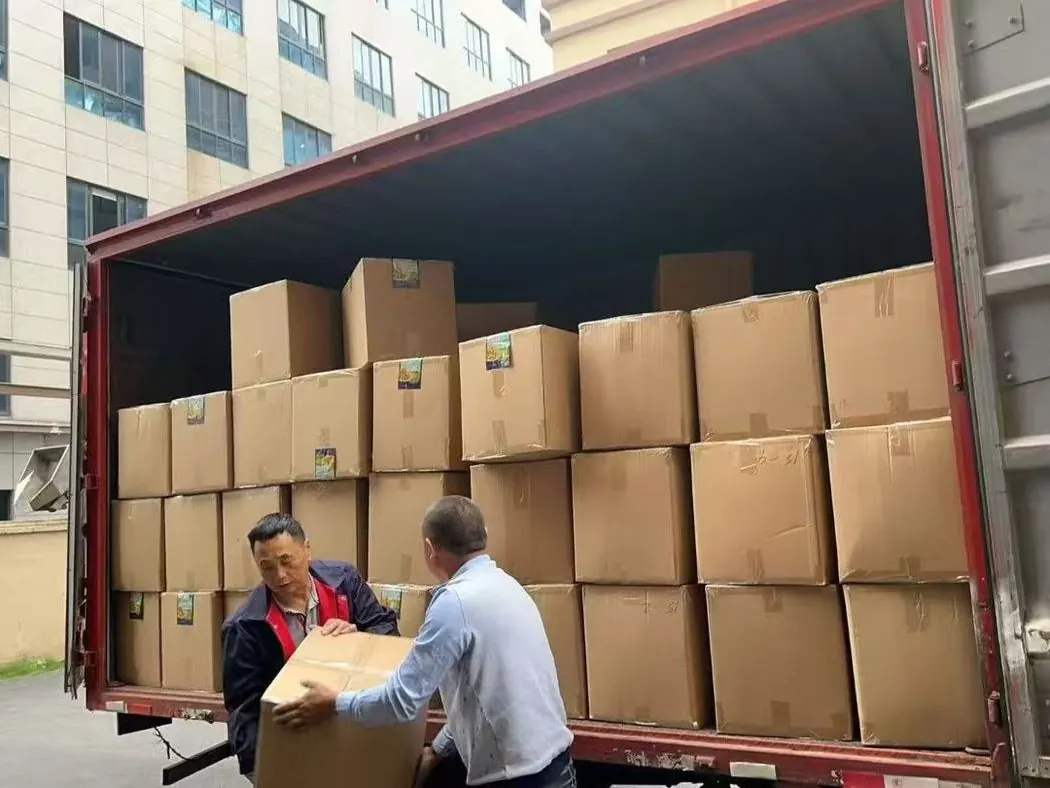
Every autumn, the same message goes out from packaging suppliers: order your holiday packaging three months early. It is repeated so often that it reads like a rule. It is not a rule — it is an average, blended across sea freight, long production queues and first-time orders. Work the dates backwards from your own on-shelf date and the picture changes, especially when an express courier leg is available.
Where the number comes from is straightforward. A flexible-packaging order is a chain: artwork approval, sampling, bulk production, transit, customs, and margin for the unknown. The advice says three months because a first-order chain with sea freight to Europe really does add up to that. But each link is a decision, not a fixed tax. Shorten the transit link and the entire cutoff date moves. This guide shows by how much, using the production figures we publish and the transit figures that are generally true of each mode.
The calendar, worked backwards
Start from the only date that matters: the day the product must be on the shelf, not the day it must leave a factory. Retailers want seasonal stock received and merchandised one to two weeks before the event, which is why the table below uses an "on-shelf" date rather than the holiday itself.
The arithmetic behind the two columns, so you can adjust it to your own case:
- Production: printed samples run in 5–7 days; bulk production after sample approval is typically 10–15 days for standard structures. For a repeat order with approved artwork, the sampling step can be skipped entirely.
- Express courier: door-to-door air courier typically runs 3–7 days to most destinations; the exact number depends on destination and is confirmed per shipment.
- Sea freight: roughly 14–18 days to the US West Coast and 25–30 days to Europe, plus port handling on both ends.
- Buffer: 7 days on the courier route and 10 on the sea route, because a festive season is the worst possible time to test your luck with customs or a missed vessel.
Applying that — 15 days of production, 5 days of courier, 7 days of buffer, against 18 days of ocean transit to the US West Coast and 10 days of buffer — gives cutoffs like these:
| Season | On-shelf date | Order by — express courier | Order by — sea (US West Coast) |
|---|---|---|---|
| Halloween | 31 October | ~4 October | ~13 September |
| Black Friday | 27 November | ~31 October | ~10 October |
| Cyber Monday | 30 November | ~3 November | ~13 October |
| Christmas | 1 December | ~4 November | ~14 October |
| Christmas | 10 December | ~13 November | ~23 October |
Read the Black Friday row again. The common advice — "order by early October" — is the sea-freight number. With an express courier leg, the same run ordered at the end of October still lands in time. That is not a marketing promise; it is the transit arithmetic. The caveat matters just as much: these are planning estimates built from typical figures. The binding number is always the lead time confirmed per project in the written quotation, because structure, print method and quantity all move the production link.
First orders and repeat orders are different games
The table above assumes the production clock starts after sample approval. On a first order, more happens at the front end: artwork and dieline checks, printing cylinders, food-contact paperwork for the destination market. That front-end work is real and it is why first orders take longer even before a single production day is counted. If your season is tight, the honest answer is that a brand-new supplier relationship and a hard holiday deadline are a risky combination — see when stock pouches make more sense than customized printing for the pressure valve.
Repeat orders are where the calendar opens up. Artwork is approved, cylinders exist, the structure is proven, and the sample step is a formality. For a brand that ordered in September for Black Friday and sells through in December, the December replenishment order can run almost entirely on the production-plus-courier arithmetic — which is how a mid-November reorder still makes a mid-December shelf date. If that describes you, the planning conversation is not "is it too late" but "how many days does artwork sign-off cost us".
Split shipments: courier the first pallet, ship the rest
There is a middle path that most buyers never ask about. One order does not have to travel as one shipment. A split shipment sends the first tranche — enough for the launch window or for marketplace fulfilment centres — by express courier, and the balance by sea. The courier tranche arrives in under a week and starts selling; the ocean tranche arrives two to four weeks later and covers the sustained run.
The logic is cost-shaped. Express air freight is priced by weight and is excellent for cartons, poor for pallets. Sea freight is priced by volume and is the reverse. A few hundred retail-ready pouches of a snack or coffee format is a parcel problem, not a container problem, and paying parcel rates for it is rational — the freight premium across a small first tranche is usually a rounding error against the revenue a missed launch window costs. The full landed-cost comparison, including duties and the fees people forget, belongs in the budget before the shipping method is chosen.
Two practical notes if you plan a split. First, tell the supplier at the order stage, not after production — the pack-out and carton marking can be arranged so the courier tranche is boxed for parcel handling, which is the failure mode behind most crushed corners and seam splits on arrival. Second, keep the two tranches within the same production run; splitting across runs invites a shade mismatch between your launch stock and your replenishment stock, which customers do notice on a seasonal shelf.
Five details that start the clock
The calendar only starts counting when specific things are locked. Most "we thought we could make it" stories trace back to one of these sitting unresolved while everyone assumed someone else had it:
- Artwork and dieline, final and print-ready. Not "the designer is sending it tonight". Print-ready means fonts outlined, colour mode agreed, dieline matched to the actual pouch size. The approval loop is the most common hidden week — coffee bags with valves and any format with special features add a review step.
- Structure and pouch size. Changing a structure after sampling restarts a chunk of the process. Sizing before quoting is cheaper than resizing after — pouch sizing by product and fill weight covers the method.
- Quantity and any split. Production scheduling depends on run length, and a split-shipment plan changes how the order is packed. Both belong in the first conversation.
- Destination and paperwork. Destination market determines food-contact documentation and labelling. This is the buffer's job to absorb, but only if the destination is known on day one.
- Who ships. If you have a courier account, say so at order stage and the shipment books against it; if the supplier arranges the courier, the transit days and cost appear in the quotation. Either way, decide early — "we'll figure out shipping later" is how a confirmed date becomes an estimate.
The full-year version
Q4 is the loudest season but the same arithmetic runs all year, and the quiet seasons are where the savings live. Mother's Day and Easter products are typically planned in January and February, when printers are between peaks and production slots are open. Back-to-school and Halloween run on the same autumn capacity — which is exactly why Halloween is the tightest cutoff in the table: it shares its factory window with Christmas production. The brands that get the best seasonal pricing are the ones ordering in the trough, not the crest.
For Halloween specifically, the honest read of the table is that a custom-printed sea-freight order for this year has already closed, and even the courier route closes in the first days of October. Seasonal products are planned a full year out; the cutoffs above are how you put next year's Halloween — and this year's Black Friday and Christmas — on the calendar with dates you can defend.
The one-line summary: the sea-freight deadline is real, but it is not the only deadline. Confirm artwork early, decide the transit mode deliberately, and the express-courier column is the difference between "already too late" and "still open". Bring the on-shelf date and the quantity, and the quote will carry the production and transit numbers that make the calendar official.
Sources and standards
Primary references for the transit planning and testing practices referred to in this guide:
- ASTM D4169 — Performance testing of shipping containers and systems (ASTM)
- ISTA transit test procedures, including distribution simulations (ISTA)
- 21 CFR Part 177 — Indirect food additives: polymers, relevant to destination-market food-contact documentation (US eCFR)
- EU Regulation 10/2011 — Plastic materials in contact with food (EUR-Lex)
Frequently asked questions
Is it too late to order customized holiday packaging now?
For Halloween, this year's custom-printed window has effectively closed by early October on both sea and courier routes. For Black Friday, an express-courier route typically stays open until around the end of October, and for Christmas stock it runs into mid-November. These cutoffs assume a repeat-order profile with artwork ready; a first order needs the sampling and paperwork steps added on the front end. The definitive answer is always the lead time confirmed per project in the written quotation.
Can I split one order between courier and sea freight?
Yes, and it is a standard request. The first tranche travels by express courier and covers the launch window; the balance travels by sea and covers replenishment. Ask for it at order stage so the courier tranche is packed for parcel handling, and keep both tranches inside the same production run so the colour matches between them.
How much does express courier add to the unit cost?
Courier is priced by weight, so the premium per pouch is largest on small, dense shipments and smallest on a light retail-ready format. On a few hundred pouches, the freight premium is usually minor against the cost of missing a launch window; on pallet quantities it stops being rational and sea freight takes over. The full landed-cost picture, including duties, should be built into the quote comparison.
What if my artwork is not ready yet?
Then the clock has not started, and that is the first thing to fix. Print-ready artwork means outlined fonts, agreed colour mode and a dieline matched to the actual pouch size. Printed samples run 5–7 days; bulk production typically 10–15 days after sample approval for standard structures. Every day of artwork review is a day off the calendar.
Do repeat orders really skip the sampling step?
On a repeat order the artwork, cylinders and structure already exist, so sampling becomes a formality rather than a stage, and the production clock effectively starts at purchase order. That is why a mid-November replenishment can still make a mid-December shelf date on a courier route, when the same dates on a first order would be tight.
Have a pack like this to quote?
Send the product, how it will be filled and stored, the format or an area to advise on, and your quantity. You get back a named structure, a colour count, a minimum tier and a line-by-line price — usually within one working day.