
Blog
Stock Pouches With Labels or Printed Pouches? The Cash Math
Stock pouches and customized printed pouches answer different questions: stock is about getting a real product on a shelf quickly, customized is about building a brand on the shelf. The cost crossover is driven by print tooling and run length — stock wins at small quantities, customized wins once the fixed cost is spread. This guide compares the two on cost, lead time, minimum quantity and what the pack can say about the brand.
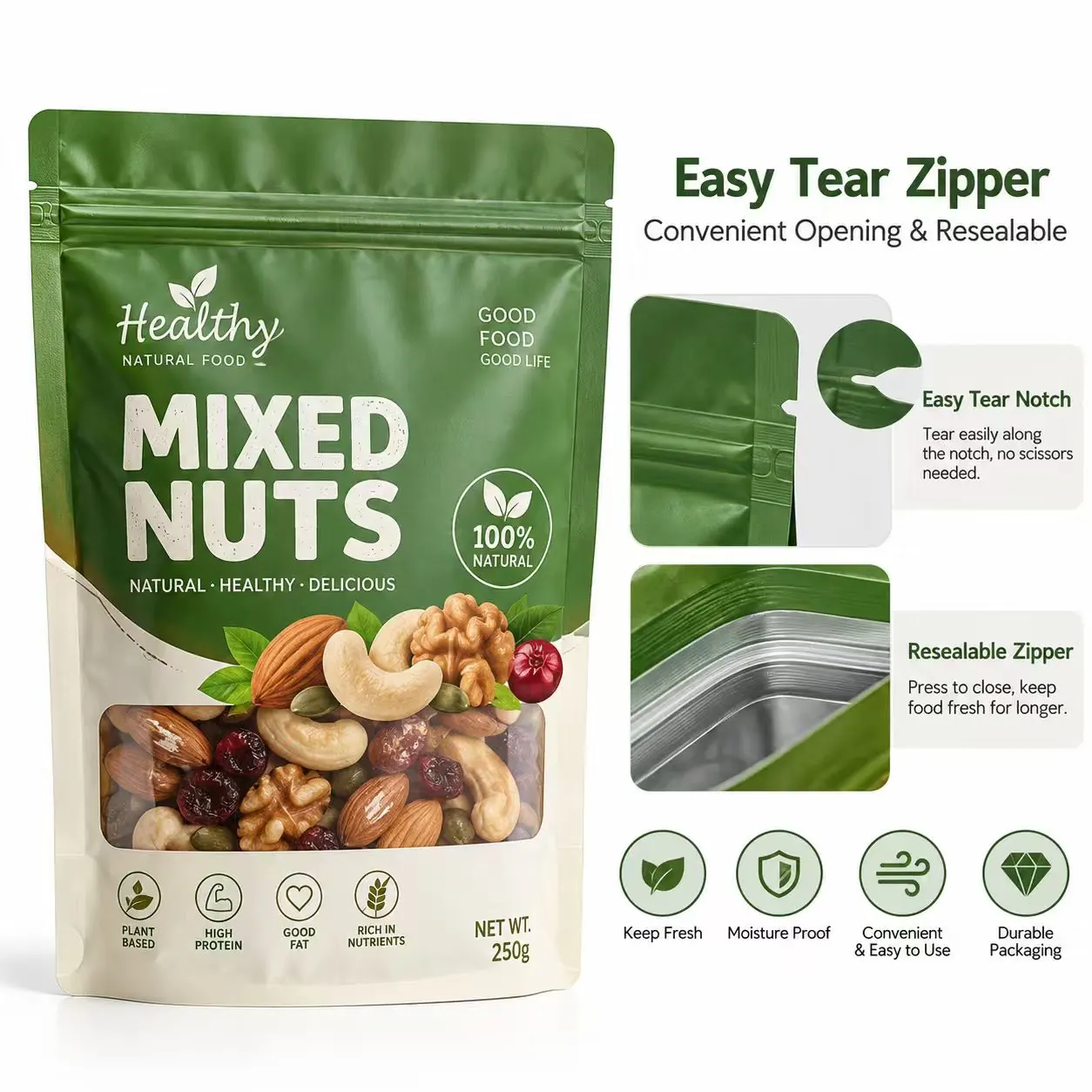
Every small brand reaches the same fork. Print the pouches, or buy stock pouches and put a label on them. The honest answer is that the two options are not really competing on price per pouch. They are competing on three other things: cash tied up before you have sold anything, how easily you can change your mind, and what it costs when one flavour underperforms.
Get those three right and the price question usually answers itself.
What “stock” actually means
A stock pouch is a standard size, made on a standard structure, from standing film. Nobody prints your design onto it, so there is no print setup and no minimum tied to print. You buy a size that already exists and finish it yourself, usually with a printed label or a stamp.
A printed pouch is made for you: your size, your structure, your artwork, in your colours. Printing introduces a one-off cost per design — and that one-off is the whole reason the two options diverge as your range grows.
Two clarifications that save a lot of confusion:
- “Customized” does not have to mean a container-sized order. Digitally printed pouches on stock sizes start from 100–500 pieces per design, because digital printing skips the image carrier entirely. That is the route small brands use to avoid the 5,000 or 10,000-piece gates that still apply to rotogravure.
- Structure and size are separate decisions from print. You can have the correct structure and the correct size for your product and still choose not to print on it yet. Choosing a label does not mean accepting a pack that is wrong for your coffee, your powder or your granules.
The three costs people forget
1. Your own labour, per unit, forever
A label is not free after you buy it. Somebody applies it. Whether that is you at a kitchen table, a warehouse hand, or a co-packer charging by the hour, the cost recurs on every single pouch, on every reorder, for as long as you use labels. Multiply one person's time per pouch by your monthly volume and it becomes a real number, not a rounding error.
Printing replaces that recurring labour with a one-off setup. That is the trade. The question is only how much volume it takes for the one-off to be cheaper than the accumulating labour — and the answer depends on your own numbers, not on a rule of thumb.
2. Mistakes get more expensive as your range grows
With labels, a wrong flavour name, a wrong net weight, a changed ingredient panel or a missed allergen statement costs you a new label run. With printed pouches, the same mistake costs new film and, on rotogravure, potentially new cylinders.
That cuts both ways and is genuinely worth thinking about honestly. In your first year, your label copy will change — possibly several times, because formulation, certification and regulatory text all move. The ability to absorb those changes cheaply is a real advantage of the label route, and it is why some brands deliberately stay unprinted until the copy settles.
3. SKU sprawl multiplies the setup, not the price per pouch
This is the cost that catches multi-flavour brands. Printing setup is charged per design. A brand with six flavours needs six artworks, six print setups and six cylinder sets on rotogravure. Brands describe the effect well: six flavours at a 1,000-piece minimum each is six thousand pouches of cash tied up before the first order ships.
Digital printing softens this a great deal, because there is no image carrier and designs can be grouped in one run. But it does not remove the need to think about how much dead stock you are willing to hold per variant.
The math, with your numbers in it
Rather than quote you an example with invented prices, here is the calculation to run. Four lines, and you can build it in a spreadsheet in ten minutes.
| Line | Label on stock pouch | Printed pouch |
|---|---|---|
| Unit cost of the pack | Stock pouch unit price + label unit price | Printed pouch unit price (structure + print + conversion, in your quantity tier) |
| One-off cost | Label plate or die setup, if any | Prepress and, on rotogravure, cylinders per colour per design — reusable on every reorder of the same design |
| Recurring labour | Time per pouch × your labour rate × annual volume | None |
| Cost of change | New label run only | New film run, plus new cylinders if the artwork or size changes |
Add the four lines for each route over a realistic twelve-month volume and you have the comparison. Two things usually fall out of it:
- At low volume, labels win on cash and on flexibility, even when the printed pouch has a lower unit price. If you are ordering 800 pouches every two months, the setup you have not paid for is money still in your account.
- At higher volume, and once your artwork has stopped moving, printing wins on unit price and on the labour you no longer spend. This is the point where the one-off has been amortised over enough pouches that it stops mattering.
The crossover is different for every brand, because it depends on your volume, your label cost per unit and what your own time is worth. Any supplier who tells you the crossover without asking for those three numbers is guessing.
What labels cannot do
It is worth being clear about the limits, because a label is a solution to a print problem, not to a packaging problem.
- Labels do not fix structure. If your product needs a barrier, a valve or a retort-grade seal, the pouch has to have it. A label cannot.
- Labels do not fix size. If no stock size fills correctly with your product, the label route is not available until someone makes the right size.
- Label performance varies. Adhesive that holds on a dry snack bag may lift on a greasy or chilled surface, or wrinkle on a curved or gusseted panel. Test the label on the actual pouch, in the actual storage conditions, before you commit a print run.
- Shelf impression is different. A well-printed pouch with a matte finish, a spot gloss or a full-coverage design does something a label cannot, and for some channels that is the whole point.
The route most small brands should take
Start in stock, label it, and prove the product. Then print the flavours that have earned it.
Concretely: buy stock pouches in the correct structure and a fill-tested size for your top flavour. Label them. Sell them. When a flavour is clearly working and its artwork has stopped changing, move that flavour to printed pouches at a digitally printed quantity — from 100–500 pieces per design on stock sizes, so the jump is not a gamble. Keep the long tail on labels until it either grows or is discontinued. You have now spent print money only where it is amortised by real demand.
The brands that get burned are the ones that print their entire range at once on the strength of a launch forecast, then change the recipe and the label copy in month three.
How we help you decide
Send the product, the fill weight, the number of flavours and your realistic twelve-month volume per flavour. We will tell you which route the arithmetic supports — and if labels are the better answer for this stage, we will say so, because a brand that grows through the label stage usually comes back to print a larger order later. Where you do print, printed samples run in 5–7 days at US$120 for one to two pieces, credited against the production order.
If the structure or the barrier is still open, start with the format comparison. If you are trying to compare two suppliers rather than two routes, the cost breakdown shows which lines in a quote move with what.
This article explains how to compare labelling a stock pouch against printing a customized pouch. It is not a price list, and the crossover point depends on your own unit costs, volume and labour. Minimums and sample terms quoted here are our published terms as of 14 October 2026.
Frequently asked questions
Is it cheaper to print pouches or to use labels?
It depends on volume, label cost per unit, the value of your own labelling labour and how settled your artwork is. At low volume the label route usually wins on cash because you have not paid a print setup. At higher volume, with stable artwork, printing wins on unit price and on labour you no longer spend. Run the four-line comparison with your own numbers before deciding.
What is the minimum order for a printed pouch?
It depends on the print method. Digitally printed pouches on stock sizes start from 100–500 pieces per design, because digital printing uses no image carrier and therefore has no per-colour setup. Rotogravure needs an engraved cylinder per colour per design, so its minimums are much higher and it becomes economic once your volume and your artwork are stable.
My recipe still changes. Should I print anyway?
Probably not yet. Printed film is fixed once it is on the press, so a formulation change, a new certification or a revised regulatory panel can strand inventory. Many brands deliberately stay on labels until the copy and the recipe settle, then move the proven flavours to print. Digital printing softens this, because designs can be grouped in one run, but it does not remove the dead-stock question.
Can I put a label on any stock pouch?
Only if the stock pouch is already right for your product. A label cannot add barrier, cannot create a retort-grade seal and cannot change the size. Test the label on the real pouch in real storage conditions too, because adhesive that holds on a dry snack bag can lift or wrinkle on a greasy, chilled, curved or gusseted surface.
We have six flavours. How should we handle the setup costs?
Treat setup as a per-design cost and decide per flavour rather than per brand. Print the flavours that have proven demand and keep the long tail on labels, so setup is only spent where volume will amortise it. On rotogravure, cylinders are kept and reused on every reorder of the same design, so the second order is materially cheaper than the first.
Do you print short runs of several different designs in one order?
Yes. Digital printing makes it practical to run more than one design for the same product without a separate image carrier for each, which is how small brands launch a range without committing to a large single-design volume.
Have a pack like this to quote?
Send the product, how it will be filled and stored, the format or an area to advise on, and your quantity. You get back a named structure, a colour count, a minimum tier and a line-by-line price — usually within one working day.