
Blog
Snack Pouch Packaging at Wholesale: Formats, Sizes and Barrier
Wholesale snack packaging is bought on three numbers: the fill weight, the cases per pallet, and the seal integrity after a distribution chain that treats the pack as a box. The pack has to survive that chain before it reaches a shelf, which is why a snack bag's film structure is often heavier than the product's shelf life alone would require. This guide covers structure against distribution, seal checks for a wholesale channel, and the format decisions that change cases per pallet.
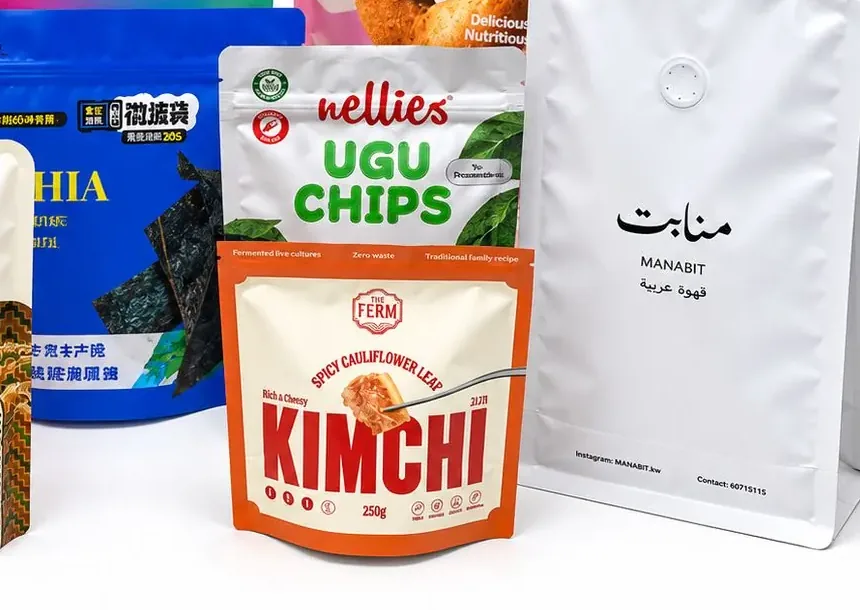
Snack packaging sold at wholesale volume is a different problem from snack packaging on a retail shelf. The distributor is not judging the pouch — they are judging whether the case cubes out well, whether the pallet stacks safely, and whether the product is still crisp when it reaches the third stop on the route. Those three questions decide the format, the barrier and the seal width, in that order.
This guide covers the four formats wholesale snack buyers actually order, the fill-size numbers behind common wholesale pack counts, the barrier builds that keep fried and baked snacks fresh through distribution, and a first-order path that does not require committing to a full print run.
The four formats, and when each one wins
Almost every wholesale snack pack is one of four structures. The choice is driven by case count and filling method far more than by looks.
- Pillow bags (back-seal). The cheapest structure per unit and the densest to pack: no gusset, so cases cube out tighter and freight per kg drops. This is the standard for multipacks, value bags and any snack sold by weight in volume. Best when the pack does not need to stand on a shelf. See the food packaging range.
- Stand-up pouches. A bottom gusset gives the pack shelf presence and resealability, at a slightly higher film cost and a worse cube ratio than pillow bags. Choose it when the wholesale account also displays the product face-out, or when the pack is resealable and intended for repeat use. See stand-up pouches.
- Side-gusset bags. Brick-shaped and efficient on pallet space, the traditional format for larger dry volumes — bulk nuts, dried fruit, crackers. Strong stackability, and a flat printable face on both sides. See side-gusset bags.
- Roll film on a form-fill-seal line. Not a pouch at all: you buy printed laminated roll film and your own VFFS machine forms, fills and seals the bag in line. At wholesale volume this is usually the lowest cost per unit, because you are not paying to ship air or pre-made bags. It only makes sense once volume justifies the machine and the print cylinders. See roll film.
A quick rule from the floor: if the case is the unit of sale, pillow bags or roll film. If the pouch is the unit of sale, stand-up or side-gusset.
Fill sizes: the numbers behind common wholesale packs
Wholesale snack pack sizes cluster tightly, and the reason is case-count maths rather than tradition. The table below is the range we quote most often for dry snacks; the exact pouch dimensions depend on product bulk density, so use it as a starting point, not a specification.
- 25–50 g — single-serve and multipack units; 12–24 units per case. Pillow bag or three-side-seal.
- 100–150 g — the core retail and convenience size; 12–24 per case. Stand-up or pillow.
- 200–250 g — family and sharing packs; 8–12 per case. Stand-up or side-gusset.
- 400–500 g — value and bulk-retail; 6–10 per case. Side-gusset or large stand-up.
- 1–2 kg — foodservice and club-store bags; 4–6 per case. Side-gusset or roll-film VFFS.
Two things decide whether a size works at wholesale. First, headspace: snacks settle after filling, and a pouch sized too tight will not seal cleanly at line speed, while one sized too loose wastes film and cubes out badly. Second, the case count: the pouch dimensions and the case dimensions have to be designed together, because a case that does not stack to a full pallet layer costs you money on every truck.
If you are not yet sure what size your product needs, read our food pouch sizing guide first — sizing is the most expensive mistake in this category because the wrong size means new film, new cylinders and a new print run.
Barrier: what keeps a snack crisp through distribution
Wholesale distribution adds weeks between the filling line and the last retail stop, and that is where a cheap structure shows. The printed layer is what the buyer sees; the layers behind it decide whether the product survives. Three questions set the structure: how much oxygen the snack tolerates, how much moisture it can gain, and how much light it can take.
- Fried snacks (chips, crisps, extruded snacks). The enemy is oxygen-driven rancidity of the frying oil and moisture-driven loss of crunch. A metallized PET or aluminum foil layer plus nitrogen flushing is the standard build — nitrogen replaces the oxygen in the headspace, and the foil layer blocks the rest of it along with light.
- Baked snacks (crackers, biscuits, wafers). Moisture pickup is the main failure mode — the pack has to hold a low internal humidity through temperature swings in transit. A high-barrier metallized or foil structure with a strong seal web is standard.
- Nuts and dried fruit. High oil content, so rancidity and moisture both matter, and so does mechanical protection: a puncture-resistant inner layer stops sharp nut edges from perforating the film in a tightly packed case.
- Popcorn and puffed snacks. Low density, so the pack is mostly air; the structure is chosen for stiffness and stacking, and often a slightly thicker film than the fill weight alone would suggest.
The single most common wholesale complaint we see is crispness lost by week six on a structure that was chosen on unit price. If shelf life through distribution is the constraint, fix the barrier first and let the format follow — not the other way around. Our customized service page lists the structure options and the documents that ship with each.
What wholesale changes about the order
Three practical differences between a wholesale order and a retail trial order:
- Case count beats pouch cost. A pouch that is 5% cheaper per unit but cubes 15% worse in the case costs more per delivered kg. Design the pouch and the case together, and check the pallet pattern before approving artwork.
- Seal integrity is the failure point. Wholesale packs travel further and get handled more. Wider seals, correct seal-temperature windows for the line speed, and a fill test on the real structure matter more than any cosmetic feature.
- One design, more volume. Wholesale buyers rarely want ten artwork variants; they want one structure that fills fast and ships clean. That usually means committing film to a single size and using the print run to hold cost down.
MOQ, samples and a first bulk order
The honest numbers, because these are what wholesale buyers ask first:
- Stock and digitally printed pouches: MOQ 100–500 pieces per design, enough to fill-test the structure and check case fit before committing to volume.
- Custom-width gravure print runs: higher MOQ, because cylinders are a one-time cost per design; the break-even is volume, so this is where wholesale orders land.
- Printed samples: 5–7 days, US$120 for one to two pieces, credited against the production order.
- Stock samples: free apart from freight — run a fill test on the real structure before paying for artwork.
The sequence that keeps a wholesale order from going wrong is short: stock pouch fill test, then case and pallet-pattern check, then printed sample, then production. Each step is cheap while a mistake is still fixable, and each one removes a category of error that would otherwise show up on a pallet.
How we help you choose
Send us the product, its fill weight, target shelf life, case count, how it will be filled and where it will be distributed. We will come back with two or three structure-and-format options, the food-contact documents for each, and a costed sample path. If you are replacing a pack you already sell, sending us the current pouch and case speeds everything up — we can measure the structure and quote against it directly.
This article is a category overview. Barrier selection, shelf-life claims and compliance requirements depend on the specific product, process and destination market, and should be confirmed with food-contact documentation and a fill test before production.
When the barrier has to be foil or metallised rather than clear, the same factory makes customized printed mylar bags for snacks and confectionery — same proofing process, same MOQ logic.
Sources and standards
Primary sources for the food-contact rules and barrier practice referred to in this guide:
- 21 CFR 177.1520 — Olefin polymers for food contact (US eCFR)
- EU Regulation 10/2011 — Plastic materials in contact with food (EUR-Lex)
- BRCGS Global Standard for Packaging Materials (BRCGS)
Frequently asked questions
What is the cheapest packaging format for wholesale snack orders?
At wholesale volume, printed roll film on a form-fill-seal line is usually the lowest cost per unit, because you are not paying to ship pre-made bags and air. Below that volume, pillow (back-seal) bags are the cheapest pouch structure and the densest to pack. Stand-up pouches cost slightly more in film but give shelf presence and resealability when the wholesale account displays the product.
What sizes do wholesale snack bags come in?
Wholesale snack packs cluster around 25–50 g single-serve and multipack units, 100–150 g core retail sizes, 200–250 g sharing packs, 400–500 g value packs and 1–2 kg foodservice bags. The exact pouch dimensions depend on the product bulk density, the case count and how the product settles after filling — so the size has to be designed together with the case, not separately.
How do I keep snacks crisp during wholesale distribution?
The barrier does the work. Fried snacks normally use a metallized or aluminum-foil layer plus nitrogen flushing to push out oxygen and block light; baked snacks need a high-barrier structure that holds a low internal humidity through temperature swings; nuts and dried fruit also need a puncture-resistant inner layer. If crispness through distribution is the constraint, choose the barrier first and let the format follow.
Why does case and pallet design matter for wholesale packaging?
Because freight is charged on volume, not just unit cost. A pouch that is mildly cheaper per unit but cubes worse in the case can cost more per delivered kilogram, and a case that does not stack to a full pallet layer wastes truck space on every shipment. Pouch dimensions and case dimensions should be designed together, and the pallet pattern checked before artwork is approved.
What is the minimum order for wholesale snack packaging?
Stock and digitally printed pouches start at 100–500 pieces per design, which is enough for a fill test and a case-fit check. Custom-width gravure print runs sit higher because cylinders are a one-time cost per design — that is where wholesale orders land. Printed samples run 5–7 days at US$120, credited against production, and stock samples are free apart from freight.
Can you produce snack bags that run on my existing filling line?
Yes — that is why we ask how the pack will be filled before quoting. Film gauge, seal width and seal-temperature window all have to match your machine, and pre-made pouches have to match your magazine and pick-up. Send the machine make and model, or a photo of the line, and we will quote a structure that runs on it rather than one you have to work around.
Have a pack like this to quote?
Send the product, how it will be filled and stored, the format or an area to advise on, and your quantity. You get back a named structure, a colour count, a minimum tier and a line-by-line price — usually within one working day.