
Blog
Flat-Bottom Pouch vs Stand-Up Pouch: Which Holds Your Shelf and Your Fill
A flat-bottom pouch and a stand-up pouch both stand on a shelf and stop behaving alike above roughly 500 g of fill: the flat-bottom carries weight on four sealed corners, the stand-up carries it on a folded gusset. That difference decides carton space, pallet count and filling speed as much as appearance, and the wrong choice is usually paid for in freight rather than in the pouch price. This guide compares the two on fill weight, shelf presence, carton density and filling, and gives the three questions that settle the format before the artwork starts.
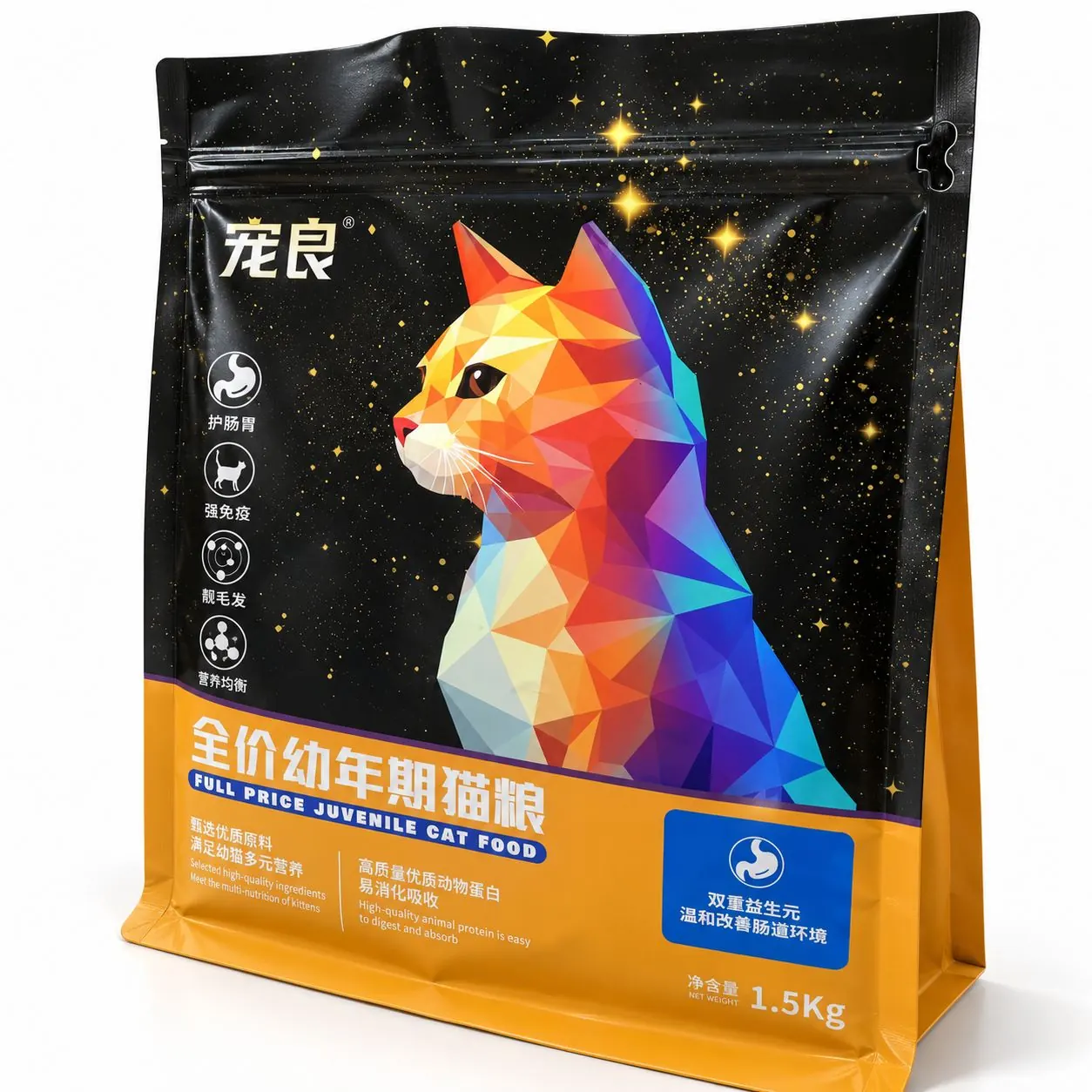
Almost every product page for a stand-up pouch says it "stands on the shelf and offers excellent shelf presence". Almost every page for a flat-bottom pouch says the same thing. The difference shows up in the four places the marketing copy never reaches: how much fill the format carries before it distorts, how much air a carton of it holds, how fast it runs on a filling line, and what happens when a customer picks it up by the top seal.
This guide compares the two formats on those four points. It is written for a brand that has decided on a pouch - the question here is which pouch, not pouch versus jar.
The structural difference, in one paragraph
A stand-up pouch (often called a Doyen pouch after the machine that made it famous) has two side panels plus a folded bottom gusset. When filled, the gusset opens into an oval base and the pouch stands. A flat-bottom pouch has a separate bottom panel sealed into a rectangular base, so the finished pack is closer to a box with soft walls. The structural difference matters because it changes where the load goes: a stand-up pouch puts the fill weight on a folded gusset, a flat-bottom pouch puts it on a welded rectangular perimeter.
That single difference explains most of the practical comparisons below.
Fill weight: where the Doyen pouch stops scaling
A stand-up pouch is perfectly stable up to a moderate fill and becomes progressively less so as the fill rises. The gusset has to open evenly, and at higher weights the base bulges and the pouch leans. The practical consequence: at around half a kilo and above, a stand-up pouch of a given footprint starts to look and behave less like a package and more like a bag with a fold in it.
A flat-bottom pouch carries load on a welded perimeter and stays square at fill weights that would visibly distort a stand-up pouch. It is the format that scales: 1 kg, 2 kg, 5 kg pet food, rice, coffee beans, frozen pieces. If the plan includes a larger bag in the range - a "family size" or a "bulk" variant - the larger size usually wants to be flat-bottom, and having both formats means two dielines and two print orders.
The inverse case is just as real. Below roughly a couple of hundred grams, the flat-bottom pouch's separate bottom panel is cost the product does not need, and a stand-up pouch of the same footprint uses less film.
Shelf presence and print area
- Front panel. A flat-bottom pouch has a wider, flatter front panel, which shows more of the design face-on and photographs as a near-rectangular block - the reason it dominates premium coffee and pet food ranges on shelf.
- Side panels. Both formats carry printable side panels. A flat-bottom pouch's side panels are closer to a true rectangle and read better as a continuation of the front, which matters for a brand that prints a story or a specification table across the sides.
- Top. A flat-bottom pouch has a flatter top seal, so the pack sits level on a shelf and stacks predictably; a stand-up pouch's tapered top makes a row of them look less uniform on a crowded shelf.
Neither is better in the abstract. A brand selling a narrow range on a crowded shelf is buying the front panel; a brand selling into a channel where the pack is picked up and handled is buying the base.
Carton space and freight
This is the cost that never appears on the pouch quotation. Both formats stack reasonably, but a flat-bottom pouch packs into a carton as a near-rectangular solid, while a stand-up pouch's gusset and tapered top mean a carton holds more air for the same product volume. On high-volume, low-value product the difference in cartons per pallet can exceed the difference in pouch price.
It also changes shipping damage. A carton of flat-bottom pouches supports its own weight in a stack; a carton of stand-up pouches compresses at the gusset, and the damage shows as creased bases and a pouch that no longer stands. If the product ships in cartons or sits in a warehouse for months, the format that stacks square arrives in better condition.
On the filling line
- Stand-up pouches run on standard pouch fillers. The gusset has to be opened mechanically, and a fill that lands badly makes the pouch sit crooked - a problem that appears on the line as a reject and on the shelf as a pouch that leans.
- Flat-bottom pouches need a filler configured for the format, because the pouch has to be squared before filling. Where the line is already set up for it, flat-bottom runs are fast and the finished pack is dimensionally stable; where it is not, the format is not a drop-in change.
- Premade versus roll stock. Both formats are available premade, which keeps capital cost down for a first order. The throughput difference only matters at volume.
Our flat-bottom pouches page lists the base dimensions and fill weights we run. If you are choosing between the two formats and the line is not yet bought, that page and a conversation about the filler will save a costly decision.
The three questions that decide it
- What is the largest fill in the range? Above roughly 500 g, flat-bottom leads. The whole range usually wants one format, and the largest SKU decides it.
- How does the product leave the factory? Cartons and pallets on a long sea route favour the square stack. A few hundred units by courier makes the carton-space argument irrelevant.
- What does the customer do with the pack? Stand it on a counter and reach in - stand-up works. Store it flat in a cupboard and pour - flat-bottom's flatter top and squarer body are easier to handle.
One more detail that goes into the same decision: the closure. Both formats take zippers and valves, but the valve placement on a coffee bag is easier to specify on a flat-bottom pouch because the top panel is wide and flat, whereas on a stand-up pouch the valve competes with the taper. For degassing products, that practical detail often settles the choice.
Send us the largest fill weight, the shipping route and the closure you need, and we will tell you which of the two formats those three point to - before any artwork is commissioned.
Frequently asked questions
Is a flat-bottom pouch more expensive than a stand-up pouch?
On the pouch price alone, usually yes - it uses more film and has an extra bottom panel and seal. On the landed cost it can be cheaper, because a carton of flat-bottom pouches holds less air, stacks square and takes less damage in transit. Compare the two on cartons per pallet, not on price per pouch.
At what fill weight should we switch from stand-up to flat-bottom?
Around half a kilo is the practical point where a stand-up pouch of a given footprint starts to bulge and lean. Above that, flat-bottom keeps its shape and carries the load on a welded perimeter. The exact point depends on the product's bulk density, so check it against the fill weight chart for the format rather than a single rule.
Can we run both formats on the same filling machine?
Usually not without a changeover and often a different filler configuration, because a flat-bottom pouch has to be squared before filling. Ask the machine supplier before committing to a two-format range - it affects how the line is bought, not just how the pouches are ordered.
Which format is better for coffee?
Flat-bottom is the common choice for premium coffee above about 250 g: wider front panel, squarer stacking, and a flat top panel that makes valve placement straightforward. A stand-up pouch remains a good fit for smaller retail formats and for brands selling on a hook.
Does the format change the barrier properties?
Not by itself. Barrier comes from the film structure laminated into either format, so a stand-up and a flat-bottom pouch can be made from the same structure and give the same shelf life. The format changes geometry and mechanical load, not the barrier.
Have a pack like this to quote?
Send the product, how it will be filled and stored, the format or an area to advise on, and your quantity. You get back a named structure, a colour count, a minimum tier and a line-by-line price — usually within one working day.